
Bhubaneswar, Nov. 20: Pratap Mohanty is in a fix. The small-time contractor is finding it difficult to engage masons and labourers for construction work.
"I have never seen such a slowdown in the past few years. Neither masons nor labourers are ready to work on credit; they just won't work on the promise of being paid after the work is done. And we have no time to stand in queues every day in banks or outside ATMs," said Mohanty.
Mohanty's predicament is the trauma that construction workers, masons and contractors have been facing ever since Prime Minister dramatically announced the demonetisation of high-value notes on November 8.
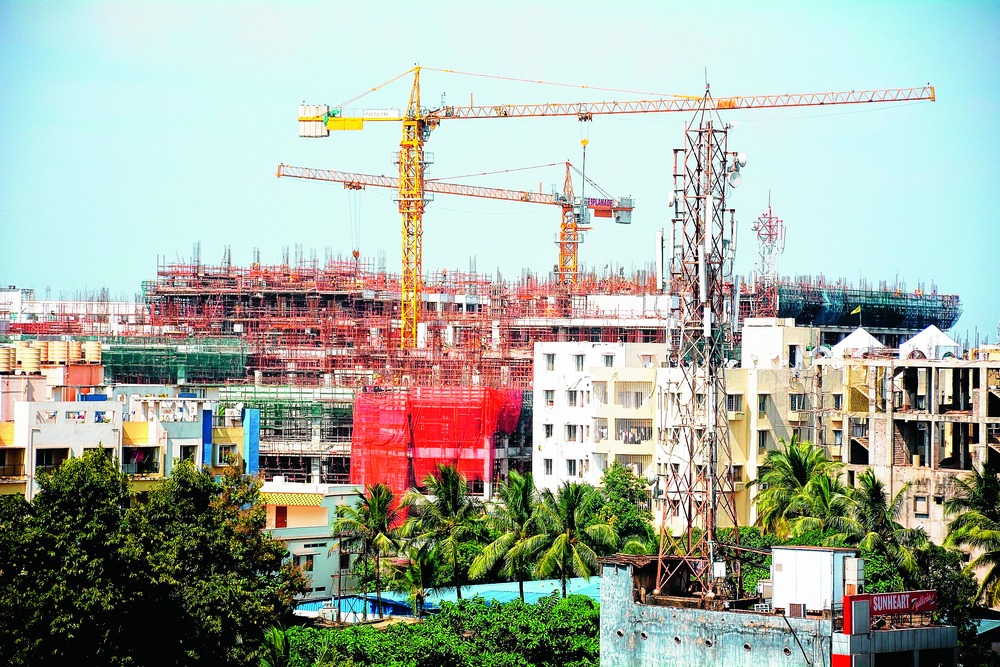
The ripple effect of the Rs 500 and Rs 1,000 notes being scrapped has been felt on the sale of cement, iron rods and other hardware products. Sales in the hardware stores have plummeted too.
Masons usually charge Rs 550 a day, while a construction labourer is paid Rs 350 a day. The simple act of paying them has now become an exceptionally difficult task because one person can only exchange old notes worth Rs 2,000 once. To top it off, banks are exchanging the old notes with the new Rs 2,000 note, which no one has small change for. At ATMs, too, one can withdraw only Rs 2,500 a day. The withdrawal limit has been set at Rs 24,000 a week, which includes both bank and ATM transactions.
Mohanty is not being able to find enough Rs 100 notes to pay his masons and labourers. "Whenever I use the ATM, it dispenses one Rs 2,000 note and one new Rs 500 note. So what do we do? How do we pay our workers? It's time the withdrawal limit was hiked," said the contractor.
The slowdown in construction activities has also had its impact on the local labour market. In the past week, the number of labourers and masons who gather every morning at Baramunda Square, Kalpana Square, Indradhanu Market, Rasulgarh Square, Lingaraj Road passenger halt and Khandagiri Square has dwindled.
Most of these people come from Ganjam, Mayurbhanj and Keonjhar in the hope of making a living in the big city. "Instead of going to the labour market and coming frustrated, we now prefer staying at home," said Sanatan Majhi, 48, a labourer from Baripada.
For the last six days, Majhi, along with nearly 2,500 others, had been coming to Indradhanu Market near CRPF Square in the hope of getting employment. Every day, they have gone back disappointed. So today, he said, he decided not to go.
The sale of cement and hardware products has fallen, too. "In my last 15 years of experience, I have seen construction activities pick up after the rainy season, especially after the Dussehra festival. This year it has gone down," said Pravanjan Das, 36, a cement seller. Demonetisation has affected his business and that of many other owners of cement stores like him.
Das said: "I used to sell around 70 to 80 cement bags. Depending on the brand, the cost of one bag of cement costs between Rs 290 and Rs 350. But suddenly, sales have nose-dived. Sometimes, people come and ask for just one bag of cement and offer scrapped Rs 500 and Rs 1,000 notes. The others offer the new Rs 2,000 notes, for which I don't really have change."
Then there are those who want bulk supply in exchange for the scrapped noted, a demand no supplier is willing to meet under the circumstances. "There is constant fear that the income tax department may be watching your account. This has caused panic among small traders. We don't want to land in trouble," said Das.
Hardware sellers have similar stories to tell. "A day's business in my store used to be between Rs 40,000 to Rs 50,000. But it has dropped to around Rs 7,000. Only people in dire need are coming to the shop."
However, bigger construction projects have not been hit that badly by the crisis. "In bigger projects, the payment for materials is made on a fortnightly or monthly basis. Besides, labour sardars (agents) take care of the payment of labourers working on these projects. So, we are not unduly worried," said a big brass contractor. However, he conceded, labour supply has been affected to an extent.
Other construction activities, such as painting of new buildings, have also been hit. "After monsoon comes to an end in mid-October, many spruce up their buildings as part of annual maintenance and carry out repair works. But this is yet to gain the momentum. Over the past 10 days, people are busy adjusting their accounts and have no time to look into this aspect," said the owner of Mahabir Paints, Prashant Das.
He said the cost of painting a two-storey building comes to around Rs 70,000. "At this juncture, people don't want to spend so much. Naturally, this impacts our trade."