
Guwahati, March 28: Dehradun-based naturalist Sanjay Sondhi had no inkling that the butterfly he had spotted was first found a century ago.
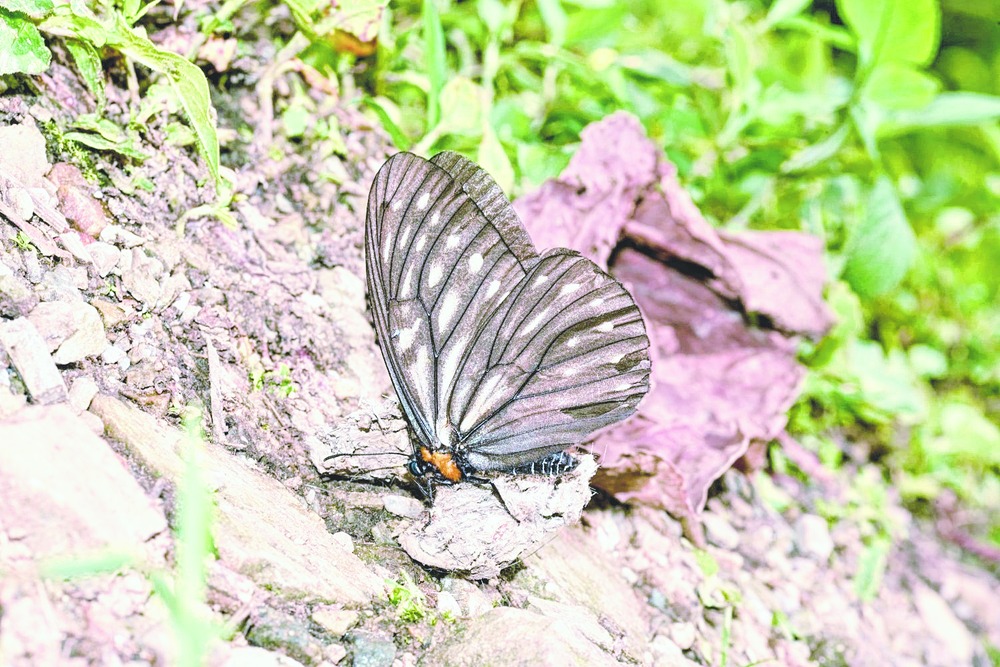
Calinaga aborica Tytler, commonly known as dark freak, was rediscovered last May near a bridge at Pakke Kesang in the northeastern part of Pakke tiger reserve in Arunachal Pradesh after it was first reported in 1915.
Calinaga aborica was described by H.C. Tytler as part of his series of papers on butterflies from Manipur and Naga hills in 1915.
The rediscovery was reported in the March issue of the Journal of Threatened Taxa. The article has been co-authored by Tarun Karmakar, Yash Sondhi, Rishiddh Jhaveri and Krushnamegh Kunte, apart from Sanjay Sondhi of Titli Trust based in Dehradun.
The butterfly was spotted at an altitude of approximately 1,100 metres in East Kameng district of Arunachal Pradesh.
Sanjay did this survey as butterflies of Pakke Kesang on the northeastern boundary of the Pakke tiger reserve had not been properly surveyed before and was surveyed from September 2013 to July 2015.
He has been surveying the butterflies of the Kameng protected area complex that includes the Eaglenest wildlife sanctuary and Sessa orchid wildlife sanctuary in West Kameng district and the Pakke tiger reserve in East Kameng district since 2009.
"There was a single sighting of the butterfly at 11.45am near Sochung bridge at Pakke Kesang on May 21 last year. On spotting it, I knew at once that it was a butterfly belonging to the genus Calinaga, but had no idea of the species. Only when I got back to my room and checked the books at night that I realised which species it was," Sanjay Sondhi told The Telegraph.
"Re-discoveries after 100 years are not that common. For Arunachal, I would guess it would be less than 10 butterflies and may be double for all of the Northeast," he said.
Both the wing surfaces of the butterfly are black or very dark brown with markings much reduced.
It is historically known to be from Abor valley, Arunachal Pradesh and from Sengkor valley in northern Myanmar.
"The individual was feeding on a carnivore scat and was easily approached without being disturbed. After a few minutes, it flew and settled on a nearby bush where it was netted. The only specimen of Calinaga aborica that we encountered was first photographed in the field and then collected with a butterfly net for further taxonomic and phylogenetic studies. It was identified by comparing the original species description and illustration at the Natural History Museum, London, along with other museum materials," the article said.
It said a review of literature on butterflies of Arunachal Pradesh showed that there are no records of this species from India since its original description in 1915. "Hence, this record represents the first sighting of C. aborica in India since its original description in 1915, and a rediscovery of the species."
On the rediscovery of the butterfly species after 100 years, Sanjay Sondhi said: "This means that there are many old and possibly new species that we do not know about. We risk losing the species at the rate at which habitats are being destroyed. The onus is on to make the right choices between biodiversity protection and development."