
Guwahati: The Archaeological Survey of India (ASI) has claimed to have found the remains of a unique lost civilisation, extending to neighbouring Myanmar, Bangladesh and part of Mizoram, during its excavations at Vangchhia historical village in Mizoram's Champhai district.
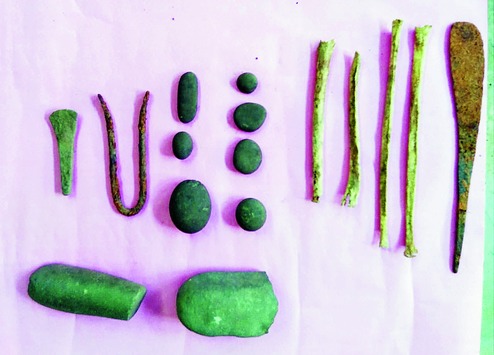
Archaeologists have stumbled upon human bones and antiquities from the burial sites at Vangchhia.
They have found samples such as potsherds, antiquities and others at the site dating back to 600 BCE (before common era) and circa 1400 CE to 1750 CE through C14 (radio-carbon) dating.
"Vangchhia proves to be a necropolis and a lost civilisation. It requires further excavation and exploration. It extends to most parts of Mizoram, eastern part of Myanmar and some parts of Bangladesh. This is the second round of excavation and will continue till mid-June," said Sujeet Nayan, assistant superintending archaeologist, (ASI headquarters, New Delhi) and director of excavations. A necropolis is a large, designed cemetery. The name stems from the ancient Greek nekropolis, meaning city of the dead.
With a geographical area of nearly 40km, Vangchhia is surrounded by thick forests, and has archaeological relics, menhirs, burial grounds, rock-cut caves, water pavilions and retaining walls.
Over 50 structures have been discovered. There are 39 burials exposed at different terraces in various shapes and sizes. The exposed burials are spread out over almost 10 square kilometres.
"It can prove to be one of the largest necropolis sites in the world. The ancient dwellers might have put the bodies of their kin inside the pits dug at the time of burial ceremony," added Nayan.
The ongoing excavations began in January. Vangchhia was selected for archaeological excavation for its cultural significance in 2014. In 2015-16, the excavation began and 50 structures were documented.
Based on the remains, the cultural sequence of Vangchhia is divided into two periods - circa 600 to 1400 CE and circa 1400 CE to 1750 CE. The unique water pavilions found at the site belong to the first period. The menhirs, burial sites and the potsherds belong to the second.