
The government on Friday issued an Ordinance exempting foreign portfolio investors (FPIs) from paying income tax on interest earnings and capital gains arising from investments in government securities, while the Reserve Bank of India (RBI) unveiled a series of measures aimed at attracting long-term foreign capital and strengthening India's external financing position.
The Ordinance amends the Income Tax Act to provide tax exemptions on interest income and capital gains arising from the sale, exchange or transfer of government securities, with effect from April 1, according to a gazette notification dated June 5.
The Finance Ministry said the exemption would apply to any interest income or capital gains accruing to FPIs on or after April 1 from investments in government securities (G-Secs).
Currently, foreign investors are subject to a 12.5 per cent long-term capital gains tax on listed shares and bonds held for more than 12 months and a 20 per cent withholding tax on interest earned from government bonds.
The Ordinance, signed by President Droupadi Murmu, defines the BIS as the international financial institution established in 1930 and headquartered in Basel, Switzerland. It also references existing statutory definitions of foreign institutional investors and government securities under Indian law.
According to the gazette notification, the Ordinance was promulgated as Parliament was not in session and immediate action was required, invoking the President's powers under Article 123 of the Constitution.
The government said the measures were part of its commitment to strengthen India's position as a leading global investment destination, deepen capital markets and attract stable long-term foreign capital.
To increase participation by FPIs in government securities, the government has expanded the list of specified securities under the Fully Accessible Route (FAR) to include new issuances of 15-year, 30-year and 40-year government securities, as well as Sovereign Green Bonds in FAR-eligible tenors.
In another major relaxation, the government removed three restrictions applicable to FPI investments in government securities under the General Route — the short-term investment limit, concentration limit and security-wise limit — while retaining the overall quantitative investment cap of 6 per cent of the outstanding stock of central government securities and 2 per cent of state government securities (SGSs).
The existing 'general' and 'long-term' sub-categories of investment limits for government securities and SGSs will also be merged into a single investment limit.
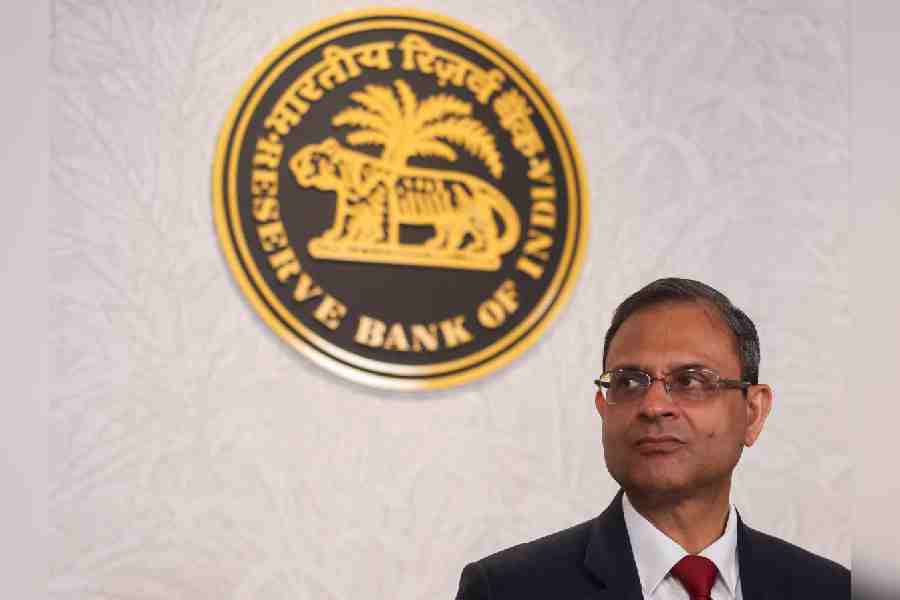
The Finance Ministry said the measures would help develop a smooth sovereign yield curve and attract stable, long-term foreign investors, including pension funds, insurance companies and sovereign wealth funds.
"These measures will help in development of a smooth yield curve, and attract stable systematic inflow of long-term, patient foreign capital, including long-term investors such as pension funds, insurance companies, and sovereign wealth funds. This is also expected to boost foreign exchange inflows for the country," it said.
Separately, the RBI announced complementary steps to support foreign capital inflows amid global uncertainty and elevated energy prices.
The central bank expanded the universe of FAR-eligible securities by including all new issuances of 15-year, 30-year and 40-year sovereign bonds and removed restrictions on short-term investments, concentration limits and individual security limits for FPIs investing through the General Route.
The combined impact of the RBI and government measures is expected to increase foreign participation in India's sovereign debt market and support government borrowing at competitive rates.
The initiatives are also expected to provide support to the rupee, which has weakened by more than 6 per cent this year due to higher crude oil prices and foreign portfolio outflows from equity markets.
In line with the Budget 2026-27 announcement, individual Persons Resident Outside India (PROIs) have now been permitted to invest in equity instruments of listed Indian companies through the Portfolio Investment Scheme, a facility previously available only to Non-Resident Indians (NRIs) and Overseas Citizens of India (OCIs).
The investment limit for an individual PROI has been raised to 10 per cent in any company from the earlier 5 per cent, while the aggregate limit for all individual PROIs has been increased to 24 per cent from 10 per cent.
The government said the change would enable more proactive mobilisation of foreign portfolio capital by leveraging existing onboarding systems.
"This notification will facilitate a more proactive mobilisation of foreign portfolio capital by leveraging the existing onboarding systems," it said.
"Simplified onboarding and reduced compliance requirements would further enhance ease of doing business, while attracting a broader base of relatively stable individual foreign investors. This will also support greater and more stable foreign inflows into Indian equity markets," it added.
To encourage overseas borrowing, the RBI announced a concessional foreign exchange swap facility for external commercial borrowings (ECBs) raised by public sector undertakings until September 30, 2026.
Additionally, authorised dealer banks will be eligible for a temporary facility under which the RBI will bear the full hedging cost for fresh three-to-five-year Foreign Currency Non-Resident (Bank) deposits mobilised until September 30, 2026.
The measures are aimed at attracting stable foreign capital flows, easing external financing conditions and strengthening India's balance of payments position amid heightened global market volatility.