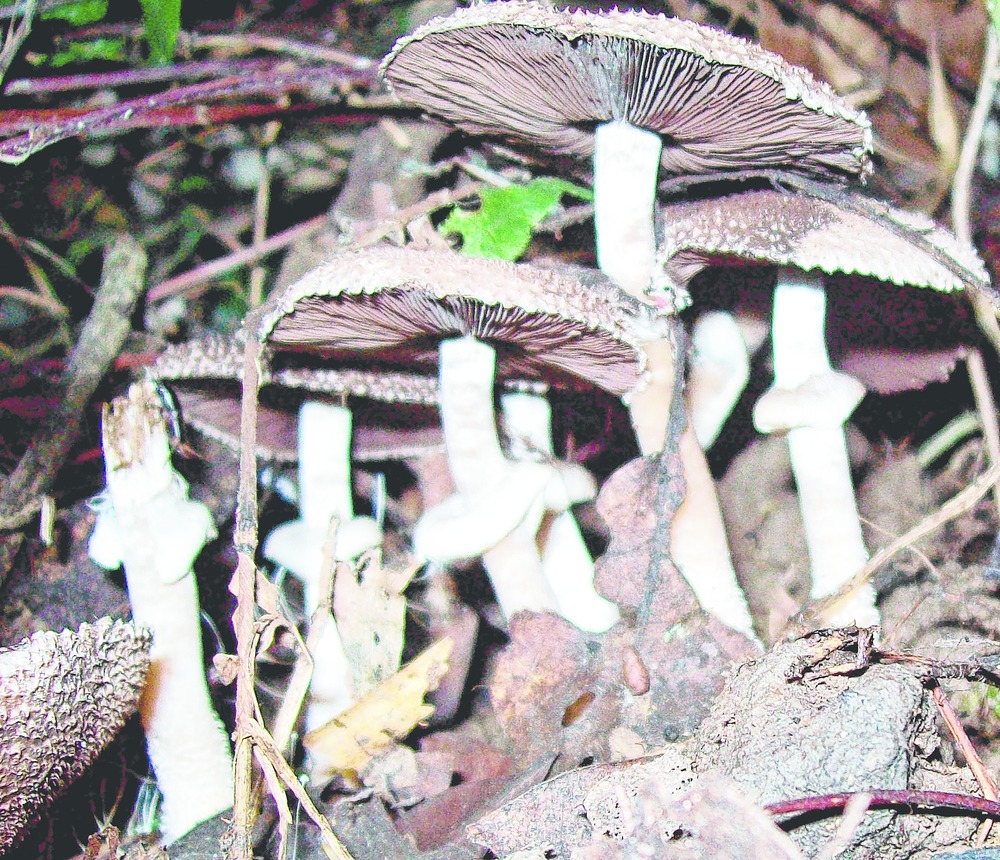

Jorhat, April 27: The Mushroom Development Foundation, Guwahati, is proposing to collaborate with students of Tata Institute of Social Sciences (TISS), Guwahati, to spread awareness among the masses regarding the poisonous effects of some mushroom species.
Pranjal Baruah, general secretary of the foundation, said these few months up to June was the time when wild poisonous mushrooms take the lives of many in Assam and the Northeast.
"We have sent a letter to TISS proposing that a section of students take this up as a project and spread social awareness in villages, especially in Meghalaya where the growth of wild mushrooms increases during this time," Baruah said.
The project will be finalised on Friday.
In the meantime, the foundation has sent letters to several deputy commissioners to take steps in their respective districts to spread awareness about eating poisonous mushrooms collected from the wild.
"An expert can differentiate between edible non-poisonous mushrooms and non-edible poisonous ones. The latter belongs to two divisions - Basidiomycetes and Ascomycetes. Only cultivated edible mushrooms are 100 per cent safe," he said.
The foundation's mission is to promote edible cultivable mushrooms as a means of sustainable livelihood.
The foundation, in its letter, stated that mushroom poisoning could be divided into cases in which symptoms appeared within several minutes to six hours after ingestion and those in which symptoms develop much later.
"Most non-lethal poisonous mushrooms produce symptoms soon after ingestion, whereas A. phalloides-type mushrooms produce life-threatening reactions six to 24 hours after ingestion. However, since a mixture of wild mushrooms is usually ingested, early onset of symptoms cannot rule out lethal poisoning. Irritant symptoms may be delayed for six to 12 hours. Renal and hepatic toxicity occurs between three and six days. A fatal dose is usually two to three mushrooms," the letter stated.
The letter further gave details of symptoms and how treatment should be given in the first stage by inducing vomiting and in the later stages as well.
"In case a poisonous mushroom is consumed, immediate first aid at home is to administer salt water to induce vomiting and the person should be taken to the nearest hospital at the earliest. The first thing that may be practised in any hospital is gastric lavage commonly known as stomach wash. This should be done only to a conscious and alert patient. If the patient is unconscious, the hospital should insert a cuffed endotracheal tube in the airway before attempting to conduct the lavage," Baruah said.
The letter outlined the initial symptoms of poisoning which were constriction of throat, burning pain in stomach, nausea, vomiting, diarrhoea, slow pulse, laboured breathing, salivation and collapse.
In the later stage, neurological symptoms like giddiness, headache, delirium, diplopia (double vision), constriction of pupils, cramps, twitching of limbs, convulsions and coma can occur.