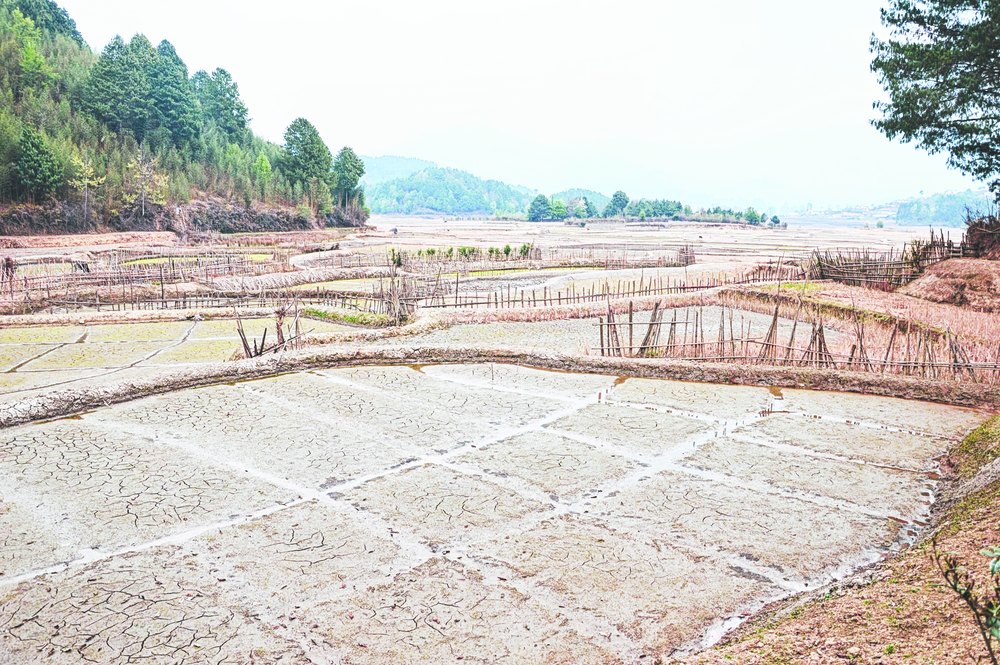

The fields where paddy, millets and fish are cultivated in Arunachal Pradesh's Ziro Valley. Picture by Sumir Karmakar
Ziro (Arunachal Pradesh), March 27: A green-and-white board with the pwta apu (wild pear) tree in full bloom to its left welcomes visitors to beautiful Ziro.
A couple of kilometres of meandering, potholed roads lead to the Apatani cultural landscape - one of the 22 Indian sites included in the tentative list for Unesco World Heritage Site status.
'We need the World Heritage Site status,' said a 70-year-old villager, making it clear that villagers understand the importance of the coveted Unesco tag for protection and preservation of unique agricultural practice and culture.
'You spread the message,' added the villager and walked towards Hong village to join the ongoing Myoko (a festival of brotherhood) celebration.
Nearly 50,000 Apatanis inhabit the landscape situated on nearly 5,700 feet above the mean sea level.
The tin-roofed bamboo houses on tall wooden stilts that dot the valley say how majority Apatanis kept their traditional housing designs alive.
The unique practice of paddy-cum-fish cultivation in limited land and community watershed management led them to the tentative list about a year ago. They also grow millet on the bunds in between plots. Since then, they have not remained confined to putting up banners about the Unesco tag alone, but are going an extra mile to impress the UN body for the coveted tag.
While the Apatani Youth Association has issued a public notice asking everyone to avoid Indian-made foreign liquor for the Myoko celebrations this year, the district administration has issued a ban on unplanned construction on the paddy fields which is seen as a threat to the age-old unique practice.
'Such unplanned activities on our cultivable land will affect a chance of getting the WHS status for Apatani #cultural l#andscape and threaten the fabric of our unique culture,' the Lower Subansiri district administration's order issued on February 11 said. It prohibited construction of buildings, towers and filling up of paddy fields.
'We are trying to convince people to be careful in construction activities,' the president of the association, Taku Chatung, told this correspondent at Hija village. Chatung said they are also planning to clean up the Kley river, the source of water for the Apatani landscape.
'We want to replace the tin sheets with bamboo roof as the tin sheets generate more heat. For that we require financial support from the government as bamboo roofs are costly,' he said.
Apatanis collectively maintain the crucial watersheds, ensuring perennial streams flowing from the nearby hill into the valley to meet the need of water for drinking and irrigation purposes. But reduction in the flow of stream water in the past few years has raised fears about impact of human activities on the environment.
As a step towards minimising the damage, the district administration has issued a complete ban on sale and use of plastic bags, water bottles and other such materials.
'We will soon supply some bags made of harmless materials to vegetable vendors, fish and meat shops and others,' deputy commissioner Kanki Darrang said. 'We are planning to submit a dossier on Apatani cultural landscape by 2016 and we have formed a committee for this,' Darrang said.
'If we want our natural water streams to continue flowing, we must make Ziro a plastic-free zone soon and make our Clean Ziro Green Ziro campaign a success. Throwing of plastic is affecting our natural channels which will gradually affect our age-old unique agriculture practice,' publicity secretary of the association Narang Samo said.
'After all, this is a unique opportunity for all of us to get the WHS for Apatani landscape and protect and preserve it for our future generation,' said Tapi Tai, general secretary of Tanii Supun Dukun, the apex Apatani council. 'Our agriculture practice is not just a tradition but also a source of livelihood for most of us,' said Taku Lodor of Hija village. Lodor cultivated 40 quintals of paddy and 50kg fish this season.