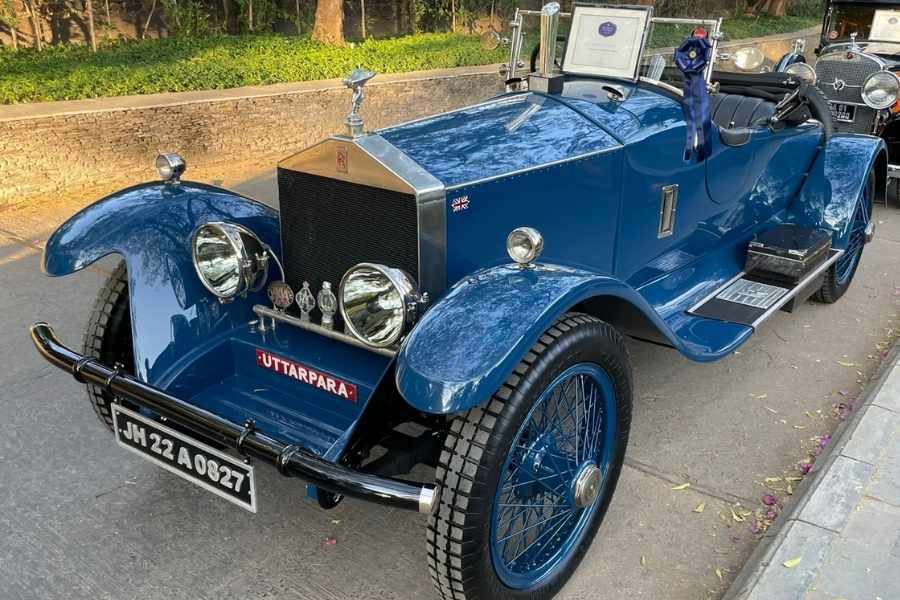
In 1970, a 25-year-old Shashi Kumar Kanoria stood before a tired, forgotten Rolls-Royce lying in the backyard of the Uttarpara Raj family. The car was derelict, half claimed by neglect, but still unmistakably blue. He bought it for Rs 500.
“It was practically a liability,” recalls his son, Shrivardhan Kanoria. “But for my father, it was a dream.”
That car, a 1923 Rolls-Royce 20 HP, chassis number 59S3, would become the foundation stone of one of Kolkata’s most respected vintage collections. If there is a beginning to the Kanoria family’s Rolls-Royce story, it starts here.
“This is my father’s first and longest surviving Rolls-Royce,” Shrivardhan says. “You can say this is the inception. This is where the Rolls-Royce obsession began.”
Built in Calcutta, born in blue
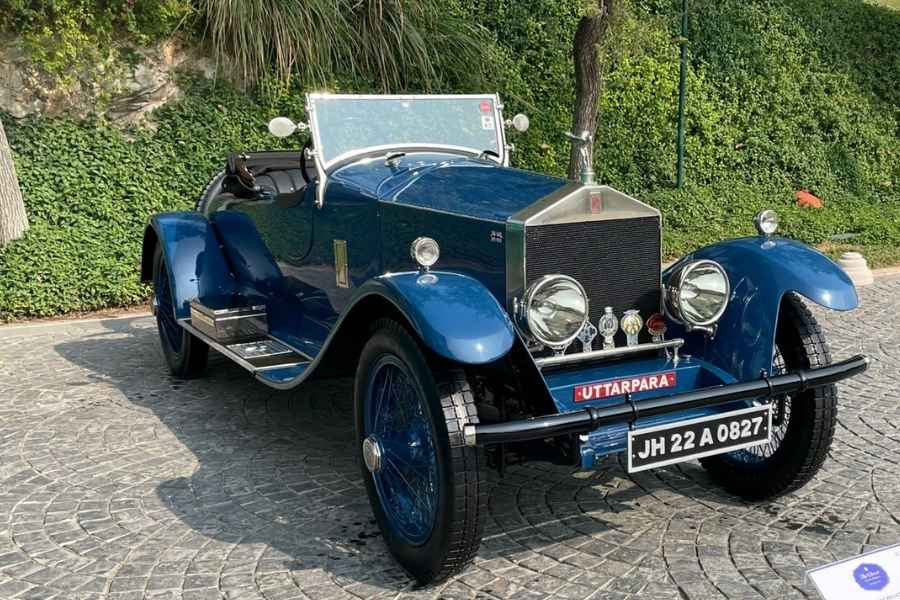
An early example of the 20 HP introduced in 1922, this car featured the rare centre gear shift and two-wheel brakes of the earliest production models. Like all Rolls-Royces of its time, it arrived in India as a rolling chassis and was coachbuilt in Kolkata.
Its body was crafted by Steuart & Co. of Calcutta, one of the foremost coachbuilders of the British Raj. Today, cars bodied by Indian coachbuilders are rare survivors of a forgotten chapter in automotive history.
“After Independence, people stopped talking about Indian coachbuilders,” says Shrivardhan. “But having a Steuart-bodied Rolls today is something very special. It is like holding on to a piece of Calcutta’s own motoring heritage.”
The first owner was businessman R.S. Colah of the Dinshaw & Sorabjee firm, known for his flamboyance and his love for blue two-door convertibles. The sporty two-seater body reflected his personality. In the late 1930s, the car passed to the Uttarpara Raj, who drove it between Calcutta and Darjeeling before it eventually fell silent.
When Shashi Kanoria found it, the car needed more than restoration.
“My father resurrected it,” Shrivardhan says softly. “What he did in 1971 was resurrection. What I have done later are restorations.”
A family member, not just a motor car
Restored initially in garnet red with black fenders and an aluminium bonnet, the Rolls became a regular at the annual vintage car rallies through the 1970s and 1980s. It returned home with trophies, but its greatest role was away from concours lawns.
It was Rekha Kanoria’s pride. It was there when Shruti was born in 1970, when Amrisha arrived in 1974, and when Shrivardhan himself was born in 1981.
“My father would drive. My mother sat beside him. I would sit in the centre with my red water bottle hanging from the dashboard. My sisters sat in the rumble seat behind,” Shrivardhan recalls.
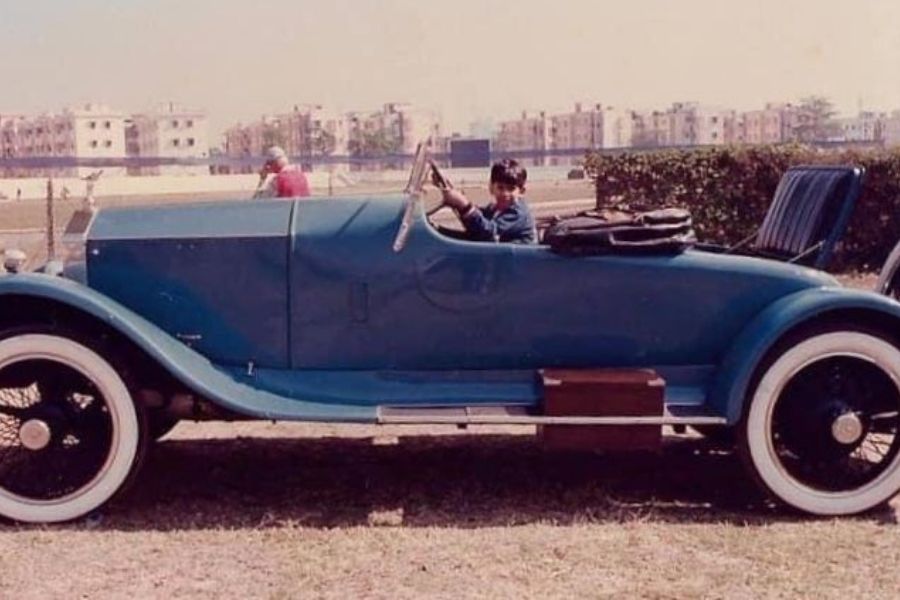
The afternoons were for card games with friends. The Rolls was his father’s chosen companion.
“This car has seen the early years of my parents’ marriage. It has seen the birth of his children. It is not just a car for us. It is family.”
In 1982, noted Rolls-Royce historian John Fasal visited India and travelled around Calcutta in this very car while researching his book. He advised Shashi Kanoria to return it to its original blue. By 1984, the Rolls was repainted accordingly and became known within the household by a name that would endure.
A son under scrutiny
After Shashi Kanoria’s passing in 2010, the future of the collection was questioned in some circles. Shrivardhan was young. Doubts were loud.
“There was a narrative that I did not know anything,” he says. “That without my father, everything would collapse.”
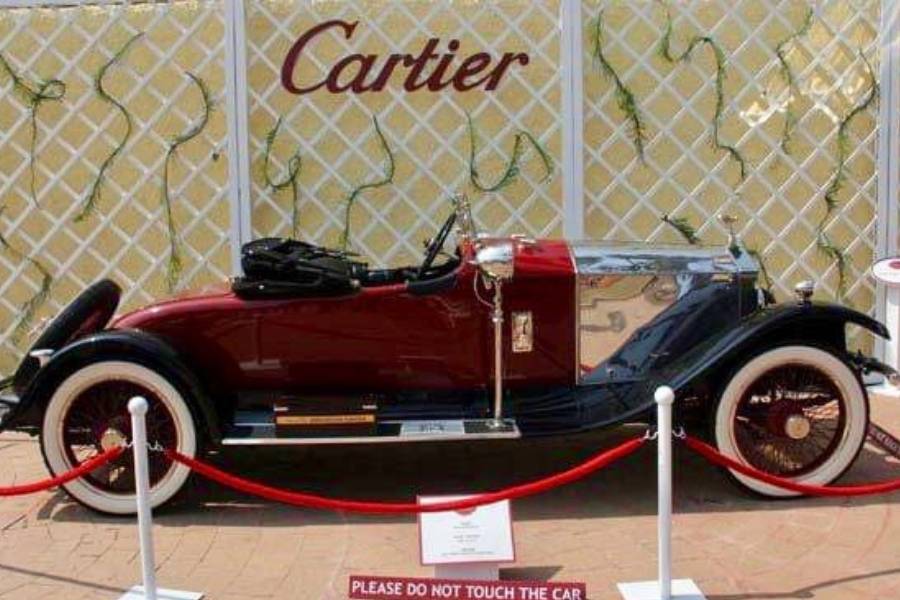
In 2012, he restored the car once more, this time returning it to the red scheme for the Cartier Concours d’Elegance in Mumbai. The car earned special acclaim in 2013, with the award presented by His Highness Manvinder Singh Barwani, the curator of the Concours
It was during this restoration that memory asserted its quiet authority.
“My sisters called it the Blue Rolls,” Shrivardhan smiles, his voice softening. “Even when it was red, for them it was always the Blue Rolls.”
For them, blue was not a colour. It was childhood.
“When I was preparing it in 2012 and in 2025, I missed my father every single day,” he admits. “You question yourself constantly. Would he approve? Am I doing this right? You are not just restoring metal. You are restoring memory.”
Returning home to blue
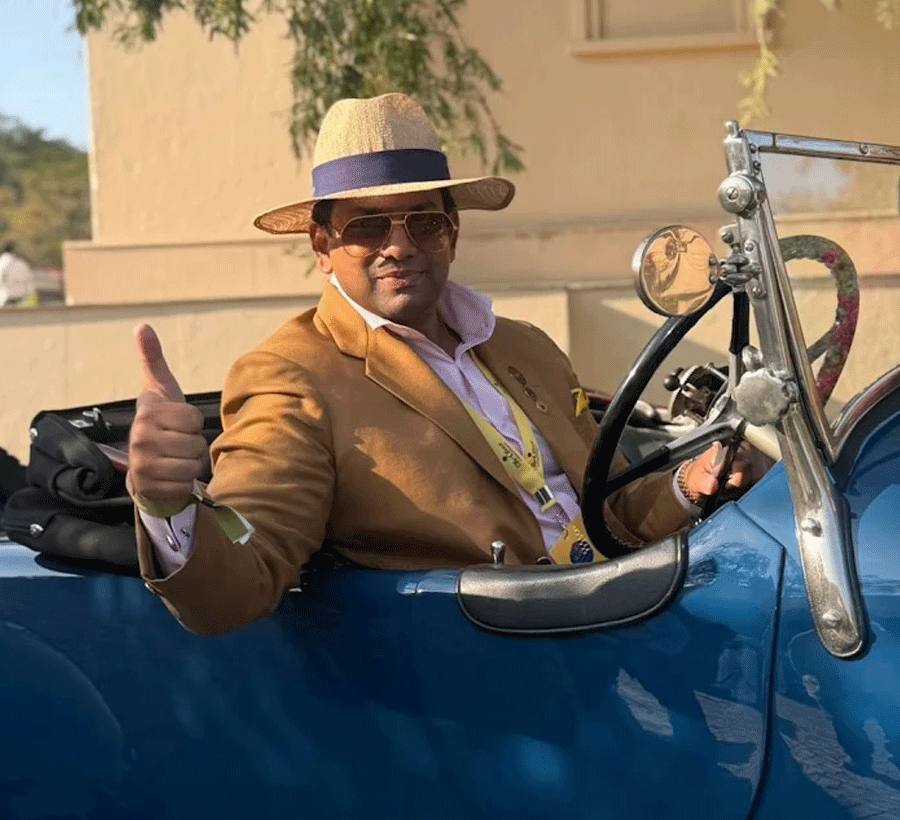
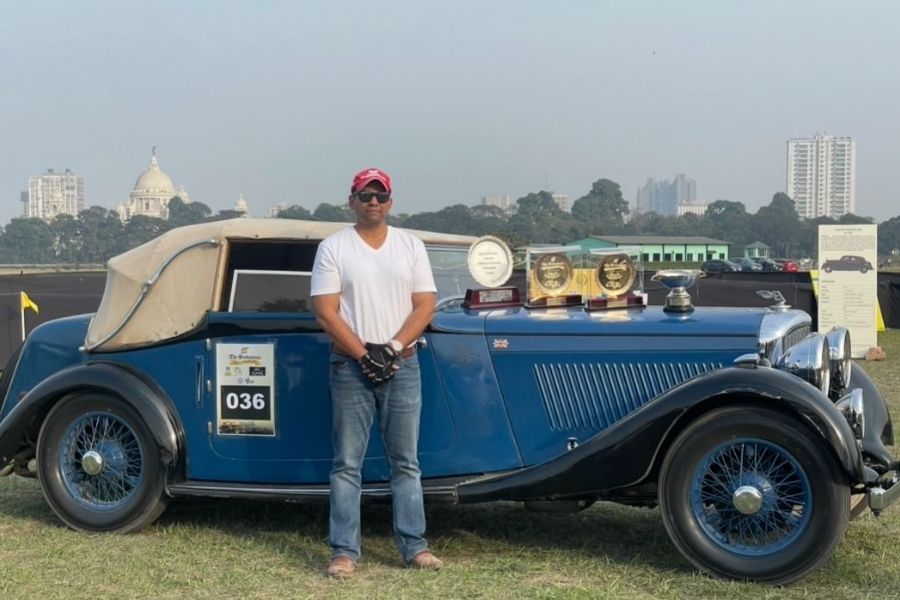
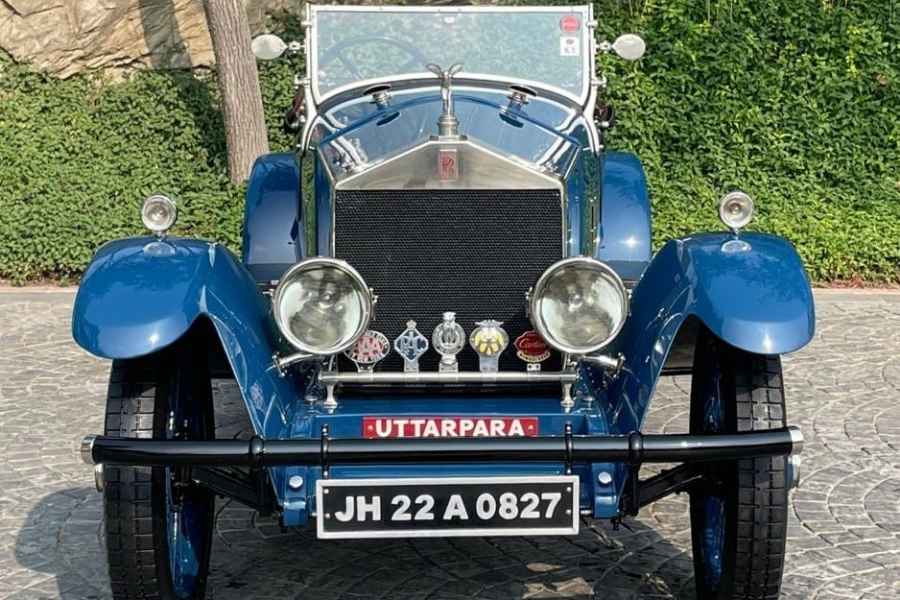
For the 2026 Oberoi Concours, under the Indian Coachbuilt category, Shrivardhan decided to return the car to its factory-correct Laguna blue. He studied the build sheet carefully, ensuring accuracy in colour, fittings and finish. The Shikar lamps were removed. Mechanical components were overhauled. Nickel plating was redone. Authentic Blockley tyres were fitted.
“With age, you become more sober,” he says. “Originality started to matter more than drama.”
When the Rolls rolled onto the concours lawns in blue once again, there was a ripple of recognition.
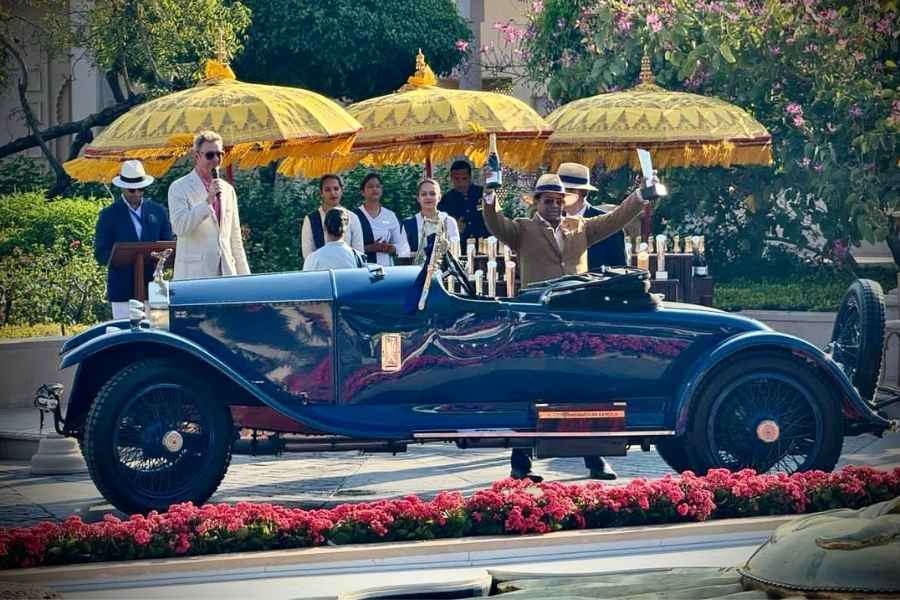
“All the old collectors know this as Shashi Babu’s Rolls,” Shrivardhan says. “When it entered in blue, people clapped. They said, ‘You have made your father proud’.”
The judges lingered. The car was awarded Best in Class.
“When I saw the ribbon on the windshield, I had tears in my eyes,” he says. “I called my mother, but I could not speak. It was only emotion.”
Fifty-six years after it entered the Kanoria household, the 1923 Rolls-Royce 20 HP stands restored once more in Laguna blue. It is the car that introduced a family to Rolls-Royces. The car that shaped a collector. The car that tested a son.
Above all, it is still, simply and unmistakably, the Blue Rolls.