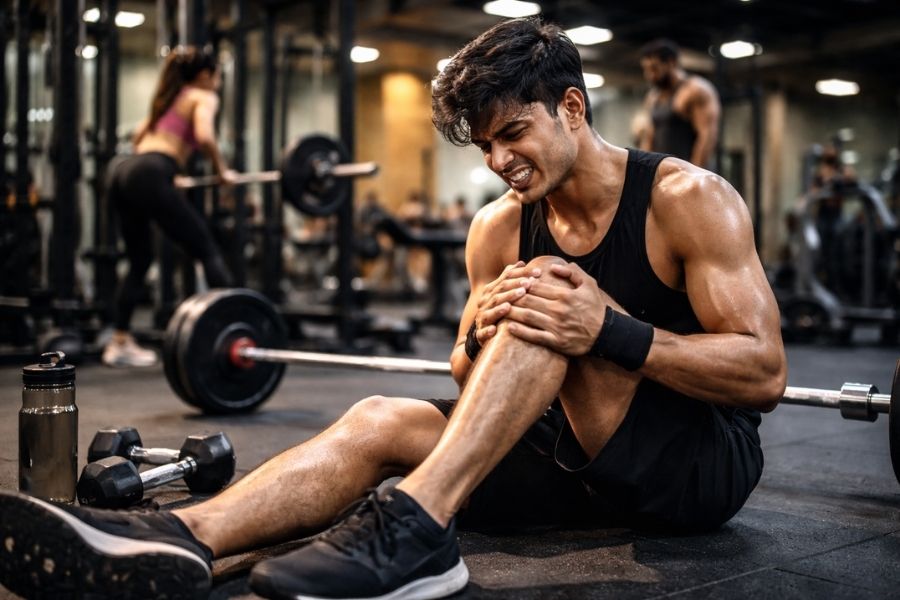
India’s fitness boom, once seen as a sign of healthier living, is now triggering a rise in injuries. Orthopaedic specialists report more gym-related cases among adults under 35, with hospitals seeing muscle tears, ligament damage and stress fractures once typical of older people or athletes.
Doctors link this to surging gym memberships and a growing push for quick results. Many are overtraining or working out without proper guidance.
“With the fitness culture rapidly growing among young Indians, we are also witnessing a sharp rise in gym-related injuries, many of which are preventable,” said Rakesh Rajput, HOD – Orthopaedics at CK Birla Hospitals, CMRI.
Major causes
- Overtraining is a major culprit. “The mindset of ‘more is better’ is leading to serious musculoskeletal problems,” said Rajput. Common issues include ligament tears, muscle strains, back problems and early joint wear. He also flagged “ego lifting” — attempting weights beyond one’s capacity — as a key risk, especially when combined with poor form.
- Social media is adding to the problem. “Many youngsters follow online workout trends without understanding their body’s limitations,” Rajput said.
- Lalit Modi, additional director – Orthopedics & Joint Replacement at CK Birla Hospitals, warned that unrealistic fitness standards are pushing people towards unsafe routines. “Skipping gradual progress can lead to overuse injuries and, in some cases, permanent damage,” he said.
- Overtraining does not just cause injuries. Persistent fatigue, poor performance and constant soreness are warning signs of inadequate recovery. Ignoring them can lead to chronic issues requiring long treatment and even surgery.
- Poor technique, skipping warm-ups and neglecting post-workout care further aggravate risk.
Precautions
- Recovery is as important as exercise. Adequate rest, warm-ups, hydration and gradual progression are essential, Rajput said.
- Modi stressed tailoring workouts to individual capacity, focusing on correct technique and allowing enough rest days.
- Stretching as well as mobility and strengthening exercises (like cat-cow, loaded beasts, lunges, and inchworms) can also reduce injury risk.
Bottom line
Fitness should be sustainable, not extreme. Listen to your body, train smart and seek guidance to avoid preventable injuries.