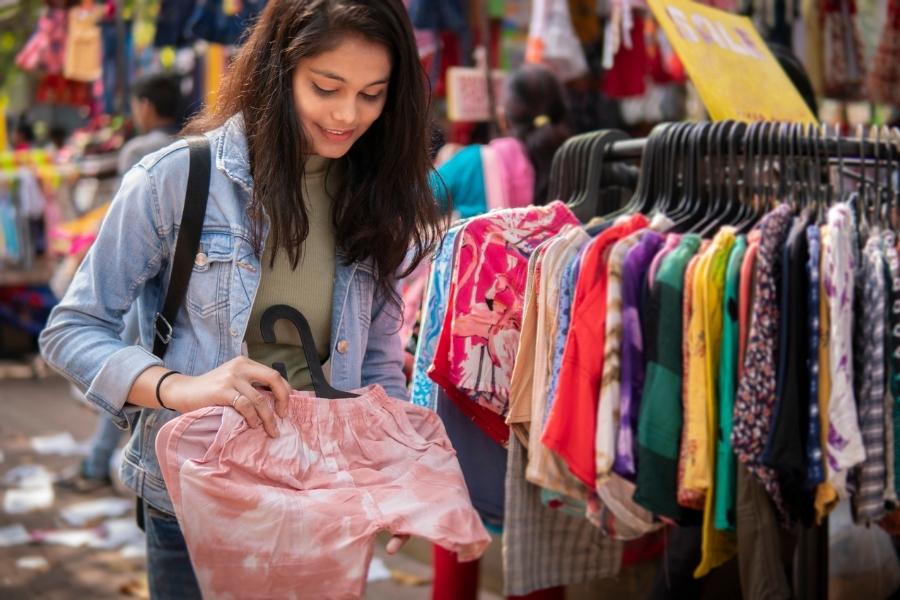
Unconventional natural materials such as mushroom leather (derived from the root structure of fungi), milk protein fabric (crafted from casein extracted from sour milk), pineapple fibre (made from the fibres of pineapple leaves) and coffee grounds (transformed into yarn through advanced recycling techniques) are rapidly gaining ground in the global market as sustainable fashion becomes a priority.
But is there a gap between trends and ground reality? National Award-winning textile designer Sunetra Lahiri is of the opinion that the gap is huge, and for now, unbreachable.
Speaking to My Kolkata on the sidelines of the second edition of Elemental at the Kolkata Centre for Creativity, Lahiri offered a candid take on why the idea of being “fully sustainable” often remains more idealistic than practical.
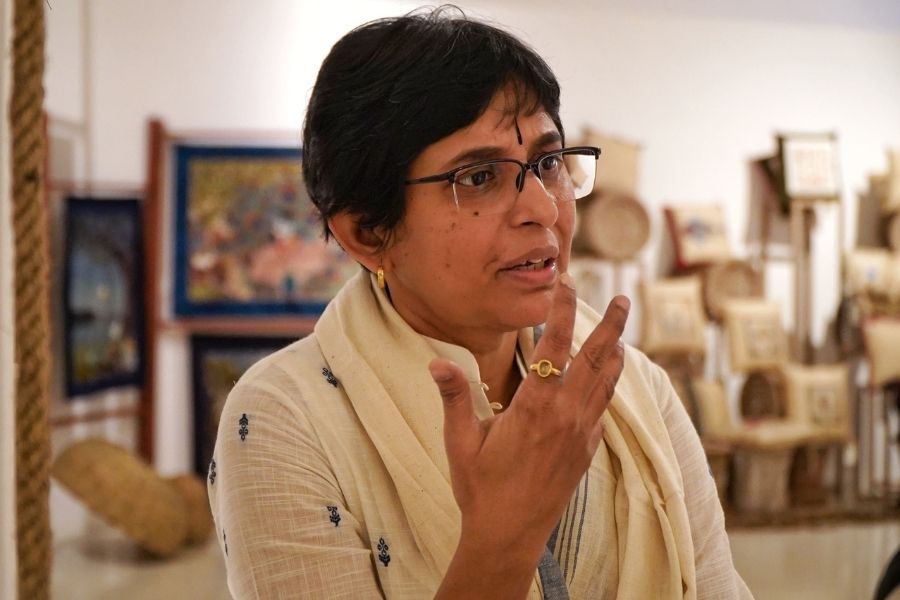
National Award-winning textile designer Sunetra Lahiri Soumyajit Dey
While unconventional materials such as milk fibre and mushroom leather are increasingly celebrated as eco-friendly alternatives, Lahiri pointed out that they come with serious limitations.
According to her, these fabrics are expensive, difficult to access and often lack durability. “It’s very nice to hear and talk about it, but very few people are making them. They may be natural and sustainable, but they are not easily available. They are very costly, and many of them are not durable enough. They don’t have a high yarn count or a tight weave pattern to make the fabric last. So, what is the point of spending so much if the work itself won’t last?” she said.
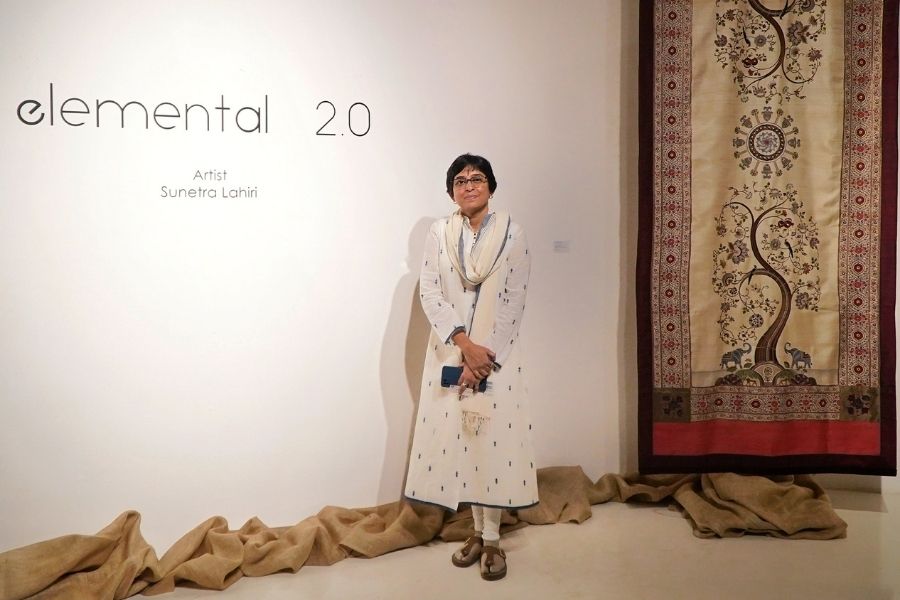
Lahiri unveiled the second edition of Elemental at the Kolkata Centre for Creativity, recently Soumyajit Dey
Lahiri said her own practice continues to rely heavily on traditional natural textiles such as kanjivaram, muga and tussar. Yet, she cannot avoid synthetic materials entirely. A major challenge lies in colour. Natural fibres and threads today offer a far narrower palette compared to synthetic ones, making them impractical for intricate embroidery work.
“In ancient India, embroidery was extremely rich, even without synthetic materials. But, somewhere along the way, we seem to have lost that knowledge. The natural threads available now simply do not have that vibrancy. The colour range is limited, so we are compelled to use synthetic threads (resham), and once you do that, you can no longer claim to be 100% sustainable,” she explained.
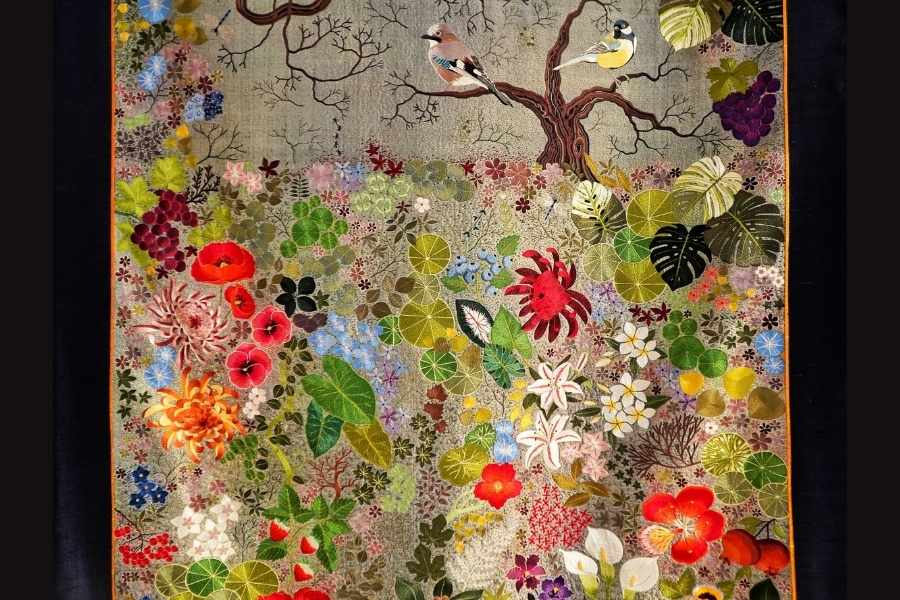
Lahiri’s works reflect her signature use of vivid colours and motifs drawn from nature and Indian mythology Soumyajit Dey
For Lahiri, this gap between a utopian situation and the actual reality highlights that sustainability is rarely absolute. Instead, she believes the focus should shift toward practical solutions such as upcycling and recycling to reduce waste. One such example at the exhibition was her patchwork kantha quilt crafted entirely from leftover fabric scraps.
The showcased works reflected her signature use of vivid colours and motifs drawn from nature and Indian mythology. Some of the pieces on display involved six to seven months of painstaking labour. “The shading, the use of colours, the minute details are very intricate. Such detailed work is bound to take months,” said artisan Ganesh Gayen, who has been working with Lahiri for over 15 years now.