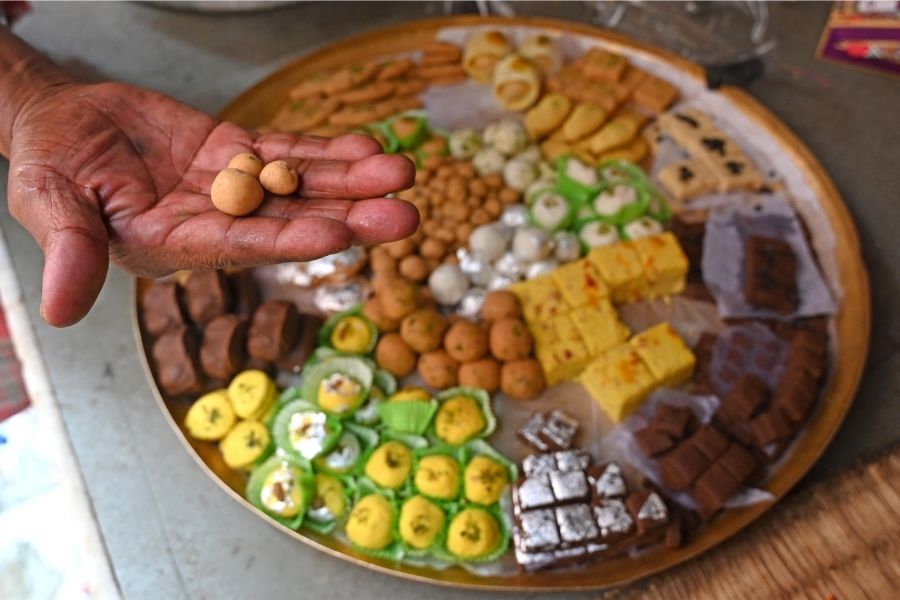
The queues at Chandannagar’s Surjya Kumar Modak on Grand Trunk Road are longer this season as people flock to get their hands on the aamer jolbhora alongside other iconic sweets. Filled with mango pulp that bursts out in the first bite, the sweet has found its place on reels across social media platforms.
My Kolkata drove down to the town to know the story behind the viral sensation that dates back more than 200 years. From the invention of Bengal’s original jolbhora to a sandesh that’s named by Rabindranath Tagore — here’s the story of a family legacy that continues to thrive.
The mishti that started it all
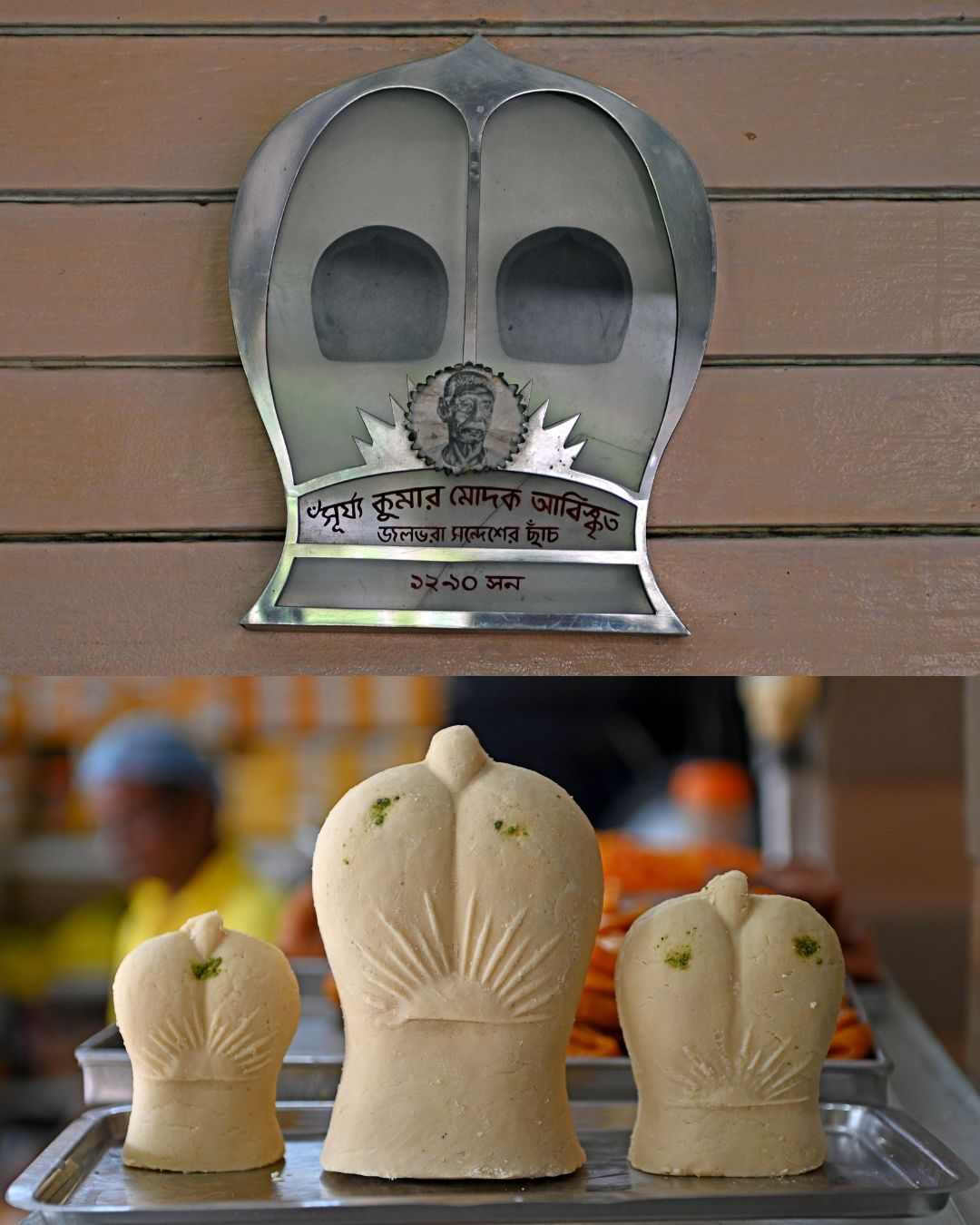
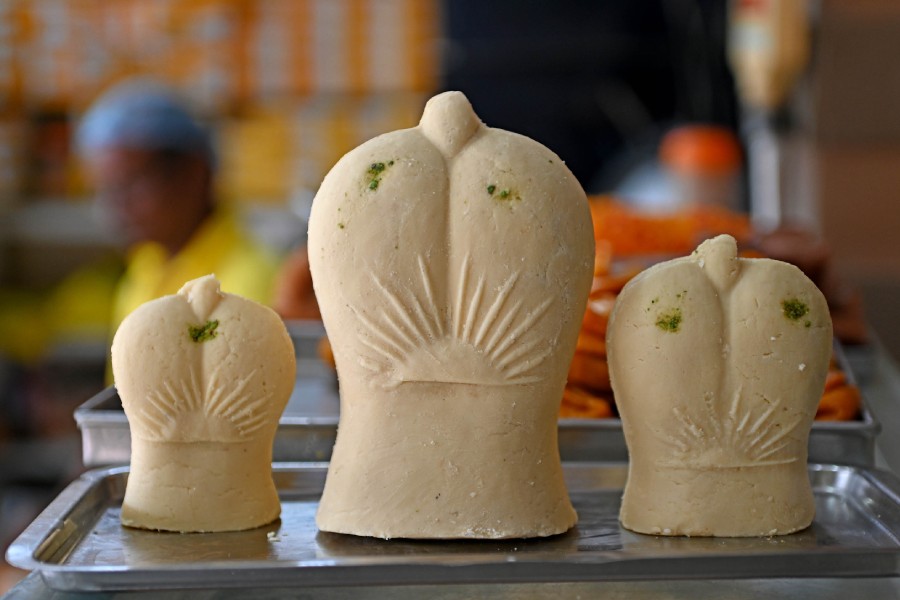
(Top) The mould that was used to make the first jolbhora sandesh and (below) three sizes of jolbhora available today at the shop
Long before the nolen gur and mango pulp jolbhora versions became popular, the original jolbhora contained a syrup known as ‘dolo’. This was made from sugar prepared by refining jaggery.
According to the fourth-generation owner, Saibal Kumar Modak, the sweet was born out of a mischievous request from the wife of Telinipara’s zamindar.
“In the year 1290 of the Bengali calendar, Surjya Kumar Modak received a summons from the wife of the landlord of Telinipara. She wanted to trick her newlywed daughter’s husband, her son-in-law, by feeding him a new kind of sweet,” said Modak.
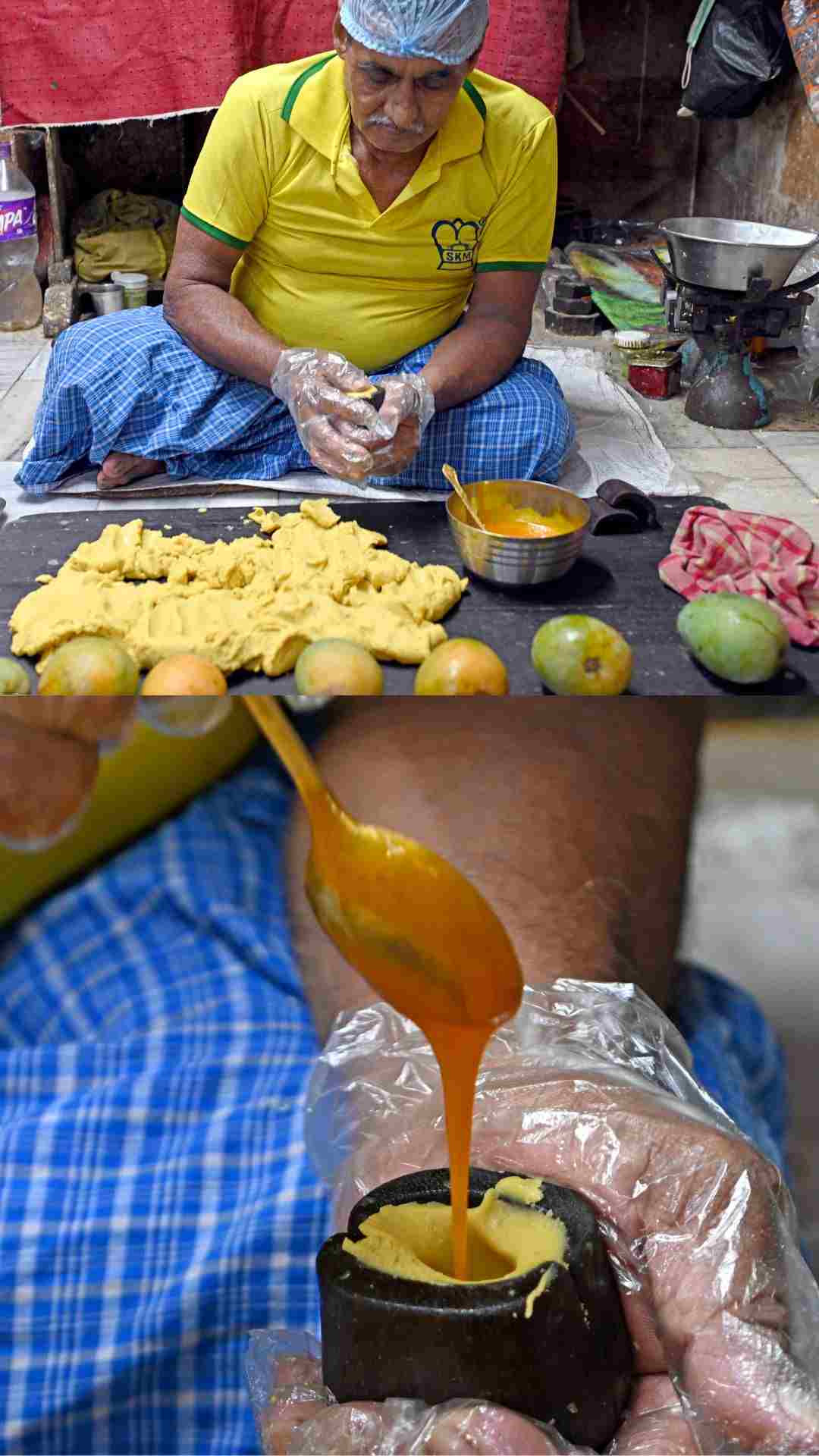
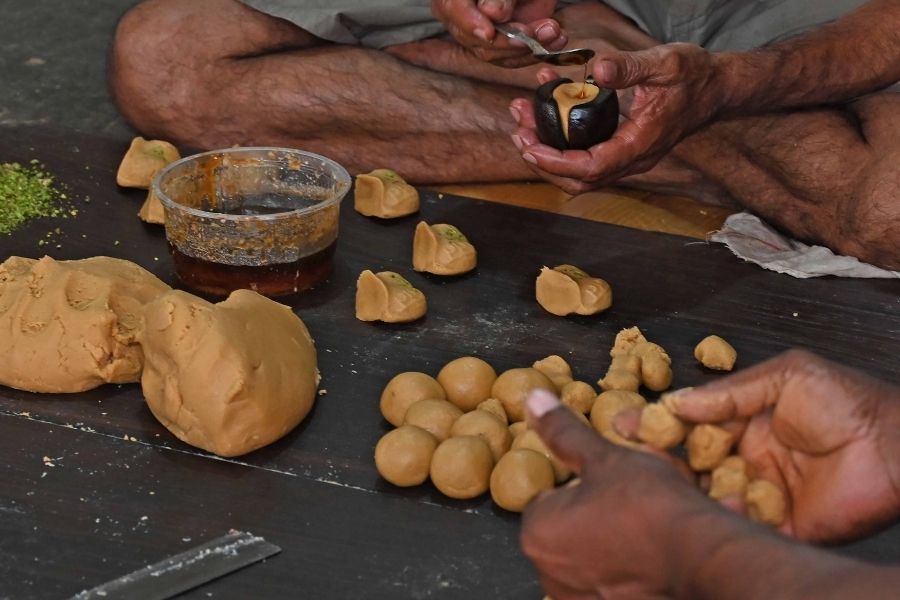
The aamer jolbhora is made from preservative-free, natural Alphonso mango pulp
After much brainstorming and experimentation, Surjya Modak and his son Siddheswar created a sandesh shaped like a talshash, or ice-apple, and filled it with dolo syrup infused with rose essence.
“As soon as the new son-in-law took a bite, the syrup inside oozed out and soaked his silk panjabi. The women of the household burst into laughter. The son-in-law had been successfully tricked,” narrated Modak.
What began as a practical joke soon became Bengal’s favourite sweet tradition. “Right from its inception, the Jolbhora Talshash sandesh reached the pinnacle of fame and later became widely known simply as the Jolbhora,” he said.
A favourite of Rabindranath Tagore
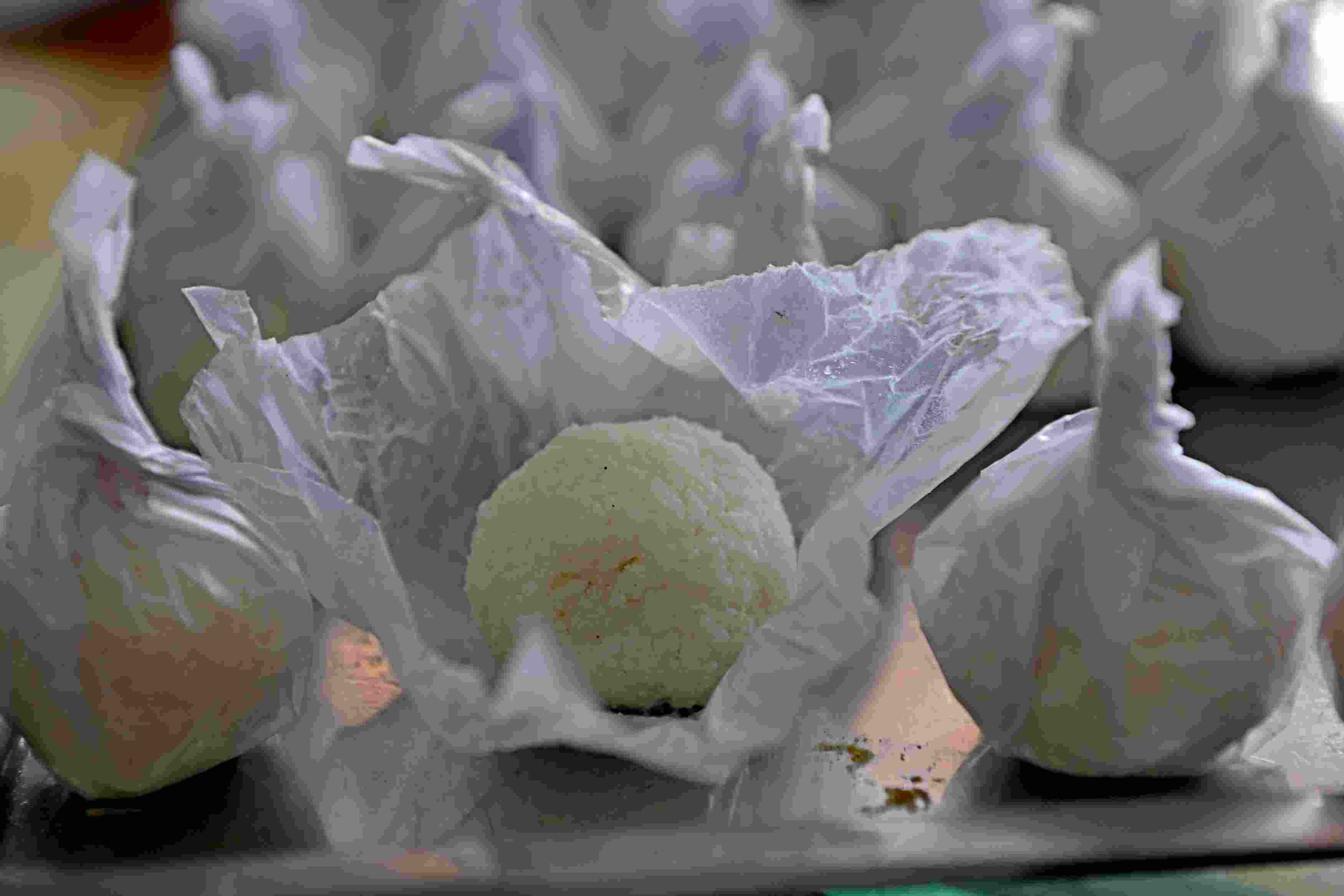
The shop also makes a sweet called motichoor sandesh, named by Tagore
The shop’s history is also intertwined with that of Chandannagar and one of Bengal’s greatest literary figures.
“The bajra of Rabindranath Tagore would often dock at the ghat of Patal Bari in Chandannagar. Orders would immediately be placed for his favourite sweets,” said Modak.
Among those favourites were jalbhora, motichoor sandesh and khirpuli sandesh, all personally delivered by Surjya Modak.
“It is said that when Kabiguru first tasted the motichoor sandesh, he remarked, ‘This is indeed a crush of pearls.’ Since then, the sweet became known as motichoor,” said Modak.
Preserving a century-old legacy
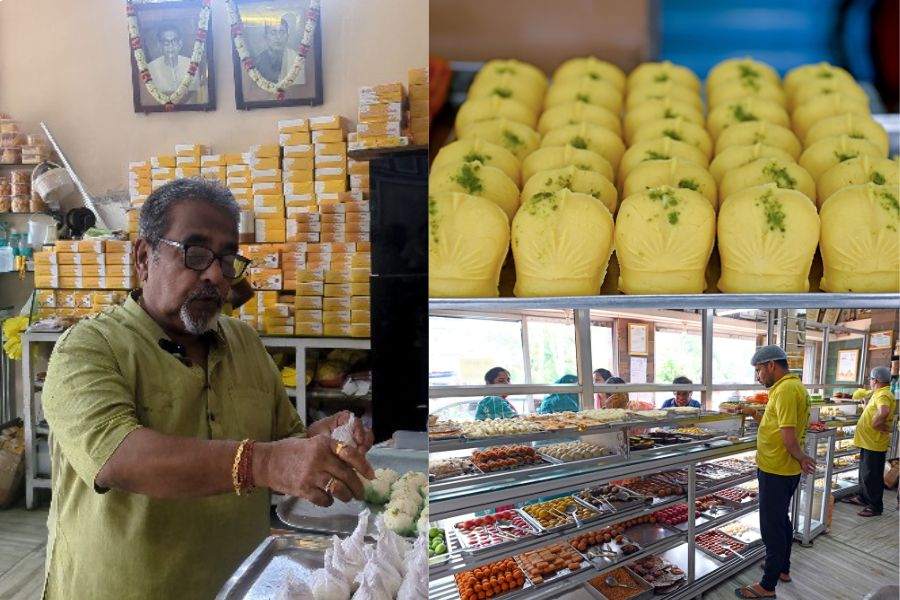
Fourth-generation owner Saibal Kumar Modak and his two daughters look after the shop in Chandannagar, along with an outlet in Kolkata’s Mishti Hub in New Town
Besides being a mishti maker, Surjya Kumar Modak was a lover of literature and poetry. He authored a panchali titled Gita-Govinda, a manuscript that is still preserved at the French Museum in Chandannagar.
Today, Saibal Kumar Modak and his two daughters continue to prepare jolbhora sandesh, motichoor sandesh, khirpuli sandesh and other iconic sweets using traditional methods passed down through generations.