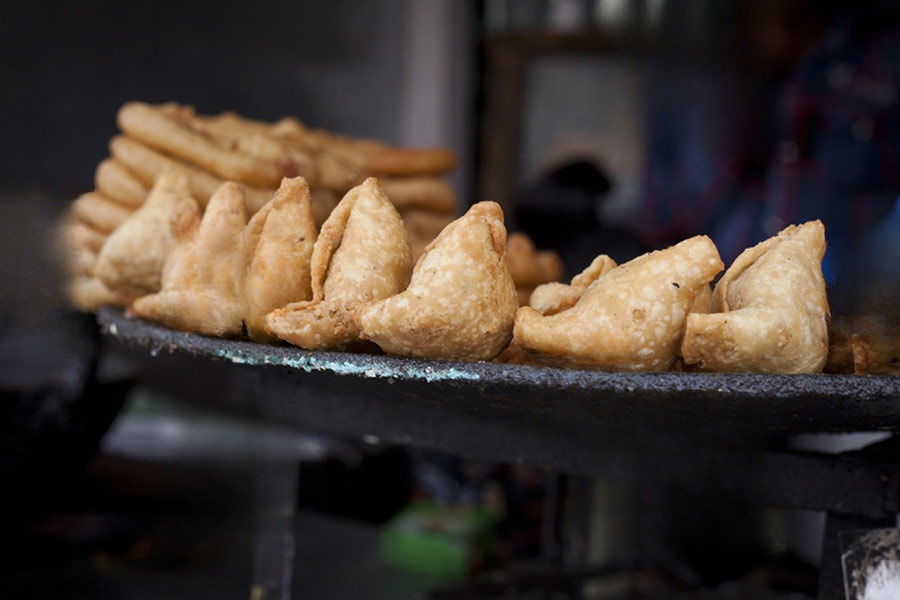
Singara isn’t originally Bengali — yes, really. And no, this isn’t rage bait. This beloved snack travelled to India along Central Asian trade routes.
“It definitely came through the Central Asian route and entered India during the Sultanate period — with the Afghans, Turks, and later the Mughals and Persian influences shaping our food,” said Pritha Sen, food historian and culinary consultant.
The singara wasn’t always vegetarian. When it first arrived in India from Central Asia, it was known as samsa.
Food researcher Dipankar Dasgupta explained: “Before the 10th century, Central Asian nomads and traders relied on these savoury pastries, typically filled with minced lamb, beef, and onions, as a practical, portable meal. Unlike today’s fried versions, these original samsas were baked in clay tandoors, creating a crisp, layered crust with a juicy interior.”
As the dish evolved in India, the samsa transformed into a conical, meat-filled pastry called lukhmi. “They’re still available in Hyderabad and were once part of Mughal kitchens,” Sen noted.
In Goa, vendors still sell meat-filled samsas — not samosas or singaras — preserving a version closer to the original.
So, why is it called singara in Bengal?
Soumyajit Dey
Short answer: Food travels.
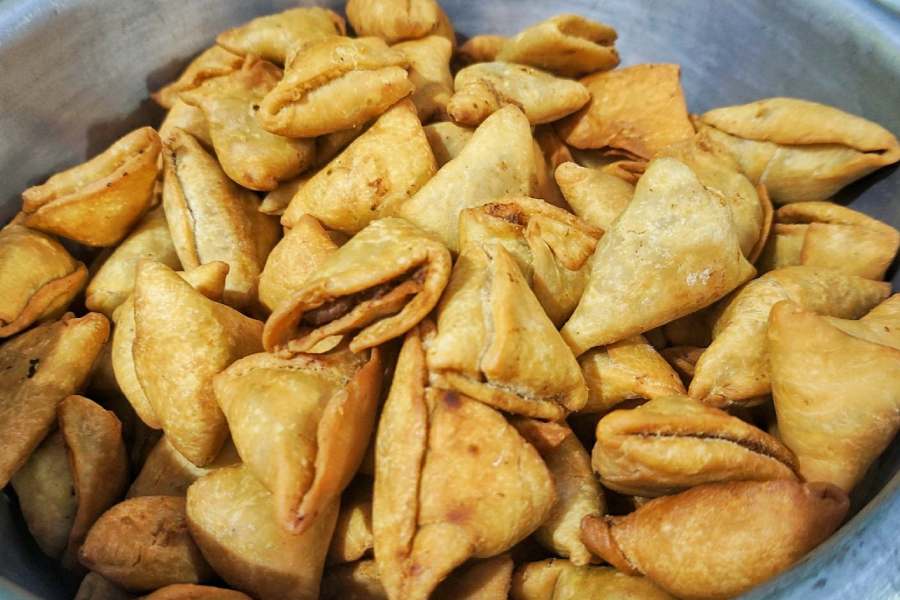
According to Sen, the name itself hints at non-Bengali roots. It was likely introduced to Bengal by migrants from Bihar and Varanasi. The word singara may have been derived from singhara — the Hindi term for water chestnut — because of the snack’s conical shape, resembling the aquatic fruit.
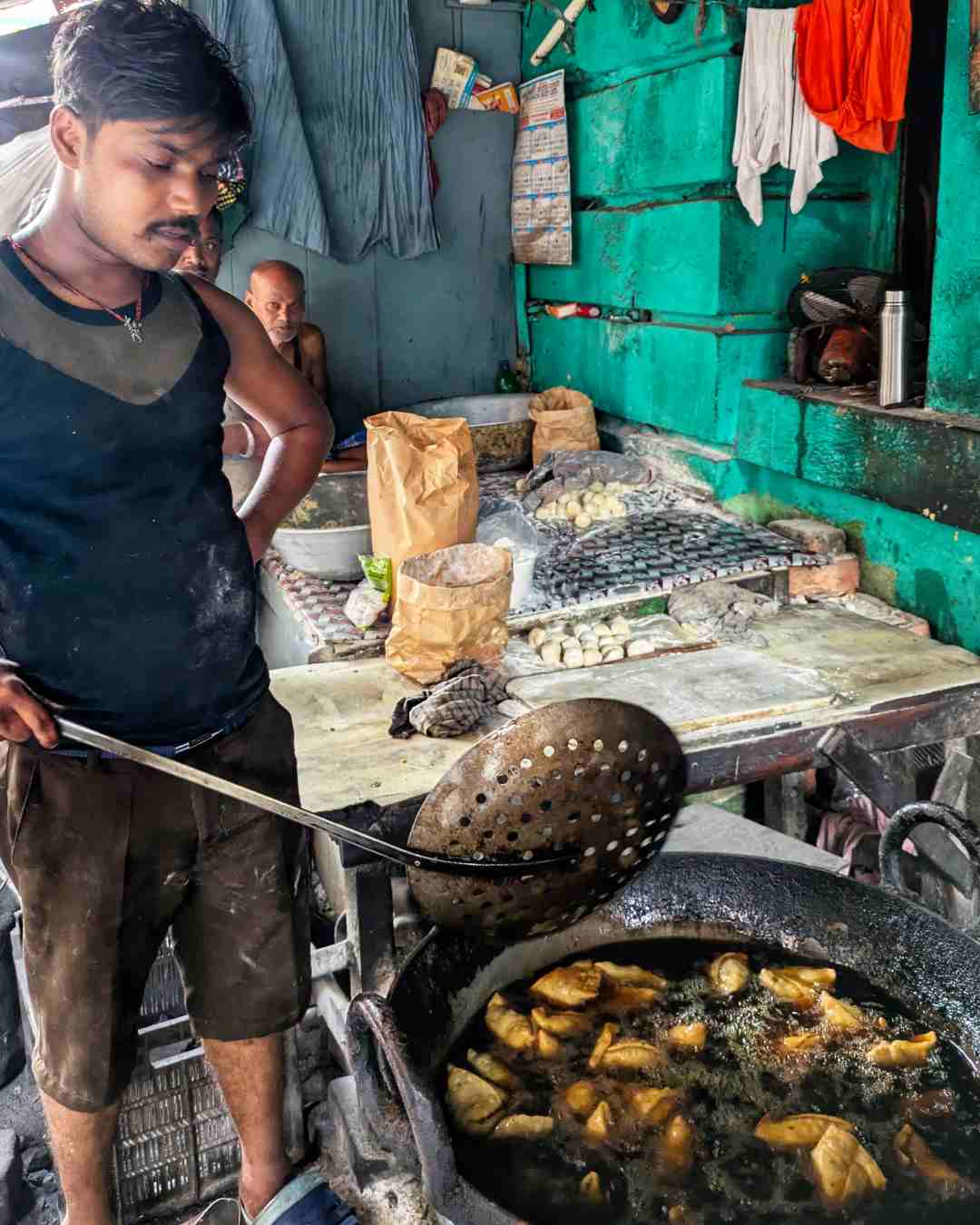
The transformation into the potato-filled snack we know today came later. The Portuguese introduced potatoes to Bengal and the British expanded their cultivation.
“Street food has always adapted to be inclusive,” Sen explained. “Once potatoes became available, they were used to create a vegetarian version of the samosa, which then evolved into the singara in Bengal.”
Amit Datta
Originally, singara was a small, two-and-a-half-bite evening snack — crisp, flaky, and notably grease-free. It was typically eaten with muri, never with chutney or kasundi, as those would overpower its flavour. That’s a far cry from the larger, oilier versions found in many sweet shops today.
Sen also points to another possible precursor — jhalpuriya, a Bengali snack made with a filling of coconut, poppy seeds, garlic, green chillies and ginger, encased in a paste of ground motor or chholar dal and then fried. “This was before the use of any kind of flour became popular in Bengal. So, jhalpuriya could have been a precursor of singara in Bengal,” she noted.
Dasgupta noted that the singara also goes back in history to an ancient city located in northern Mesopotamia (present-day Iraq) of the same name. “The city gained prominence as a military base during the Roman Empire. The remnants of the city still bear its historical significance,” he added.
What sets a singara apart from a samosa?
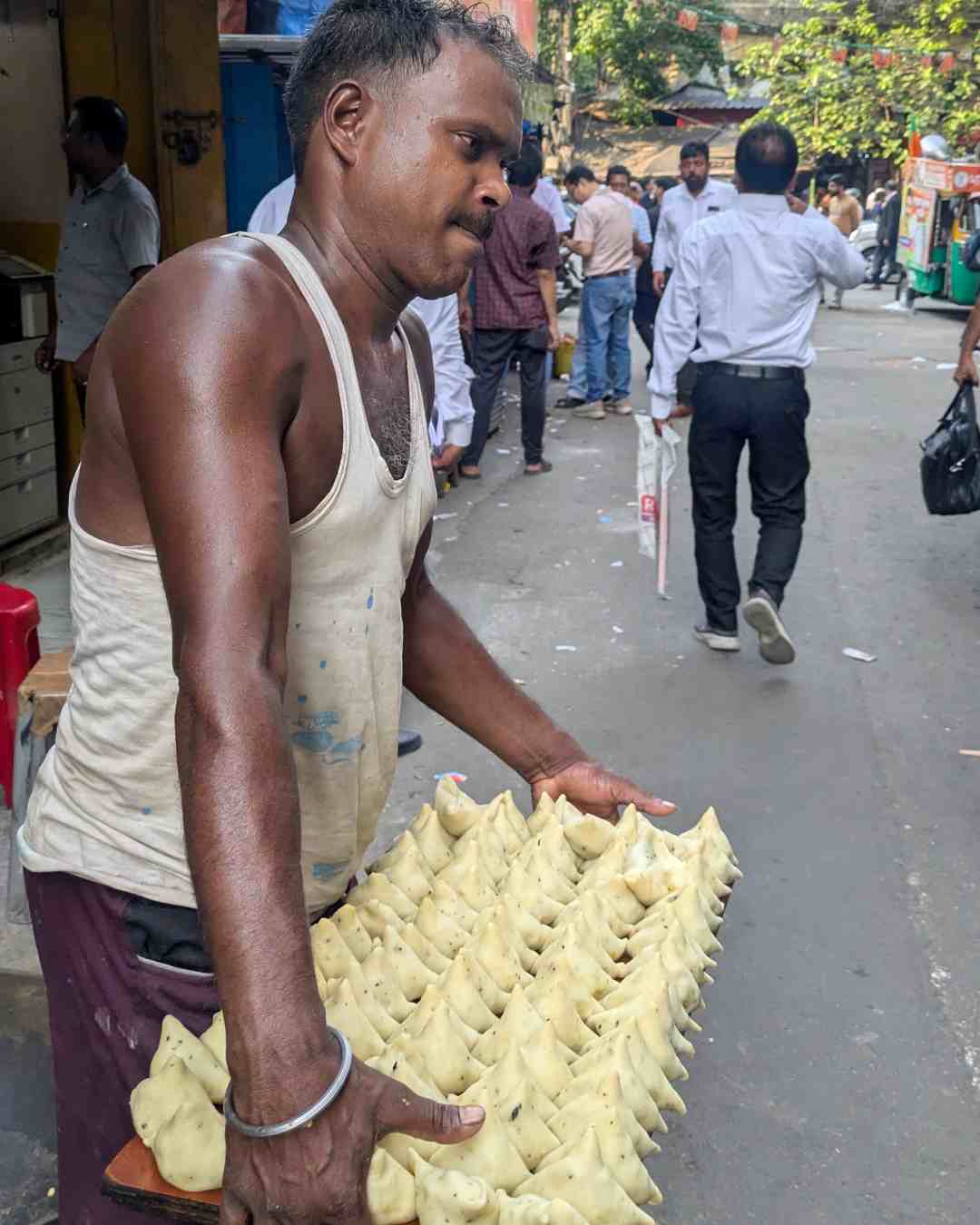
Amit Datta
Speaking on the differences between a singara and a samosa, Sen said that in Bengal singaras typically use cubed potatoes, often with peanuts, raisins, and seasonal vegetables like cauliflower and green peas.
Winter versions may even include mutton. North Indian samosas, by contrast, usually feature mashed potatoes and are served with a variety of chutneys — something traditionally absent in Bengali singara culture.
What about the other variations?
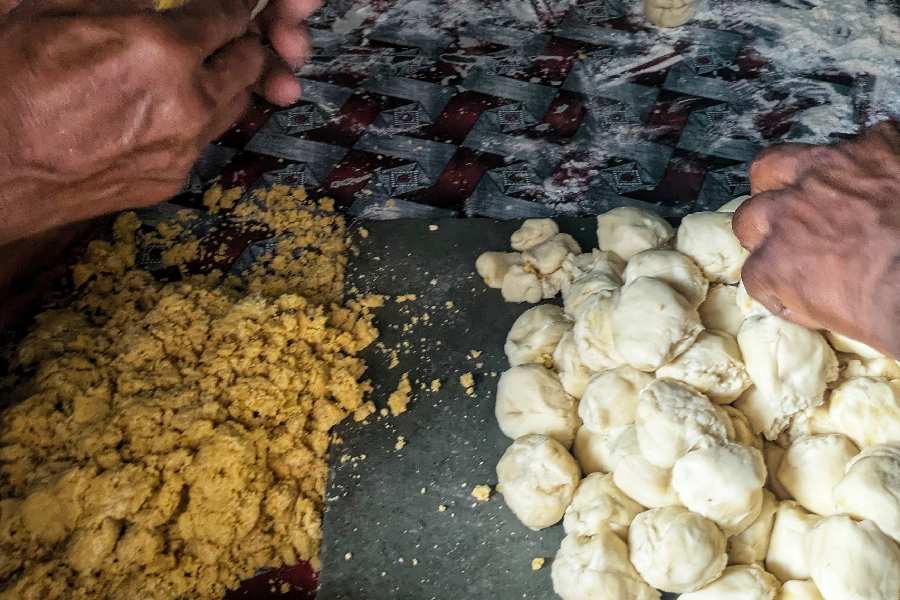
Amit Datta
As for variations like the dry Gujarati samosa or the popular “Chinese singara” stuffed with noodles — those are products of adaptation.
“As a result of their climate, the Gujaratis did not get many vegetables. So, they just converted a kachori filling into a samosa filling,” Sen explained. “And it was also something that they could travel with, because they were traders mainly, and they travelled for long distances. So this dryer variety of samosa would not spoil and would last them longer.”
Chinese samosas, with a filling of noodles, now available at different confectionery shops, are a result of evolution, innovation and improvisation, she said.