Kristen Lucek was in her late 30s when she began experiencing pain in her hip that felt like a knife whenever she bent over. It got worse, and within two years, Lucek, a gym owner in San Diego, US, couldn’t pick up a kettlebell while coaching. She became depressed and gained weight.
She eventually got an MRI that showed a torn labrum, osteoarthritis and bone spurs, so she had her hip replaced early the next year, a few months before she turned 40.
Lucek, who is now 43, said the surgery completely resolved her pain. “My hip does not hurt anymore,” she said. “I feel so good in my body, and it’s amazing.” She now competes in Hyrox races and recently set a personal record for hip thrust — three repetitions at 320 pounds, more than 150 pounds heavier than what she could do before her surgery.
Knee and hip replacements are becoming more common as the population ages. And more people are now getting these surgeries earlier, which means the joints must be built to last.
Dr Matthew Abdel, surgeon-in-chief for Mayo Clinic in the US and a professor of orthopaedic surgery, said that 10 or 15 years ago he would have been apprehensive about performing a knee replacement on someone younger than 55. “Now I don’t think twice about it,” he said.
Fortunately, the technology and surgery techniques have improved enough that many patients can return to playing tennis, lifting weights, surfing and even running, Dr Abdel said. If you are considering a joint replacement, there are ways to help a new hip or knee last as long as possible once you’re able to resume the activities you enjoy.
Many people are now pushing their new joints harder than those in previous generations. This is in part because doctors began using a new type of plastic for hip and knee replacements in the early 2000s that lasts significantly longer, said Dr Eric Cohen, an orthopaedic surgeon and the programme director of the Total Joint Center at Brown University Health, US.
These new knee and hip replacements now grow into the bone, which often means the implant won’t have to be replaced and can withstand more impact than older implants could, Dr Abdel said.
At the same time, surgeons have made advancements in minimally invasive techniques, robotic-assisted surgery and 3D imaging, all of which have contributed to long-term success. For all these reasons, many doctors have adjusted their recommendations for post-surgery activity, Dr Abdel said.
While today’s artificial joints are impressive, they aren’t indestructible. Here are a few things you can do to ensure yours lasts as long as possible.
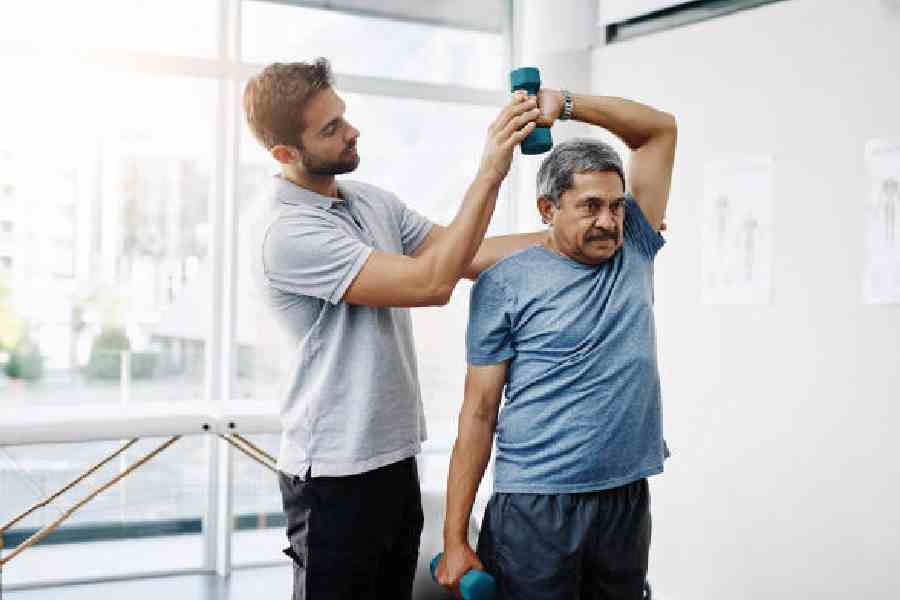
- Ensure you are strong before surgery. If you can train without pain, it’s crucial to build strength as early as possible. For knee replacements, focus on strengthening your quadriceps with exercises such as straight leg raises, mini-squats, sit-to-stands, step-ups and stationary biking, Dr David William Fabi, an orthopaedic surgeon and joint replacement specialist with San Diego Orthopaedic Associates Medical Group in the US, wrote in an email.
Hip replacement patients should focus on strengthening the glutes, hip abductors and hamstrings, with exercises such as bridges, clamshells, side leg raises and resistance band walking, Dr Fabi said.
- Gradually return to exercise. For both hip and knee replacements, doctors have begun to scale back their list of forbidden activities, especially for younger, healthy patients.
“What I tell my patients is, when I see you in three months, if things are going well, you have no limitations,” Dr Abdel said. Keep in mind, though, that your post-surgery activity has a lot to do with how active you were before the joint replacement. For most people, the first stage of recovery from the surgery takes around four to six weeks. After that, slowly build back your strength and endurance, focusing on low impact and light weights.
- Be cautious about high-impact exercise. In the past, doctors advised patients to avoid running, martial arts and contact sports after a joint replacement, even after recovery. Now, with younger patients and better-quality artificial joints, the rules have shifted a little, Dr Abdel said. If you ran or played tennis before your surgery, that isn’t necessarily off the table.
Dr Joseph Mitchell, assistant professor of orthopaedic surgery at the University of California San Diego, US, said he had seen patients with new hips compete in karate tournaments. While most people aren’t looking to do such extreme activities, Dr Mitchell said the point of today’s joint replacement surgeries is to let you get back to doing what you enjoy, not to end up with a list of things you can’t do.
However, in the long term, it’s always safer to focus on low-impact activities such as biking, swimming and strength training, Dr Abdel said. “If you peel your car out at every stop sign, even with the best tyres, they’ll wear out sooner,” he added. “I want you to have a normal life, but do be smart about it.”