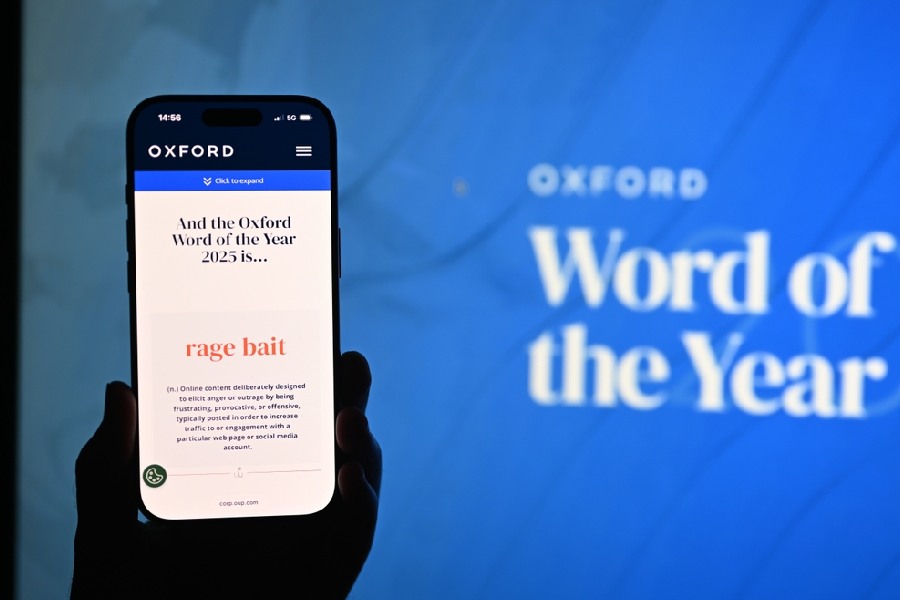
2025 was the year when the internet wrote the dictionary. From TikTok trends to AI tools, from foodie slang to social media debates, new words didn’t just appear, they took over feeds, captions, comments, and group chats.
Here’s a look at the words that defined the year, along with examples of how people used them.
Rage bait
Oxford University Press crowned “rage bait” as Word of the Year, and social media users saw it coming. What it means: Content deliberately made to make people angry so they comment, share and fight in the replies.
How people used it: “This post saying Kolkata has no good food is obvious rage bait.”
Vibe coding
Collins Dictionary’s pick summed up how AI changed tech culture. What it means: Coding with the help of AI, guided more by instinct than strict technical rules.
How people used it: “Deadlines are close, so I’m vibe coding and praying.”
6-7
Dictionary.com’s Word of the Year looked confusing until TikTok explained it. What it means: Although the term doesn’t have a clear meaning, some suggest it conveys “so-so” or “maybe this, maybe that.”
"That new song is okay, it's kinda 67."
Broligarchy
Cambridge Dictionary added this one, and it made headlines. What it means: A power structure dominated by elite men, often in tech, business or politics.
How people used it: “Another panel, all men - peak broligarchy.”
Dumbphone
What it means: A phone without apps or internet, used for calls and texts only.
How people used it: “Thinking of switching to a dumbphone because my screen time is scary.”
Ghost kitchen
Food apps made this term unavoidable. What it means: A kitchen that only cooks for delivery, with no dine-in space.
How people used it: “This brand doesn’t exist offline - it’s a ghost kitchen.”
Tradwife
Another Cambridge Dictionary entry that sparked debate. What it means: Women promoting traditional homemaking roles, often through curated social media content.
How people used it: “That video romanticising housework felt very tradwife-coded.”
Slop
Merriam-Webster captured internet frustration with this one. What it means: Low-effort, AI-generated content that floods timelines.
How people used it: “You can tell this article is slop - no original thought.”
Mewing
What it means: A jawline exercise trend focused on tongue posture.
How people used it:
“He’s been mewing for six months and won’t stop talking about it.”
Gyatt
TikTok reactions made this unavoidable. What it means: An exclamation reacting to an attractive backside.
How people used it: “He saw the outfit and just said ‘gyatt’.”
Bussin’
Food content kept this word alive. What it means: Extremely good, especially food.
How people used it: “Didn’t expect airport food to be this bussin’.”
Clanker
AI debates gave birth to this insult. What it means: A clumsy AI bot or robotic interaction online.
How people used it: “Too many clankers arguing in the comments.”