 |
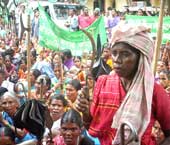
| Tribals in the state want recognition of the age-old system of self-rule. Picture by Hardeep Singh |
Tribals of the state have demanded more autonomy from the government in affairs related to their well-being.
They also want the Indian government to sign the International Labour Organisation’s 169th convention declaration. The demands started gaining momentum with more than 50 tribal organisations coming together to submit a memorandum to the state and the Central government in this connection.
Tribal bodies are unhappy with the Centre’s stance of “Indian tribals are not indigenous” at the UNO. They believe that the Centre should support the “permanent forum for indigenous issues” set up by the UNO.
Signatories to the memorandum include the Jharkhand Indigenous People's Front (JIPF), Adivasi Chatra Sangh, Chotanagpur Munda Chatra Sangh, Adivasi Sanskritik Kala Kendra, Adivasi Bhasha Parishad, Jharkhandi Bhasha-Sahitya Parishad, Aadim Jaati Shaikshik evam Sanskritik Sangh, Adivasi Khadiya Mahasabha and Jharkhand Sarna Samity.
The memorandum demanded that the yardstick of National Tribal Policy should not be below the parameters of the ILO’s 169th convention and that the Centre should not only sign the declaration of the convention, but should also recognise the declaration on the rights of tribes and tribals.
The memorandum also underscores the demand for more autonomy in their affairs and changes in the draft National Tribal Policy prepared by the Union ministry of tribal affairs.
The tribal bodies have also demanded recognition of the traditional social administration system of the tribal society. Rejecting the formula enacted in the draft policy in connection with displacement, rehabilitation and acquisition of tribal land, tribal outfits have demanded that the areas with more than 50 per cent tribal population be brought under the “Samata judgment” clause.
They also maintained that even in non-scheduled areas, where tribal population is 20 per cent, the same criteria be enforced.
Other major demands listed out in the memorandum includes recognition of the age-old system of tribal self-rule like the manki-paadha, manjhi-pargnait and mahto-munda system of governance. “Tribals elect their chiefs or heads through these systems. We want the government to recognise this election system and the pradhaans, mundas, manjhis and mahatos who have been elected thereof. This form of self-rule was recognised even during the British regime. We too have provisions under the law like the Wilkinson’s Rule. The system, however, is not being given due respect and recognition by the respective governments,” said JIPF spokesperson Shiv Shankar Oraon.
The tribal organisations have also demanded that the Centre and the state government provide financial aid to such self-rule bodies in tribal areas to make them stronger.
They also sought inclusion of traditional form of medicine and treatment practised by the tribal society in government health centres.
The resolution favoured a more active role of the Tribal Advisory Council, constituted by the state government, and demanded that seeking opinion of the council be made mandatory in all matters related to tribals.
They, however, maintained that the council would not trespass into the jurisdiction of tribal self-rule bodies.
Ban on acquisition of any tribal land earmarked for religious or academic purposes by the government also figures on the list of demands.
The resolution has pointed out that since Sarna religion is associated with land and nature and is different from other religions like Hinduism, Islam and Christianity, care should be taken while touching tribal land.
Salman Ravi