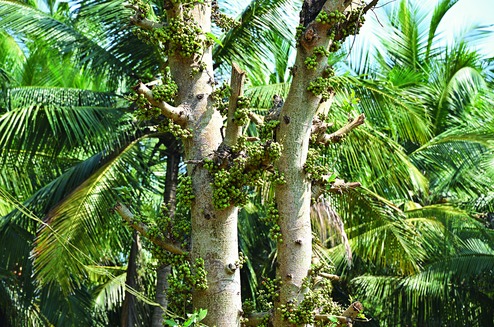

June 30: Uttar Pradesh chief minister Yogi Adityanath has ordered the trimming of the "inauspicious gular (popularly known as cluster fig) trees" along the routes to be taken by Shiva devotees while fetching water from the Ganga in the Shrawan month beginning in 10 days.
The decision was taken at a meeting that reviewed preparations for the kanwar yatra (an annual pilgrimage by Shiva devotees known as kanwariyas) and was presided over for the first time ever in the state by a chief minister. Earlier, chief secretaries used to head such meetings.
Adityanath passed several orders to ensure a "comfortable journey" for the kanwariyas. The directive to trim the "inauspicious" trees has drawn charges of state-sponsored promotion of superstition.
" Gular adi jaese kanwariyon dwara apavitra mane jane pedon ki chhantai tatha mishrit jansankhya wale kshetron me CCTV camera ki wyawastha ke nirdesh bhi adhikariyon ko diye hain (Officers have been asked to trim cluster fig trees, which are considered inauspicious by the kanwariyas, and install CCTV cameras in the areas of mixed population)," a media statement issued by the Uttar Pradesh information department said.
Adityanath has also asked the officials to ensure that Bollywood numbers and lewd and provocative songs are not belted out during the yatra. Permission will be granted to sing only bhajans but it is not clear how this will be monitored along the multiple routes the devotees take.
Gular, in spite of its medicinal values, is considered inauspicious by many followers of several religions.
"Yogi Adityanath comes from eastern Uttar Pradesh, which is the hub of all kinds of superstitions. He is now institutionalising these superstitions," said veteran Hindi journalist Mrinal Pande.
Botanical folklorist K.D. Upadhyaya had written in Indian Botanical Folklore: "Its mere shadow is enough to deprive a person of all his piety and virtues. Hence religious men and women pointedly avoid coming near it."
State government officials said they were given to understand that the kanwariyas do not like the shadow of the tree to fall on them. Hence, the pruning has been ordered.
If on the one end the gular is considered inauspicious and a tree of gloom and sorrow that should not be planted near a house, the juice from its stem is called "hem-dugdha" in Sanskrit because of its medicinal value. Two other laudatory references to the gular can be found in Hindu mythology, according to Upadhyaya. The seat of God Vivaswan, worshipped at the end of the soma sacrifice, is made of its wood; and lawgiver Manu ordained that the staff used by the Vaishya student at his thread ceremony should be made of gular wood.
In eastern Uttar Pradesh and Bihar, a belief exists that if the flower of the gular is put in a vessel of cooked food or in the storehouse, the container will never be empty.