|
Behrampore, July 21: This poll season will witness its first triangular fight tomorrow when Murshidabad’s 39 lakh-odd voters signal how far Mamata Banerjee has progressed in her ambition of decimating the Congress and capturing the entire anti-Left space in Bengal.
The first three phases of this panchayat election saw straight contests between the Left and Trinamul in nine south Bengal districts. But Monday’s battle in Murshidabad will hold significance for all the three major parties in the state.
The Left will be desperate to hold on to the zilla parishad, which it won in 2008 by the slender margin of one seat. A defeat here will be seen as a further sign of erosion in its support base.
The Congress is keen to wrest control of the district, a traditional stronghold, because a victory can help revive the party’s relevance in Bengal ahead of the 2014 Lok Sabha polls.
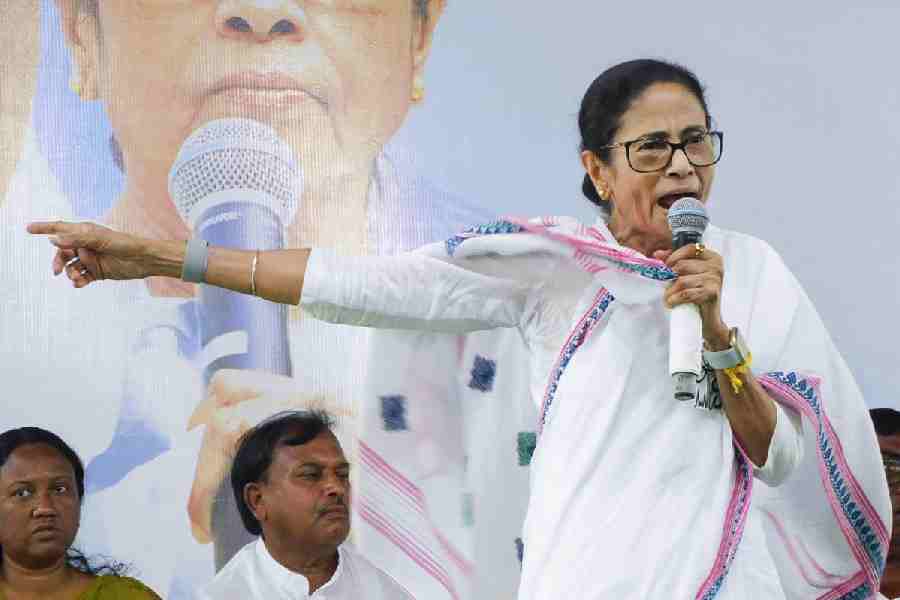
Trinamul may not harbour high hopes of winning the zilla parishad but wants to improve its performance to boost Mamata’s chances of becoming the sole anti-Left voice in Bengal while dealing a blow to one of her chief critics, Congress Union minister Adhir Chowdhury.
“Murshidabad is unique among the state’s districts. Trinamul and the CPM are colluding here to harm the Congress,” Chowdhury said in the party office in Behrampore, around 200km from Calcutta.
“Our supporters are under attack because the administration is helping the ruling party, but that won’t affect our fortunes. We are confident of wresting control of the zilla parishad.”
The junior railway minister, the face of the Congress in Murshidabad, has been criss-crossing the district for more than a month, attending six to eight meetings a day, as he knows that Trinamul is primarily targeting the Congress vote bank.
“Shivaji used to be the southern scar of Aurangzeb while I am Mamata’s scar in what she considers north Bengal. She is desperate to deal a blow to the Congress to settle scores with me,” Chowdhury, “Captain” to his supporters, added.
Apart from Mamata, senior Trinamul leaders such as party all-India general secretary Mukul Roy and MPs Subhendu Adhikari and Subrata Bakshi have campaigned extensively in Murshidabad.
Unlike 2008, when the party hardly put up a contest in the rural polls here, Trinamul has fielded candidates for 3,978 of the 4,247 gram panchayat seats, 734 of the 748 panchayat samiti seats and all the 70 zilla parishad seats in the district.
District Trinamul president Mohammad Ali said: “The graph of the Congress support base is descending while ours is ascending as we are the party in power in the state. We will surely improve our performance. The people want neither the Congress, nor the Left.”
Although Trinamul leaders are talking about the Congress and the Left in the same breath, sources said their primary target was to eat into the Congress’s vote share to weaken Chowdhury. This appears to be borne out by the recent defections by several lower-rung Congress leaders to Trinamul.
Identity politics
The BJP is in the fray, too, as is an entire gamut of identity-based parties such as the Social Democratic Party of India (SDPI), Welfare Party of India (WPI) and the All India United Democratic Front (AIUDF). There are scores of Independent candidates as well.
The identity-based parties’ effect on the poll arithmetic was felt in the Jangipur Lok Sabha byelection last year.
In the absence of a candidate from Trinamul (which stayed away because President Pranab Mukherjee’s son was in the fray), the BJP bagged around 10 per cent of the votes while the SDPI and the WPI together received over 7 per cent.
Eventually, Congress candidate Abhijit Mukherjee won by a thin margin of 2,500 votes.
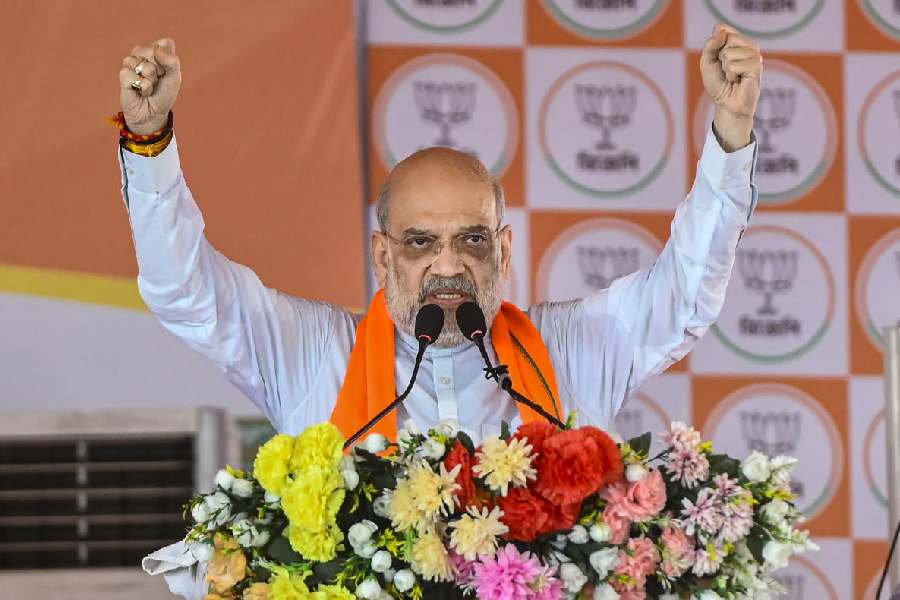
This panchayat election, the BJP has put up over 720 candidates — its highest in any district in the state — covering almost all the 26 blocks in Murshidabad. The party already has a presence here: it was at the forefront of the protests against land allotment to Aligarh Muslim University in Ahiran, trying to cash in on Hindu sentiments in a district where Muslims account for more than 70 per cent of voters.
The WPI, SDPI and the AIUDF have together fielded more than 500 candidates in blocks such as Suti II, Sagardighi, Raghunathgunj II and Shamshergunj, where the minority population is more than 80 per cent.
“As of now, these parties are not significant in the electoral sense as their influence is limited to a few pockets. But their growth is indeed disturbing,” said Mriganka Bhattacharya, district CPM secretary.
Chowdhury echoed him, saying these parties were trying to fill the Opposition space, which the Congress and the Left had failed to appropriate because of organisational deficiencies.
Given Murshidabad’s demography, parties such as the WPI and the SDPI hope to become key players in the Assembly and Lok Sabha polls in the district.
“Our party is not only for Muslims; we are for downtrodden people. That’s why we are reaching out to the Dalit community and have fielded SC/ST candidates,” said state SDPI president Tayedul Islam.
Regional parties have used the backward class-Muslim combine to grab votes, a prime example being the Samajwadi Party in Uttar Pradesh. Whether the model can be replicated in Bengal depends on several factors, one being the aspiring party’s organisational strength and capability to network with other parties, said political scientist Prashanta Roy.
Independents galore
The desire to look beyond the mainstream parties has taken another form in Aurangabad in Suti II block, which is dotted with bidi-making units. The prominent bidi merchants, whose collective turnover is at least Rs 1,500 crore, are backing over 70 Independent candidates in the block.
“People in the area are disenchanted with the CPM, Congress and Trinamul. So we are supporting the Independents, who will run the rural bodies and deliver development,” said Zakir Hossain, managing director of Shhiv Biri, at his office in Aurangabad, around 85km from Behrampore.
“Our industry employs over 7 lakh people; we are confident of winning,” he added, citing how more than 10,000 people attended a rally in support of Independent candidates last week.
A Trinamul leader, however, said: “Traditionally, the bidi merchants were Congress supporters but have switched their allegiance to Trinamul. They are supporting Independents this time because the party did not nominate their preferred candidates. This cannot be called a trend; this is vested interest.”
He said “hundreds of (Trinamul) supporters” were contesting as Independents because differences over seat allotments had led to disenchantment with the ruling party at the ground level. “But they won’t be significant in the election.”
Even if the forecast comes true, there is little doubt that the battle for Murshidabad has evolved from a Left-Congress fight to a multi-pronged tussle that could make it one of the most closely fought contests in the state.
The CPM, which has ironed out kinks with ally RSP, appears ahead in the race as the new entrants are likely to eat up more votes from the Congress’s kitty.