Saturday, 20 June 2026
Saturday, 20 June 2026
Saturday, 20 June 2026
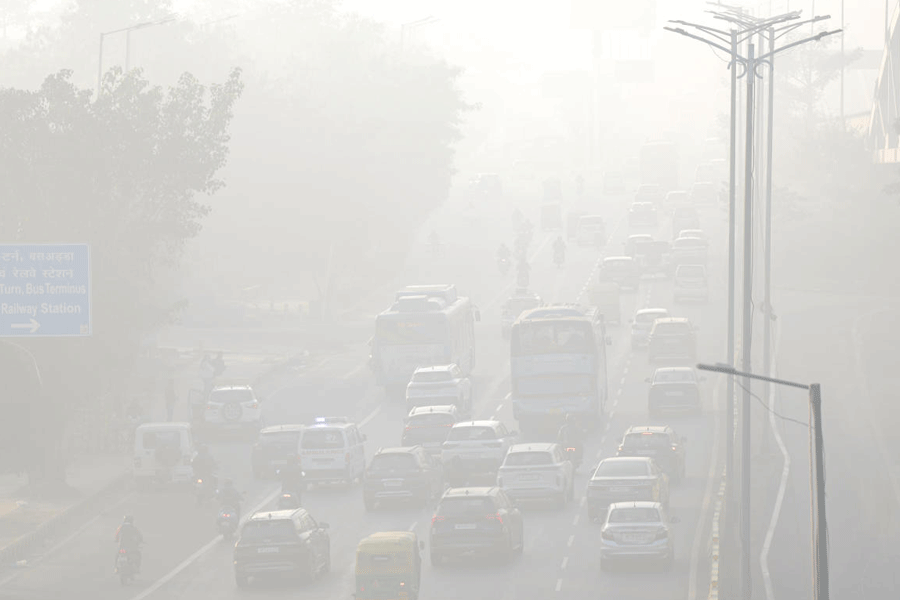
Sonam Varughese’s five-and-half-year-old son has constantly been on nebulizers and inhalers twice a day, with an increased dosage when the air quality index (AQI) peaks in the National Capital Region.
“We started with anti-allergic medicines. Then we started with nebulizers. We moved to metabolizers then and then slowly we moved to inhalers.Because kids can't take inhalers directly, they have to be given with spacers. So he has been on inhalers for the last two years,” Sonam, who lives in Gurgaon, tells The Telegraph Online.
She says it is not only the general air pollution but also the dust from construction going on in her area that affects her son.
She can’t “wean him off his inhaler”, because the cough comes back.
The air purifier remains active in her home throughout the year. During peak AQI days, she and her family have to leave the city.
“But every year we cannot do it. We are working people. Uprooting yourself by going to another city, it gets really difficult,” she says. This year when schools had shifted to the hybrid model due to the pollution, her son would attend classes online. Now that schools have reverted to their regular schedule, she decides whether to send her child to school or not based on the day’s AQI.
She drives him to school every day with the air purifier switched on in her car.
Another Delhi mom, Namrata Yadav, makes her son wear zero-power glasses whenever he steps out of the house because his eyes are constantly watering.
The 7-year-old has had four eye surgeries. He only goes outdoors to attend school and “doesn’t know a life without a mask on”.
Namrata’s son was born premature and was an intra-uterine growth restriction (IUGR) baby.
“He was born in his eighth month and was severely underweight. And now there is enough data and scientific literature that talks about the direct correlation between pollution and IUGR babies,” Namrata tells The Telegraph Online.
Another side effect of constantly being indoors – besides the frustration of a child his age – is vitamin deficiency. So Namrata has to feed her child supplements.
Often, he is not able to sleep because he is not able to breathe properly “even though he sleeps in a room which has two air purifiers on,” Namrata says.
The Energy Policy Institute at the University of Chicago has found that an average Delhi resident can lose up to 8.2 years of his/her life to pollution.
Research by the Central Pollution Control Board (CPCB) and other public-health studies have shown that children in Delhi have higher rates of respiratory illnesses compared to peers in rural areas. One study found that 32.1 per cent of Delhi children suffered respiratory problems vs. 18.2 per cent in rural control groups.
Six major central government hospitals in Delhi recorded 2,04,758 cases of acute respiratory illness at emergency departments between 2022 and 2024, according to data from the Union Ministry of Health and Family Welfare presented in Parliament.
Doctors have warned that even children without pre-existing respiratory issues are now being diagnosed with asthma and other lung diseases, potentially lifelong.
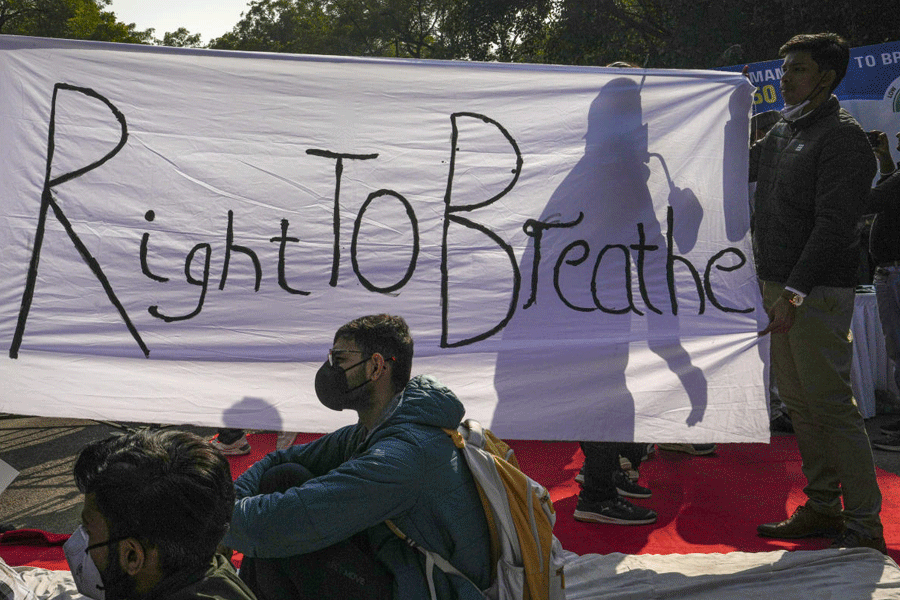
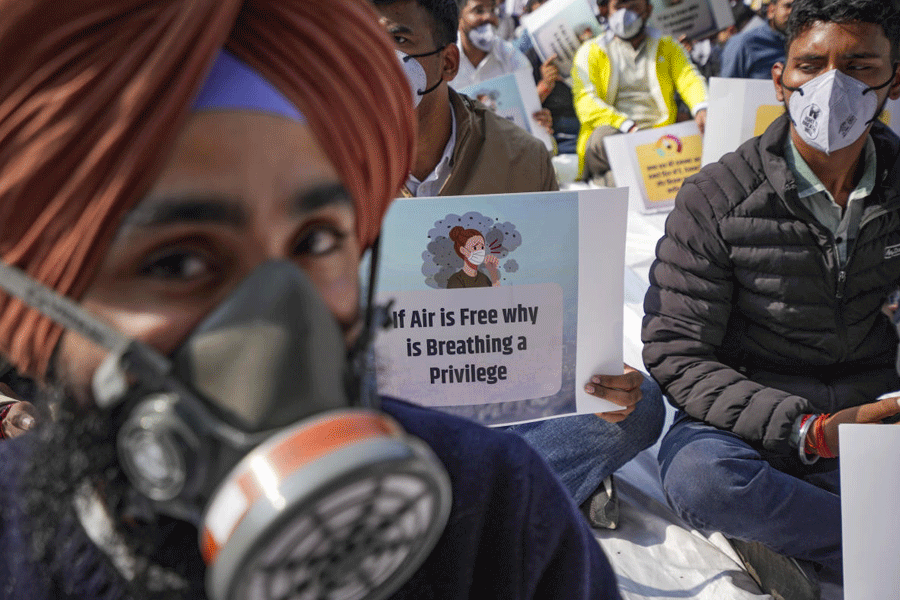
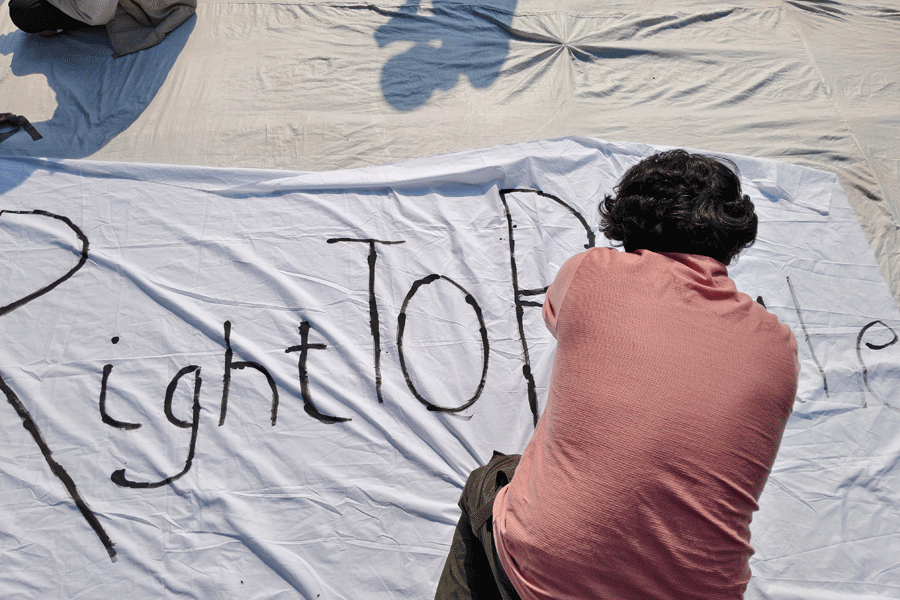
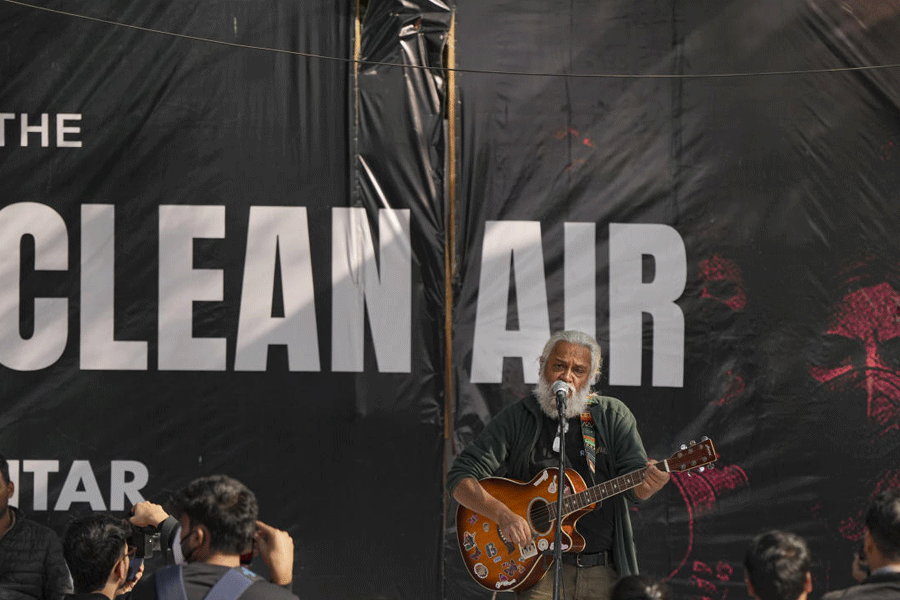
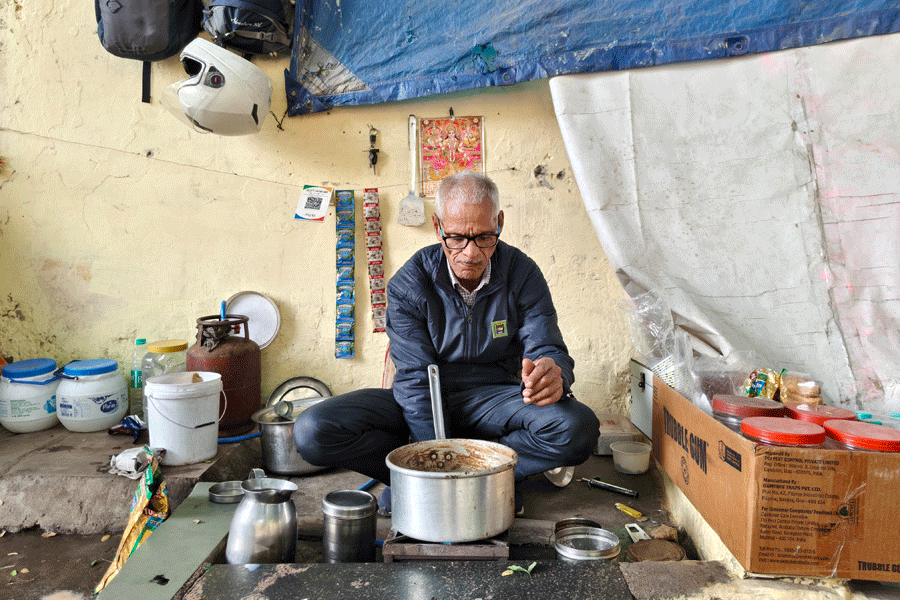
On Wednesday at Delhi’s Jantar Mantar when residents of Delhi – activists, environmentalists, politicians, students and mothers, including Namrata and Sonam – are demonstrating yet again demanding clean air, Jeevanand Joshi sits in his humble stall selling tea and cigarettes some distance from the protest stage.
Joshi, 70, complains of persistent coughing and wheezing but cannot afford an air purifier.
Joshi does not keep track of the pollution meter; he has no option but to open shop.
“We have to come, otherwise we won’t earn our food,” he says.
That feeling of resignation echoes in the words of Deepak, an Uber driver.
“I have gotten used to the air here, because I have been living here for decades now, but that doesn’t mean it isn’t affecting my health,” Deepak says.
“I keep the window rolled up so that the polluted air doesn’t come in, but then customers complain that the cabin is getting stuffy and tell me to switch on the AC. In this weather if I switch on the AC the cold air hits me directly and I’ll come down with a cold. What should I do?”