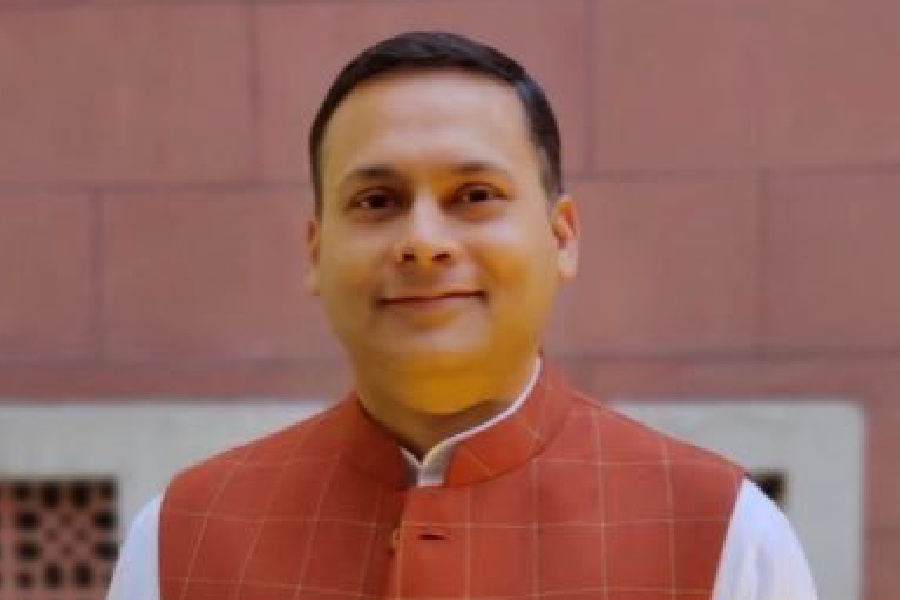
The Madras High Court has quashed an FIR registered against BJP leader and party IT Cell chief Amit Malviya over allegations that he distorted the comments made by Tamil Nadu Deputy Chief Minister Udhayanidhi Stalin on Sanatana Dharma.
The court questioned why those who allegedly initiated “hate speech” were allowed to go free while those reacting to it were prosecuted.
Allowing Malviya’s criminal original petition, Justice S. Srimathy held that continuation of the proceedings would amount to an abuse of the process of law. The FIR, registered by the Tiruchirappalli city police, was accordingly quashed.
The case stems from remarks made by Udhayanidhi Stalin in September 2023 at the Sanatan Eradication Conference organised by the Tamil Nadu Progressive Writers-Artistes Association in Chennai.
In his speech, Stalin called for the “eradication” of Sanatana Dharma and compared it to diseases such as malaria and dengue.
Reacting to the speech, Malviya had posted on social media that the remarks amounted to a call for “genocide” of the 80 per cent of the population who follow Sanatana Dharma.
Following this, a Tiruchirappalli-based DMK office-bearer, KAV Thinakaran, lodged a complaint accusing Malviya of distorting the deputy chief minister’s speech and attempting to foment animosity among different sections of society.
The Madurai Bench of the High Court rejected this argument, holding that Malviya’s remarks did not distort Stalin’s comments. The court observed that the minister’s speech itself amounted to hate speech and that Malviya’s response was a reaction to it.
“If the present proceedings continued the petitioner would suffer irreparable harm and injury and the court is of the considered opinion that the petitioner is entitled to quash the FIR,” the court said.
In a strongly worded observation, the judgment noted: “This court with pain, records the prevailing situation that the person who initiates the hate speech are let scot-free, but the persons who reacted for the hate speech are facing the wrath of the law. The courts are also questioning the persons who reacted, but are not putting the law in motion against the person who initiated the hate speech. In the present case, no case has been filed against the minister for his hate speech in the state, but some cases have been filed in other states.”
The court also took exception to the police counter affidavit, which referred to opinions allegedly expressed by leaders such as Mahatma Gandhi and former chief minister K Kamaraj against Sanatana Dharma.
Justice Srimathy said these leaders had spoken only about removing certain practices and not against Sanatana Dharma itself, adding that “Except EV Ramasamy alias Periyar, none of such leaders had spoken against Sanatana Dharma.”
“Hence the counter has stated incorrect information,” the court said.
During the hearing, the DMK functionary who filed the complaint failed to appear either in person or through counsel.
The police, however, filed a detailed counter stating that Udhayanidhi had said the term Sanatana was derived from Sanskrit, was against equality and social justice, and needed to be changed.
It also said Dravidian and Communist outfits had long questioned the ideology.
The police argued that while the minister had compared Sanatana Dharma to diseases such as dengue and coronavirus and said they had to be eradicated, he had not called for the genocide of any community or group.
Rejecting this line of argument, Justice Srimathy said the counter itself revealed a political stance. “The officials ought to be apolitical and taking sides with political party is reprimandable,” the court observed.
The judgment went on to note the long-standing ideological opposition to Sanatana Dharma by Dravidian movements.
“It is evident that there is clear attack on Hinduism by the Dravida Kazhagam and subsequently by Dravida Munnetra Kazhagam, to which the minister belongs to, for the past 100 years,” the court said.
After examining the speech and Malviya’s response, the court concluded that the BJP leader had merely questioned the “hidden meaning” of the minister’s remarks.
“By overall consideration, the speech of the minister would clearly indicate it is totally against 80 per cent Hindus, which comes within the mischief of hate speech,” the judgment said.
“The minister hails from the above legacy.” The court further observed that Malviya, “who is a sanatani is a victim of such hate speech and has only defended the Sanatana Dharma.”
“It is evident that the reply post of the petitioner would not attract any of the provisions of the IPC. Rather, the minister's speech would attract the above provisions,” Justice Srimathy concluded.