
New Delhi, Aug. 10: India and Russia are speeding up negotiations to construct the final two units of their signature nuclear project, the Kudankulam power plant, in a signal to the US at a time American companies and New Delhi remain stuck in negotiations over the purchase of reactors.
Negotiators from New Delhi and Moscow are expected to conclude and sign a formal pact known as the "general framework agreement" for the third phase of the Kudankulam project by the end of the year, Russian President Vladimir Putin said today.
The third phase of the Tamil Nadu-based project will include the fifth and sixth nuclear reactors Russia will supply to India under a nearly three-decade-old project that both nations are keen to speed up at a time of growing competition in nuclear commerce.
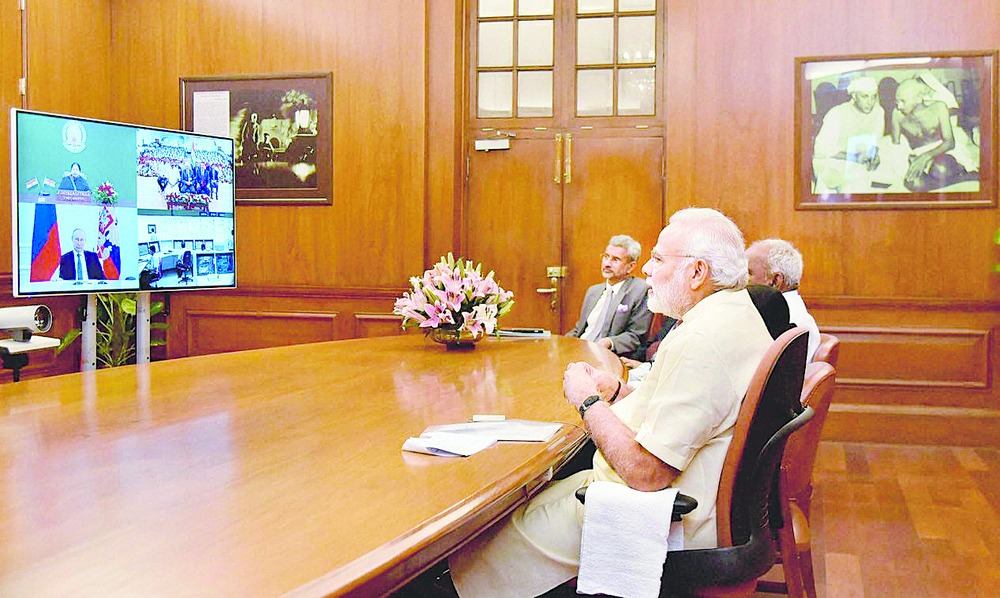
Putin was speaking via video-conference with Prime Minister Narendra Modi and chief minister Jayalalithaa today on the formal commissioning of the first reactor of the Kudankulam plant that was completed in 2014. A second reactor is also ready and is expected to start supplying power by the end of this month. Work on the third and fourth Russian reactors began this February.
"We have big plans with Indian friends in the (nuclear) area," Putin said, speaking in Russian. "We expect that a general framework agreement and the credit report for the construction of the third stage of the nuclear power plant (for the fifth and sixth reactors) will be signed before the end of this year."
Unlike Putin, Modi restricted his address to anodyne comments, celebrating the traditional strength of the India-Russia relationship and the role the Kudankulam plant can play in supplying clean energy to India. "I have always deeply valued our friendship with Russia and it is fitting that we jointly dedicate the first unit of the Kudankulam power plant," Modi said. "We are determined to pursue an ambitious agenda of nuclear power generation."
Jayalalithaa called the nuclear power complex a "tribute" to India-Russia friendship.
But the occasion was set up for more than just a formal bureaucratic ceremony. The unit formally commissioned today has been in commercial operation since December 2014, working at a capacity of 1000MW, and supplying power to the electricity grid at Rs 4.97 a unit.
Modi had, during a meeting with Putin in mid-2014, invited the Russian President to travel with him to Kudankulam when he visited New Delhi in December that year, for the formal commissioning. But Putin, preoccupied with Russia's diplomatic tussles with the West over the annexation of Crimea and violence in Ukraine, kept his India visit to a single day in New Delhi.
In the meantime, India and the US announced a breakthrough in their stalemate over the nuclear liability law. They declared, during President Barack Obama's visit in January 2015, that they would strive to sign commercial agreements for New Delhi's purchase of Westinghouse reactors within a year.
But 19 months after Obama's visit, negotiations on the commercials contract between Westinghouse and the Nuclear Power Corporation of India Limited (NPCIL) - India's government-run monopoly nuclear operator - still remain inconclusive. Now, the two sides have had to postpone the deadline for the contract to the summer of 2017 - Obama voiced frustration in June this year that he will not be in office to see the pact.
A public demonstration of swift India-Russia progress over nuclear reactors represents a signal to the US that India isn't dependent on American firms which, in fact, are the ones that risk losing crucial business if a commercial contract isn't signed soon.
Today, Putin also made a point to assert that Russia was financing, through a loan to India, 85 per cent of the third phase of the Kudankulam project, and was transferring nuclear technology. Financing and technology restrictions are among the sticking points in India's negotiations with Westinghouse and the US government.