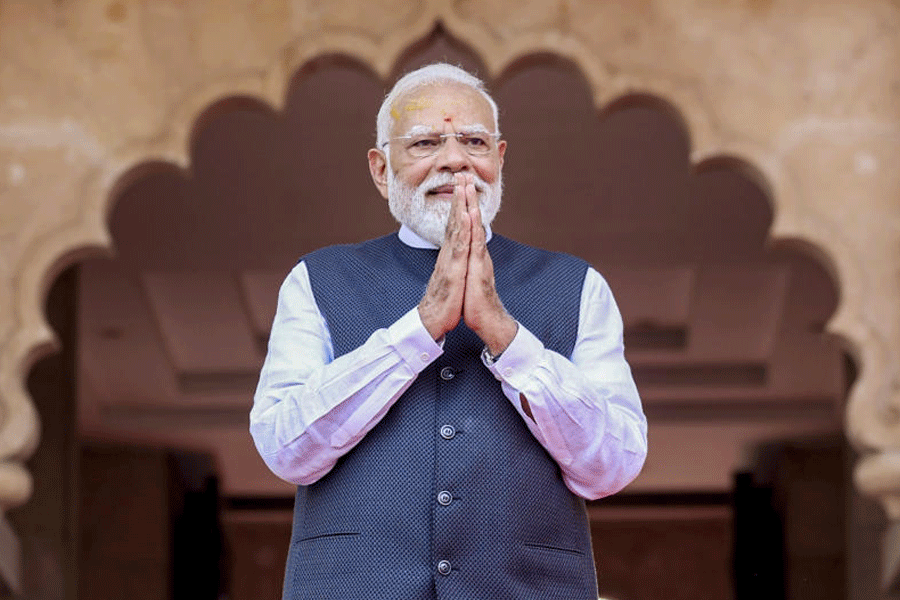

When Maoists took 250 villagers hostage in Chhattisgarh on May 9, initial reports tied it to Prime Minister Narendra Modi's visit to the state that day.
But however obvious the conclusion was, it proved wrong. Police later clarified that the mass abduction from Marenga - 60km from Modi's rally in Dantewada town -was linked to the villagers' support for an upcoming bridge that the rebels opposed for strategic reasons.
That hostage crisis in Sukma district reflected a nascent shift in the rules of engagement between the security forces and the Maoists in the rebel hotbed Bastar region that is yet to be appreciated fully outside.
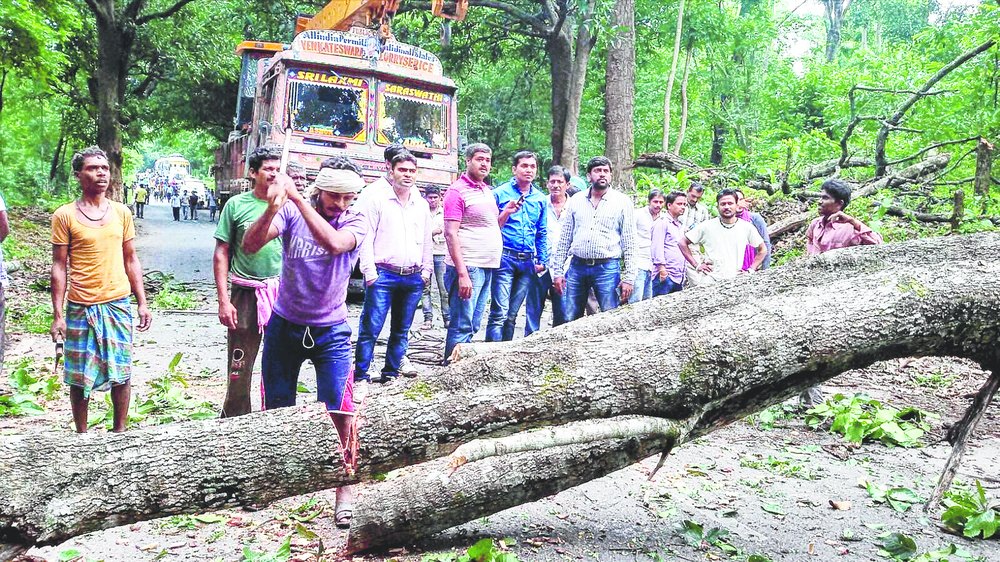
For the first time, central paramilitary and state police forces are being heavily redeployed in Bastar for the specific and dedicated task of speeding up road-building.
The stress on road construction was in focus yesterday when a patrolling team of the special task force came under attack and an assistant platoon commander was killed in the Jeeram valley in the restive Bastar region.
The security team was securing a stretch of the newly laid National Highway 30 in the valley, a few kilometres from the spot where the Maoists had ambushed a Congress convoy in May 2013.
Officials say the focus on roads is a long-term investment, for highways alone can bring development and administration to the Maoists' "liberated zones", while giving the forces a means to access the insurgents' forest dens in the future.
The strategy was framed over a year ago and is being gradually implemented as scores of security camps are set up dotting the planned highway routes.
"We are now deploying our companies only to provide dedicated security to road construction. That wasn't so earlier," R.K. Vij, additional director-general of police (anti-Maoist operations), told The Telegraph last month.
In focus are the strategic National Highway 221, which dissects the Maoist bastion stretching from Bijapur in the west to Malkangiri in Odisha to the east, and 22 arterial roads that will for the first time link scores of remote hamlets to the "mainland".
Altogether, there is 1,000km of roads to be built, and the forces have been asked to provide cover to the effort in "mission mode" so that multiple road stretches can be constructed simultaneously at different places.
In the most sensitive zones, where private contractors or public works department officials may fear to take up projects, the security forces will themselves do most of the construction under the supervision of government engineers, sources said.
For example, it's the police who will be building an all-weather road connecting Injaram with Bhejji and Chintagupha in the rebel heartland of Sukma. The Maoists' local den is a place called Jagargunda, which is virtually inaccessible by road.
The plan is to build roads to Jagargunda from four sides, connecting it with Dantewada in the north; Dornapal (a town on the Sukma-Konta stretch of NH221) in the east; Bijapur via Basaguda and Awapalli to the west and Injaram to the south.
Camps housing one company (about 1,000 troops) each have been set up every 5km along the 56km Dornapal-Chintalnar-Jagargunda route. A year ago, the stretch had just two camps.
The Sukma-Konta stretch of NH221 will have the heaviest deployment - one company every two or three kilometres, to patrol the area and oversee the completion of the road.
New flashpoints
Till now, the forces were largely positioned at the mouths of the sensitive zones they were assigned to patrol rather than the routes leading to these spots. The redeployment will perhaps lower the intensity of hinterland patrolling and the incidence of clashes there in the immediate future.
However, officials say they now expect immense tension around the road-building sites.
At Marenga and neighbouring villages, people had openly supported the construction of the river bridge ignoring the rebels' warnings. During the May 9 hostage crisis, the Maoists held a kangaroo court and slit the throat of Sadaram, a villager hired as a supervisor by the private company building the bridge.
The rest were let off with a further warning.
But the villagers, whom the government had strategically drafted into the project as construction labourers, are back at work on the unfinished bridge, Bastar inspector-general of police S.R.P. Kalluri said.
It's the people's desire for development that, officials say, forms the basis of the government's new strategy.
The planned roads already exist on the map - they were to be part of 1,126km of National Highways and 4,351km of state roads the Centre had sanctioned in 2009 for 34 Maoist zones in nine states under a Rs 7,300-crore programme.
Most of the projects were completed in the other states - such as in Gadchiroli (Maharashtra) and Malkangiri (Odisha) - but no roads could be built in Bastar because of the Maoist resistance.
This time the forces are determined. Over the past year, the CRPF has built camps every 5-6km in the notorious Darbha-Jeeram valley, venue of some of the Maoists' most daring attacks in recent years.
"It wasn't easy to cover this stretch," a CRPF officer in Jagdalpur said. "We faced resistance every time we tried to build a camp."
"But there are no ifs and buts this time," Kalluri said. "We'll do it, whatever it takes."