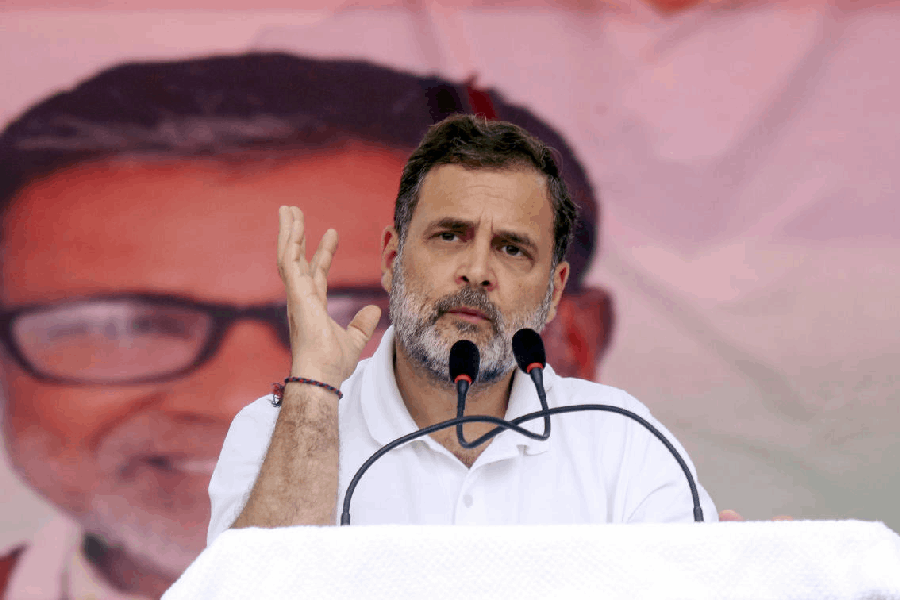
Congress leader and Leader of Opposition in the Lok Sabha Rahul Gandhi launched a blistering assault on the Bharatiya Janata Party (BJP) and the Election Commission of India (ECI) on Saturday, asserting that the Special Intensive Revision (SIR) of electoral rolls has been weaponised to undermine democratic rights and orchestrate “vote theft”.
In a post on X, Rahul accused the BJP of turning the routine process of updating voter lists into a calculated strategy to “dismantle the constitutional right to vote”, alleging that it distorts the bedrock democratic principle of “one person, one vote”.
He contended that the revision has ceased to be an administrative exercise and has instead become a mechanism to eliminate voters from electoral rolls in areas where the BJP fears electoral setbacks.
“Wherever there’s SIR, there’s vote theft,” Rahul wrote, asserting that voters have been selectively removed, especially in constituencies where Congress sees strong support.
“It is not the people but the BJP who decide who stays in power,” he said, accusing the ECI of abandoning its role as democracy’s guardian and becoming a “chief accomplice” in a supposed conspiracy to skew electoral outcomes.
Rahul pointed to recent instances in Aland and Rajura, and claimed the same pattern of alleged manipulation is now unfolding in Gujarat, Rajasthan and other states where SIR has been enforced.
He said millions of objections to the electoral rolls were submitted late in the process, effectively removing voters without adequate transparency or accountability.
The Gujarat Congress, echoing Rahul’s criticism, alleged large-scale manipulation during the SIR process in the state, claiming that information on the objections was withheld by the Election Commission, which it accused of abdicating its responsibility and accountability.
The BJP and the ECI have yet to respond to these allegations formally. The controversy comes amid heightened political scrutiny ahead of key state elections, with opposition parties increasingly focusing on electoral roll revisions as a flashpoint in the broader debate over electoral integrity.