The BJP on Monday invoked the “M-factor” to spotlight Prime Minister Narendra Modi’s remarks marking 1,000 years since Mahmud of Ghazni’s first attack on the Somnath temple and the denial of bail to Delhi riots accused Umar Khalid and Sharjeel Imam by the Supreme Court.
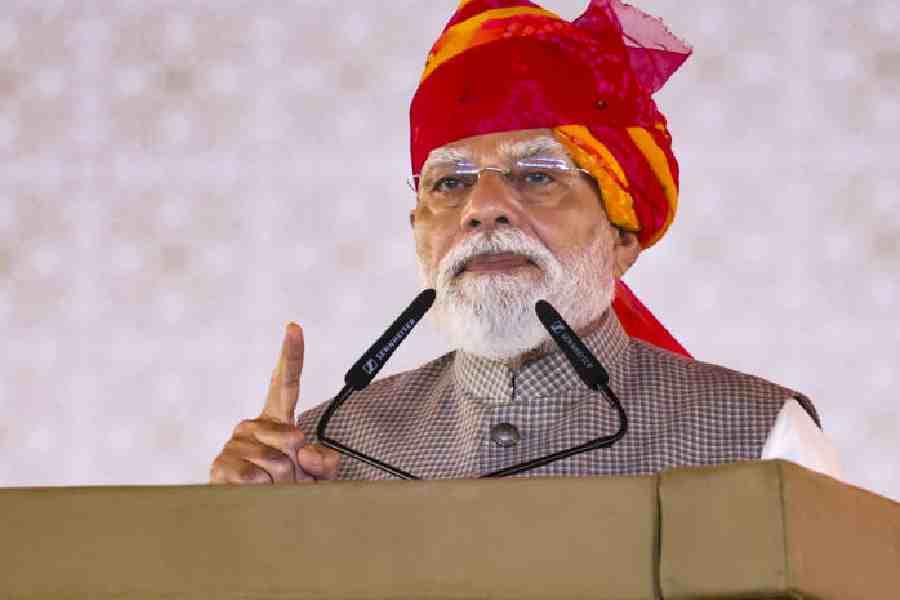
In a blog post released on Monday, Modi described the Somnath temple in Gujarat, rebuilt after repeated attacks by foreign invaders, as a symbol of the “indomitable spirit of Indian civilisation”. He referred to the 1,026 attack on the shrine by Mahmud of Ghazni as an attempt to destroy “a great symbol of faith and civilisation through a violent and barbaric invasion”.
The timing of the blog coincided with the top court’s refusal to grant bail to Khalid and Imam, two key accused in the 2020 Delhi riots case, whose continued incarceration has drawn international attention.
Later in the day, the BJP addressed the media on both issues, praising Modi for underscoring the resilience of India’s Hindu civilisation and welcoming the apex court’s decision. The party fielded two leaders — Rajya Sabha member Sudhanshu Trivedi and spokesperson Shehzad Poonawala — who accused the Opposition of being fixated on the “M-factor”.
Trivedi said the “M-factor” for him referred to the “Macaulay factor of the 19th century and the Marx factor of the 20th century”. He, however, added that he had “full faith” in the intellect of the journalists who were interpreting something else.
In his blog, Modi also took a swipe at then Prime Minister Jawaharlal Nehru, noting that the restoration and reopening of the Somnath temple in 1951 did not enthuse him. Trivedi went a step further, accusing Nehru of glorifying Mahmud of Ghazni in his book The Discovery of India.
Modi recalled that when the restored Somnath temple was opened to devotees on May 11, 1951, with then President Rajendra Prasad in attendance, Nehru was “not too enthused” by the event. According to Modi, Nehru had objected to the President and Union ministers associating themselves with the ceremony, arguing that it would create a “bad impression” of India. “But Dr Rajendra Prasad stood firm and the rest is history,” Modi wrote.
Trivedi alleged that Nehru had advanced a “false narrative” by suggesting that Mahmud’s attacks on Hindu temples were motivated solely by the desire to loot wealth and not by religious faith. He claimed Nehru had even described Mahmud as an art lover, adding that a historian who accompanied Mahmud had contradicted this portrayal.
The BJP leader further alleged that Mahmud had rejected pleas from priests and the king to spare the Shivling at Somnath temple in exchange for “lakhs of gold coins”, and accused Nehru and “modern Leftists” of distorting history. Citing another historian, Trivedi described the Mughal period as the “bloodiest” phase of Indian history.
Trivedi hailed Modi for “restoring the country’s civilisational glory”.
After Trivedi, Poonawalla addressed the media, saying that after “Jai Somnath” it was now time to say “Satyameva Jayate”. He claimed the Congress’s “tukde-tukde gang” was unsettled by the top court’s decision to dismiss the bail pleas of Khalid and Imam.
Poonawalla equated the 2020 Delhi riots with what he described as “anti-Hindu massacres” during the Mughal period. “The Congress continues to glorify the villains of the country,” he said, asking whether such glorification stemmed from the “M-factor”.