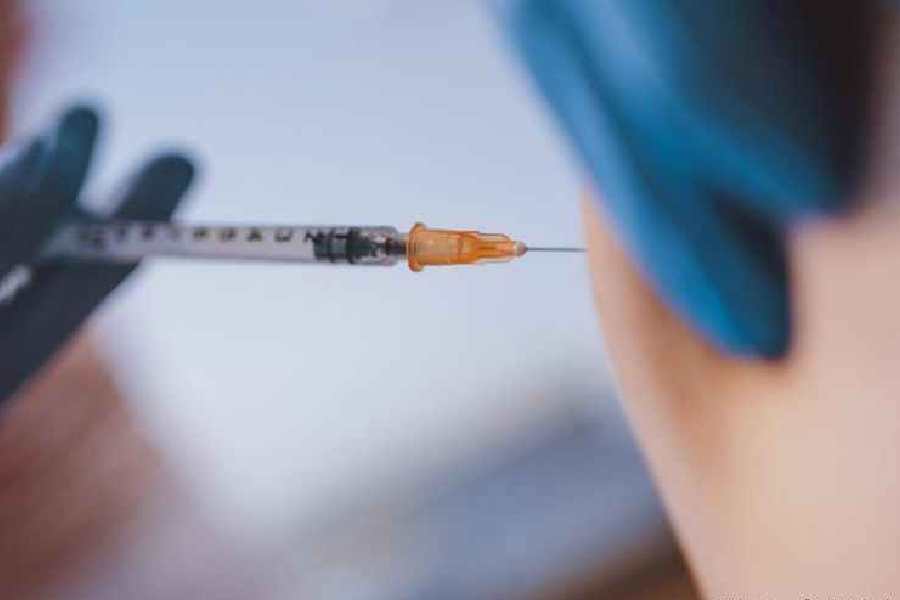
A government-owned Indian vaccine maker has challenged a December 22 Australian health advisory warning of “counterfeit batches” of an anti-rabies vaccine circulating in India since November 2023, and has asked authorities to review the notice.
Indian Immunologicals Limited (IIL) said it had itself flagged a counterfeiting incident involving a single batch of its anti-rabies vaccine Abhayrab in January, and said the Australian advisory could create “anxiety and mistrust” among the public and healthcare professionals.
However, India’s central drug regulatory authority has not disclosed whether it has investigated the counterfeiting, how widely the falsified vaccine may have circulated, or how many people may have received it, leaving the scale of the incident and its potential impact unclear.
The Australian advisory said that while Abhayrab is not available in Australia, people who have received the vaccine while in India may not be fully protected against rabies, a viral infection of the central nervous system that is almost always fatal if left untreated.
“Counterfeit (fake) batches of rabies vaccine Abhayrab have been circulating in India since November 1, 2023,” the advisory for travellers and healthcare providers said. “People who have received Abhayrab, or an unknown rabies vaccine brand in India from November 1, 2023, onwards are advised to see their healthcare provider to check if replacement doses are needed.”
The advisory was not an isolated alert. The US Centers for Disease Control and Prevention said on November 25 that a case of rabies had been reported in the United States in a traveller from India, and cited the circulation of a counterfeit Abhayrab vaccine in India. A UK travel health authority had also issued an advisory on the falsified vaccine on October 29.
In a note sent on December 25 to the Australian health authorities, IIL said the advisory could be misinterpreted and undermine public trust in vaccines, and asked for a review of the notice to avoid potential confusion among healthcare providers.
The vaccine maker said it has supplied more than 210 million doses of Abhayrab to Indian and global markets, describing it as “the most trusted brand” in the country and saying it holds about 40 per cent of India’s anti-rabies vaccine market.
The company said the counterfeiting involved a single batch of Abhayrab, KA-24014, manufactured in March 2024 and expiring in February 2027, which it reported to India’s Central Drugs Standard Control Organisation (CDSCO) on January 13, 2025.
The firm told drug regulators that while the counterfeit product used the same batch number, its printed manufacturing date was November 2023 and its expiry date was October 2026. The ₹ symbol was also missing ahead of the price (397.62) printed on the counterfeit product.
IIL said it had asked the CDSCO in January to investigate the counterfeiting, seize the fake product, and work with law enforcement agencies to identify and prosecute those responsible for producing and distributing the counterfeit vaccine.
However, queries from this newspaper to the CDSCO on Saturday seeking information on the status or outcome of any investigation into the counterfeiting incident did not elicit any response.
In the absence of details from the CDSCO, experts say it remains difficult to assess how extensively the falsified vaccine may have circulated or how many recipients may have been affected.
A scientist specialising in rabies research in India said the Australian advisory’s use of the plural phrase “counterfeit batches” and the reference to circulation “since November 2023” had the potential to stir concern among many recipients of anti-rabies vaccines in the country.
“Abhayrab is a reliable vaccine, used widely across the country,” Reeta Mani, professor and head of neurovirology at the National Institute of Mental Health and Neurosciences in Bangalore, told The Telegraph. “It is important to use precise language in public advisories. People should not lose trust in vaccines.”
A 2022 publication by the National Centre for Disease Control estimated that nearly 2.3 million people in India receive post-exposure anti-rabies vaccines each year following animal bites, mainly from dogs.
A study by the Indian Council of Medical Research published earlier this year had estimated that rabies kills roughly 5,700 people annually in India, a decline from earlier estimates of around 20,000 annual deaths.
Peer-reviewed medical studies have documented that thousands of people have received counterfeit rabies vaccines worldwide, including more than 1,600 recipients in China in a single province in 2010. Chinese regulators also reported over 1,13,000 falsified rabies vaccine doses in 2018.