India and the European Union on Tuesday signed a landmark security and defence partnership, covering maritime security, cybersecurity and counter-terrorism, similar to the tie-ups the EU has with two other Asian countries — Japan and South Korea.
The partnership comes at a time India is trying to reduce its dependence on Russia for military hardware by diversifying imports and pushing its domestic manufacturing. Europe is also trying to reduce its dependence on the US and deepen its diplomatic and economic ties with other regions.
Speaking about the defence and security partnership, European Commission president Ursula von der Leyen said: “We are not only making our economy stronger, we are also delivering security for our people in an increasingly insecure world. And today, the world’s two largest economies and democracies launched their first-ever security and defence partnership. This is a landmark departure and a trust-based platform for cooperation on the strategic issues that matter most.”
“In doing so, we will help to build each other’s resilience. Europe and India have a long history of cooperation in the defence industry. Now we will enhance this teamwork even further. We will deepen our cooperation on maritime security, for example, joint naval exercises, to tackle piracy,”
she said.
“And we will step up our work on countering cyber and hybrid threats, which are getting more sophisticated by the day. Our partnership includes a dedicated dialogue on space security, from situational awareness to secure connectivity and stronger cooperation on counterterrorism. Finally, we are launching negotiations on a Security of Information Agreement. Europe and India have chosen to be reliable partners to one another, and this is how we demonstrate the trust we share,” she added.
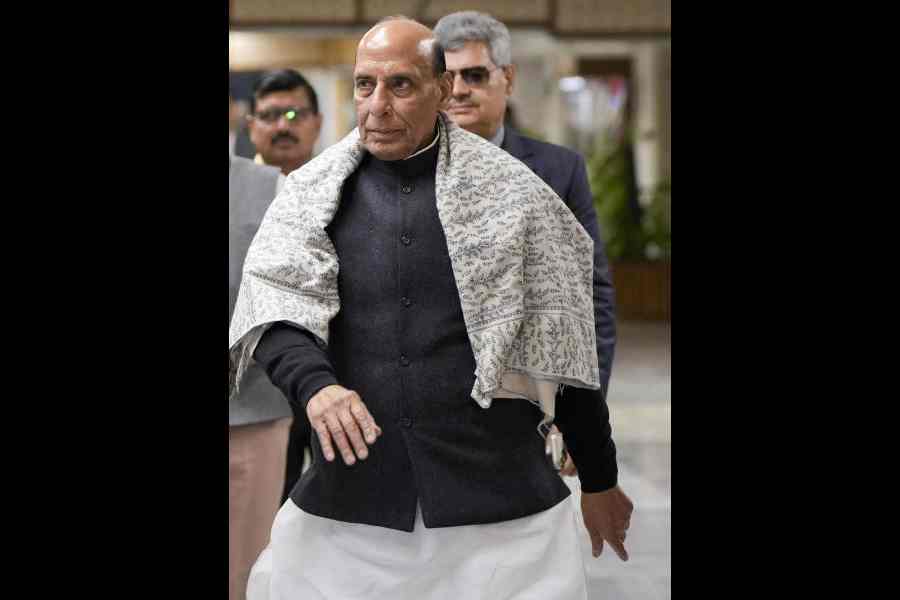
Earlier in the day, defence minister Rajnath Singh said he discussed a range of bilateral security and defence issues with European Commission vice-president Kaja Kallas, including opportunities to integrate supply chains to build trusted defence ecosystems and develop future-ready capabilities.
He said India’s defence industry “can play a meaningful role in the EU’s ‘ReArm initiative’, especially when the EU was seeking to rapidly diversify suppliers and derisk dependencies”.
Kallas, after signing the defence partnership, said the pact “launches an annual security and defence dialogue and deepens cooperation on maritime security, cyber issues, and counterterrorism”.
Rajnath emphasised that Indian and EU defence industries must synergise their efforts for the larger global good as it “complements India’s vision of self-reliance while aligning with the EU’s pursuit of strategic autonomy”.