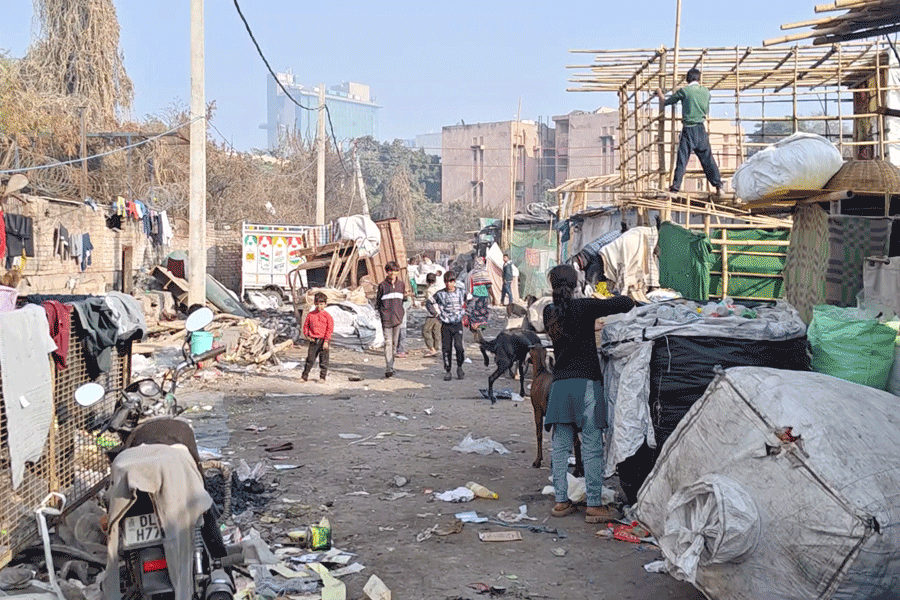
On a sunny winter afternoon, the residents of Bengali Basti, located near Rithala metro station in northwest Delhi, are taking time off from their sanitation and scrap-dealing work to reconstruct their houses using bamboo, tarpaulin sheets and blankets.
It’s been over a month since a major fire razed the shanty to the ground. The medium-sized open ground was home to almost 500 temporary settlements, mainly consisting of Bengali Muslim migrants who came from regions close to the India-Bangladesh border in Bengal.
This isn’t the first time that this basti has gone up in flames. It was burnt to the ground twice before – once in 2011 and then in 2016. The then AAP government had provided each family a compensation of Rs 25,000.
This time around, Beena Bibi, Nizam Khan and other residents have mortgaged whatever they could to take out loans to buy the materials needed to rebuild their houses.
Volunteers – from NGOs, and good samaritans – who have been helping them say they have been warned about “bringing too much attention” to the slum.
The fear of being branded Bangladeshi and harassed has overpowered everything else.
“It is difficult to go to work,” says one resident. “The police come, they say we are Bangladeshis, and detain people. We are being branded Bangladeshi even after showing all identification proof.”
The resident says he had stopped plying his e-rickshaw during usual hours and only ferries some children to and from school in the morning and afternoon.
He is scared that he too might get detained by the police or asked to cough up a sum of money in exchange for being released.
“We are also scared of being evicted, but we are from West Bengal; we are not from Bangladesh, so we shouldn’t have anything to be afraid of,” says another resident, a woman named Beena Bibi.
“At night, the cold dew falls on us from the roof, but what do we do? We are exposed to the dew and the cold throughout the night until we can build our houses. Our kids are coming down with cough, cold and fever. Our pillows and beds get drenched overnight and we end up sleeping in that.”
Despite promises of compensation from the government, the residents are yet to receive any. They have not been offered any form of rehabilitation either.
The e-rickshaw driver says that since the fire burnt most of his belongings, he and his family “slept in freezing temperatures without a blanket.” Recently an NGO provided him and other residents with blankets.
Until 2016, the residents of the Bengali Basti used to pay rent to “landlords” who lived in Rithala village. Later, the land was recognised as government property and not owned by the villagers, prompting the residents to stop paying rent.
Residents say that this had angered these villagers and they had earlier threatened to burn the slum down.
“The fire started at the electric pole at the entrance of the basti. The media reported that the fire was caused by an LPG cylinder explosion, but the fire had started before the cylinders started to explode,” says one resident.
For now, that is less important for them; more important is how to shield themselves from the hounds of Delhi’s winter – without attracting too much attention.