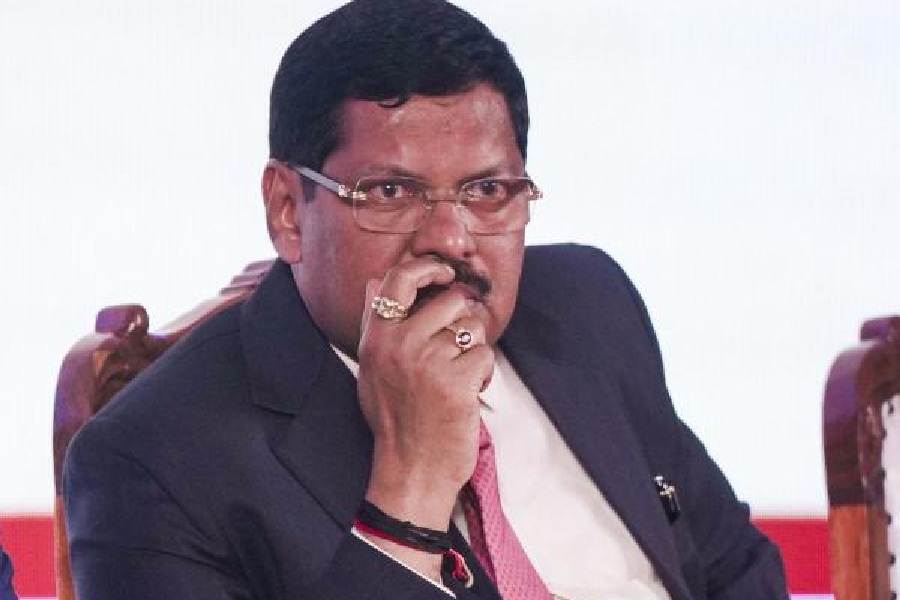
Former Chief Justice of India B.R. Gavai said he has been “widely criticised” by people from his own community for holding in a judgment that the creamy-layer principle should apply to reservations for the Scheduled Castes.
Delivering a lecture on “Role of Affirmative Action in Promoting Equal Opportunity” at Mumbai University on Saturday, Gavai referred to B.R. Ambedkar’s vision of affirmative action and said the architect of the Constitution never intended long-term dependence on state support.
Invoking Ambedkar’s oft-cited metaphor, he said affirmative action was like giving a bicycle to a person lagging behind so they could catch up. “Did he think that the person should not leave the cycle… and thereby ask the people who are at zero km to continue to be there?” he asked.
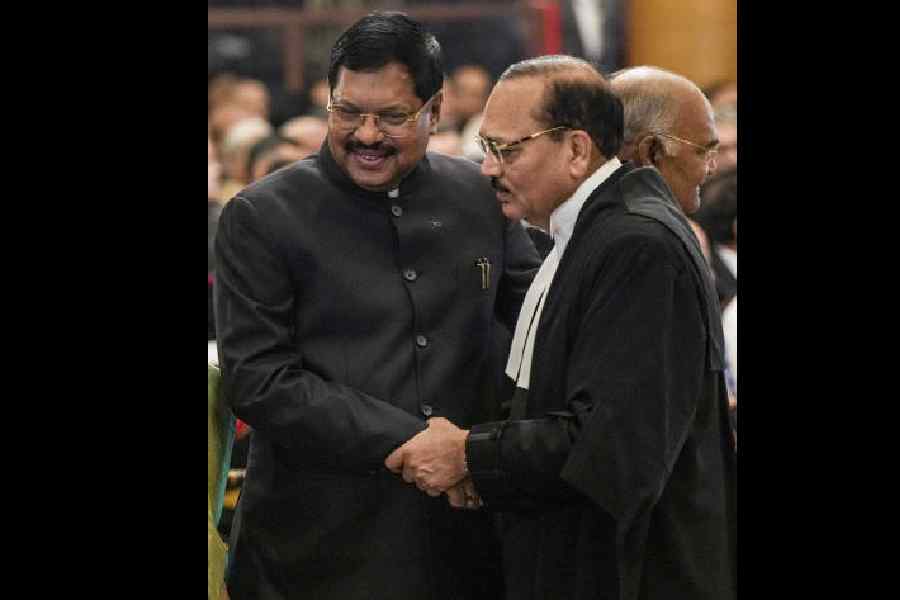
“In my view, that was not the vision of social and economic justice as contemplated by Babasaheb Ambedkar,” the former CJI said, adding that Ambedkar aimed for justice “in the real sense and not in a formal sense.”
Gavai noted that the Indra Sawhney verdict laid down the creamy-layer rule, and said he himself had ruled that it should extend to the Scheduled Castes as well.
The principle demands that those who are sufficiently advanced economically and socially should not get the benefit of affirmative action, even though they are members of the backward community for which it is meant.
He was "widely criticised" by the people of his own community for this judgement, Gavai said, adding that he was accused of taking benefit of the reservation himself to become a Supreme Court judge and then advocating the exclusion of those who fell in the creamy layer.
But these people did not even know that there is no reservation for the constitutional office of High Court or Supreme Court judge, Gavai said.
Can applying the same yardstick to the son of a chief justice of India or chief secretary and the son of a labourer who has studied in a gram panchayat school satisfy the test of equality as enshrined in the Constitution, he asked.
Gavai, however, emphasised that in the last 75 years "no doubt affirmative action has played a positive role".
"I have travelled across the country, travelled across the world, I have seen many people belonging to the Scheduled Caste becoming chief secretary or director general of police or ambassadors and high commissioners," he said.
Maharashtra is a land of social reformers, and the "region can truly be described as the birthplace of the idea of modern India", Gavai said.
"We are all aware of Jyotirao Phule and Savitribai Phule's pioneering work in the eradication of inequalities in society," he said.
When women were among the most oppressed in society, it was the Phule couple who opened the door of education for them, he noted.