
New Delhi, April 12: Balloons had been strung up and cans of confetti were ready when Abhishek Saini checked his email in his apartment in the Crimean capital of Simferopol one final time before his friends arrived.
Saini and his classmates were graduating from medical school, and a party was in order.
Minutes later, Saini recalled, his fingers were shaking, his mind numbed by an email he had just received from a friend on their shared dreams. Saini's career plans in the US or Europe had stumbled - at the altar of Russia's tensions with the West over Moscow's annexation of Crimea.
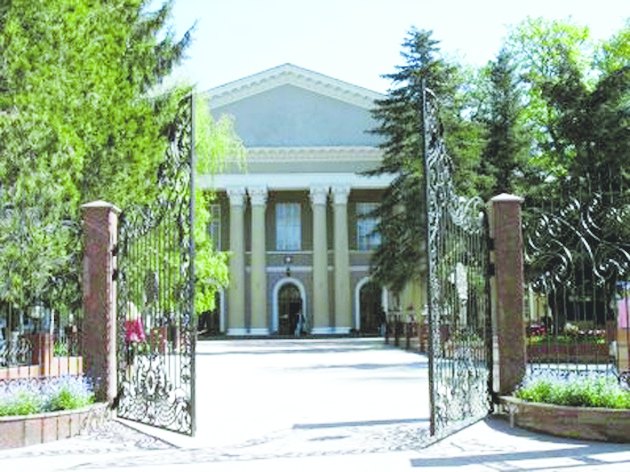
When Saini left his hometown Ludhiana, Punjab, to join the Crimea State Medical University (CSMU) in Simferopol in 2008, the peninsula was an unquestioned part of Ukraine.
But after Russia annexed Crimea in March last year, Saini graduated in September with a degree bearing a Russian government stamp - not recognised by the US or the European Union, which still consider Crimea a part of Ukraine.
A year after Russia swallowed Crimea from Ukraine, fresh conflicts have stolen the world's attention. The Indian embassy in Kiev, which helped over 800 Indian students escape the fighting last year, is now focused on assisting any nationals in eastern Ukraine, the lingering conflict zone where Russia-backed rebels and Ukrainian forces continue to battle.
But over 500 Indian students, who returned to continue their studies in Crimea once military battles over the region ended by the summer of 2014, now find their careers teetering over the conflicting claims on the peninsula by Moscow and a West-backed Ukraine.
Theirs is an unlikely stake in a speedy resolution.
"I wonder what I did wrong even today," Saini said, speaking from Ludhiana where he has returned from Simferopol. "I didn't annex a part of another country, I didn't shoot at people. I just paid my fees and studied."
Saini said he knew some would call him "foolish" for going back to Crimea. But he had completed nine of the 10 semesters and was on the cusp of graduating. There was no physical danger in returning to Crimea by last May.
Crimea's medical colleges have used their low fees as a bait to lure thousands of Indian students over the past decade, Hardeep Singh, a Ukraine-based education agent, told The Telegraph . Private Indian medical schools charge annual fees upwards of Rs 6 lakh ($10,000), compared with about $3,000 in Crimea.
These colleges are affiliated to the CSMU, which in turn figured in the International Medical Education Directory (IMED) - a global database of medical schools recognised by their own countries and the world medical community.
The IMED is the principal tool the US, Canada and the UK and many other European nations use to screen the eligibility of foreign medical graduates for licences to practise, representatives from their medical regulators confirmed.

Students from universities listed in the IMED aren't guaranteed a licence in these countries. They still need to clear a test, like the US Medical Licensing Examination (USMLE) in America, and the Professional and Linguistics Assessment Board (PLAB) Test in the UK.
But those from schools not on the IMED - created by the Educational Commission for Foreign Medical Graduates, the US federal agency that also conducts the USMLE - aren't even eligible for these tests.
The Medical Council of Canada requires that candidates "must confirm that their medical school is listed in the International Medical Education Directory", Jessica Hertzog-Grenier, director of communications at Canada's federal medical regulator, said in an email.
At least 10,000 medical graduates from the CSMU have obtained licences to practise medicine in western Europe and North America, according to the website of the Soviet-era institution that till last year was widely rated as among the best medical schools in Ukraine.
But the IMED listing that made the Crimea State Medical University's graduates eligible for western licences is today meaningless because the school's country on the database - Ukraine - no longer matches the one - Russia - on its degrees.
Graduates from Crimea seeking a licence from the British regulator, the General Medical Council (GMC), face a second roadblock.
The UK requires "that 50 per cent of the study by a student on a course has been undertaken in the country that awarded the qualification", Andrew Edgeworth, media officer at the GMC, told this newspaper.
This requirement, which Saini and others cannot meet, is at times relaxed "when the medical school relocates to another country", he said.