Sonam Wangchuk has never believed in going hungry. Yet, just days after his detention during a high-profile protest demanding greater autonomy for Ladakh, the climate activist has once again chosen to stop eating.
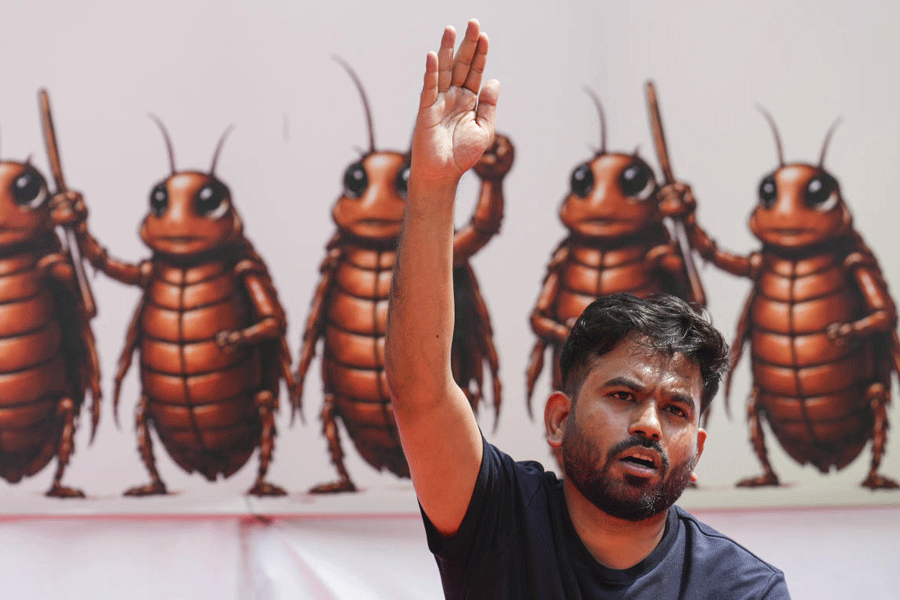
This time, at the Cockroach Janta Party protest at Jantar Mantar, his warning to the state is: ignore peaceful dissent now, and risk turning India's youth toward the volatile unrest seen in Bangladesh and Nepal.
For over a week, hundreds of student protestors have occupied Jantar Mantar, demanding accountability for rampant national examination scandals and the immediate resignation of Union education minister Dharmendra Pradhan.
According to attending doctors, Wangchuk’s blood sugar level plummeted to an alarming 66 this morning, casting a grim medical shadow over the political standoff.
"Truth and nonviolence is my path, and justice is my goal," Wangchuk told The Telegraph Online in an exclusive interview from his makeshift bed. "I am never interested in staying hungry. Nobody would be. But when compelled, I am also not hesitant."
Wangchuk’s current fast is driven by a dual crisis: a perceived betrayal by the government regarding commitments made to Ladakh’s ecological future, and a systemic collapse in India’s national examination framework, which has recently been rocked by leaks and corruption allegations.
The human toll of the examination crisis is what weighs heaviest on him.
Noting reports of nearly 20 student suicides linked to recent leaks, academic pressures and failures, Wangchuk argued that the crisis strikes at the soul of the nation's future.
"When the examination fails them, then you have to really raise your voice," Wangchuk said.
He acknowledged that the resignation of Pradhan would be a positive first step, but insisted true accountability rests higher up.
Ahead of the upcoming monsoon session of Parliament, he demanded a comprehensive legislative overhaul.
Without an immediate, deep investment in education, India’s ambitions of becoming a developed nation (Viksit Bharat) by 2047 are hollow, he argued. "You can't be even developed by 2047 or 2147 if this is how education is being invested in."
The deeper danger, Wangchuk warns, is not just academic, but existential to Indian democracy. As young people watch peaceful appeals go unanswered by a seemingly oblivious government, there is a risk that the nation's youth will abandon democratic norms.
"What I don't want is that they lose faith in democracy, in peaceful protests," Wangchuk said. He drew a parallel to the violent, student-led upheavals that recently destabilised neighboring Bangladesh and Nepal.
"If nothing is done and [the government] takes a very tough stand and no accountability is taken... then you will see what happened in Nepal and Bangladesh. That's the last thing I want."
Currently, the atmosphere at the CJP protest remains remarkably orderly, a "global example" of civic resistance, as Wangchuk called it, where volunteers manage sanitation, food, and water under extreme heat.
He has urged the protesters to approach the authorities with flowers rather than bitterness.
Yet, as his vital signs drop and the days pass without a response from the ruling administration, Wangchuk warns that the government is playing a dangerous game of silence.
"It's more for the government now to keep it peaceful, by listening to peaceful voices, by rewarding peace rather than violence," Wangchuk concluded. "If they don't reward peaceful means, then it will be understood by young people that peace is not rewarded... If peaceful means are not respected and rewarded, then there are others who are saying these peaceful means never work. And they'll be proven right. And that, I don't want."