The Catholic Church in India has called for a nationwide observance of a national day of Prayer on June 28 to express the Christian community’s concerns over the proposed Foreign Contribution (Regulation) Act (FCRA) Amendment Bill, 2026, which is expected to be considered during the upcoming Monsoon Session of Parliament.
In a circular issued to dioceses, parishes, religious institutions, and Catholic communities across the country, church leaders expressed concern about the potential impact of the proposed legislation on charitable, educational, healthcare, and social service activities carried out by churches and Christian organisations.
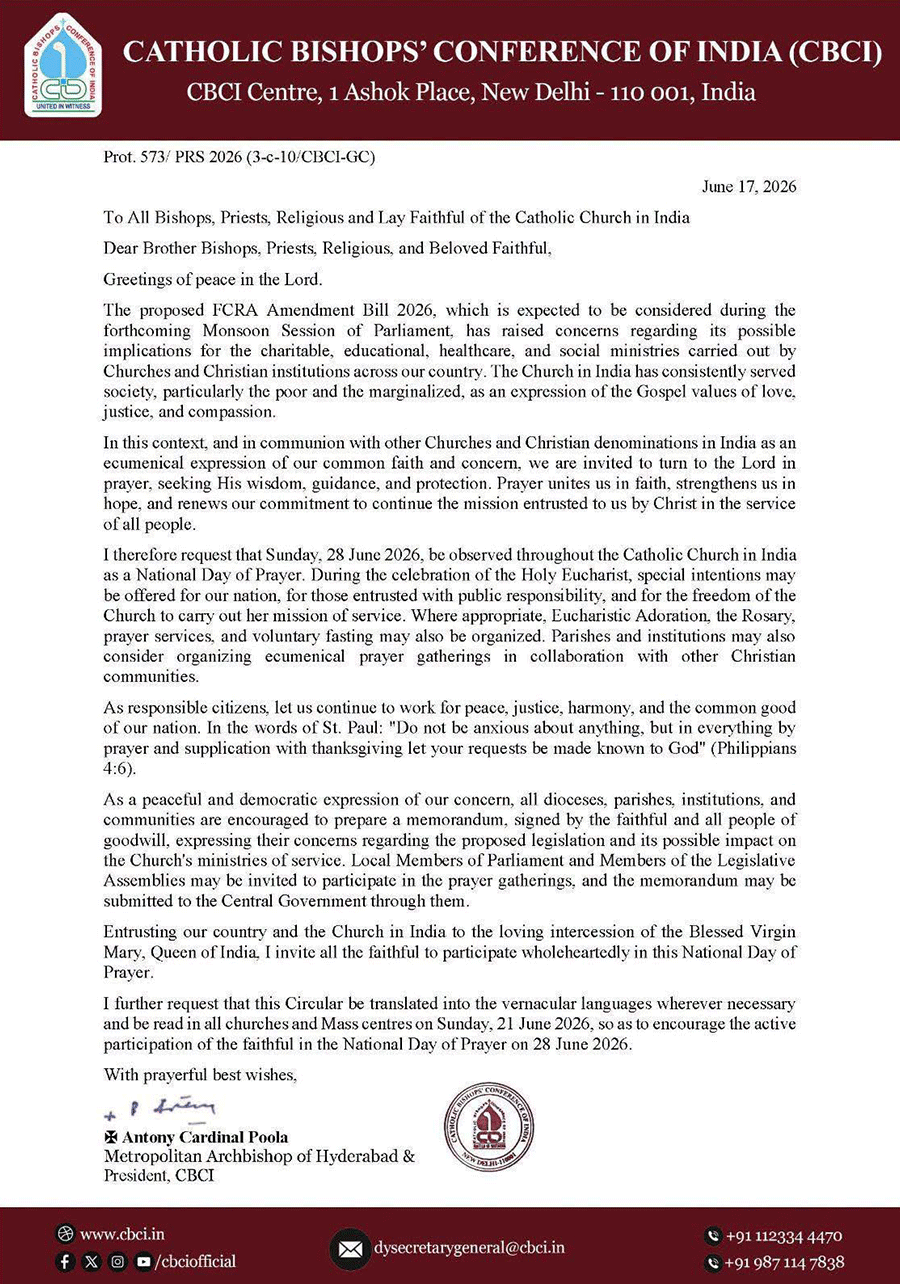
“The Church in India has consistently served society, particularly the poor and the marginalised, as an expression of the Gospel values of love, justice, and compassion,” wrote Cardinal Anthony Poola, archbishop of Hyderabad and president of the Catholic Bishops’ Conference of India (CBCI), in a circular.
Cardinal Poola called on bishops, priests, religious and lay faithful to unite in prayer with other Christian communities, describing the initiative as an “ecumenical expression of our common faith and concern.” He said believers should seek God’s “wisdom, guidance, and protection” as they respond to the proposed legislation.
“I therefore request that Sunday, 28 June 2026, be observed throughout the Catholic Church in India as a National Day of Prayer,” he wrote. During Masses that day, special intentions may be offered “for our nation, for those entrusted with public responsibility, and for the freedom of the Church to carry out her mission of service.”
The circular encouraged to organise Eucharistic adoration, rosaries, prayer services and voluntary fasting where appropriate. Local communities were invited to consider ecumenical prayer gatherings with other Christian denominations.
The CBCI president also asked church communities to prepare memorandums expressing concerns about the FCRA bill. The documents, signed by faithful and “all people of goodwill,” could be submitted to the central government through local members of Parliament and state legislators.
“As responsible citizens, let us continue to work for peace, justice, harmony, and the common good of our nation,” Cardinal Poola wrote.
Earlier this year, CBCI deputy general secretary Mathew Koyickal had described the provisions of the FCRA bill as "alarming".
The Centre had introduced the bill in the Lok Sabha on March 25.
The bill is controversial because of its provisions enabling what minority groups called over-centralisation of certain powers, discretionary executive overreach and potential for attacks on minority-run institutions.
On April 2, opposition MPs held a protest in Parliament demanding that the bill be rescinded, with a banner that said: “Stop targeting NGOs and institutions”.
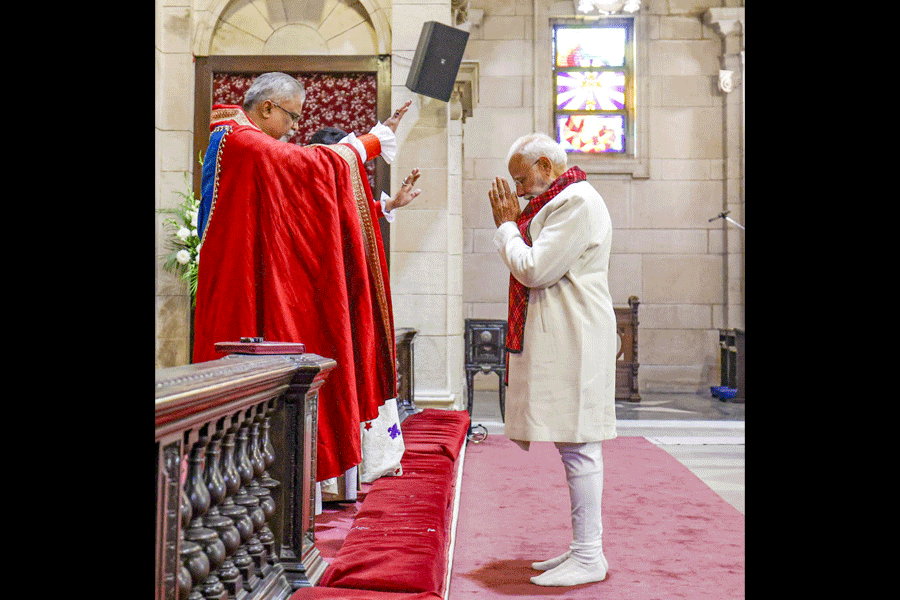
Many Christian organisations in Kerala and elsewhere cried foul. In a March 31 memorandum to MPs and Union home minister Amit Shah, the CBCI said the bill “raises serious concerns about constitutional balance, civil society freedom, and the future of charitable service in India.”
The memorandum, signed by CBCI secretary general Archbishop Anil J.T. Couto of Delhi, stressed that “the lack of safeguards for charitable and educational institutions—while limited protection is extended to places of worship—may result in undue interference in the internal management and service mission of these organisations.”
The furore resulted in the bill being put on hold and parliamentary affairs minister Kiren Rijiju had reassured minority organisations that their apprehensions were unfounded. He maintained that the bill was designed to protect national security and did not target any religion.
Prime Minister Narendra Modi, while campaigning in Kerala, had reached out to the Christian community stating that his government would not go against their interests. He accused the Left Democratic Front and the United Democratic Front of spreading lies about the proposed changes in the FCRA.
The Congress has called the bill “not a reform but an attack on minorities, civil societies, NGOs and people who are working for the poor”.
Just like the Waqf (Amendment) Bill created fear among Muslims, the FCRA Bill would create fear among Christians, it said. Congress leader K.C. Venugopal wrote to Modi expressing anguish. Tamil Nadu chief minister M.K. Stalin also wrote to the prime minister demanding the withdrawal of the bill.