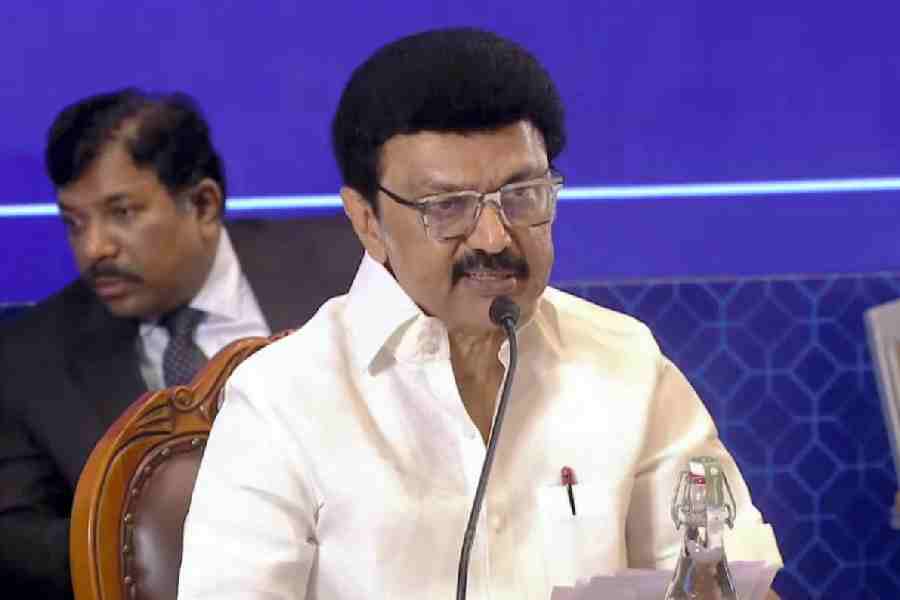
Tamil Nadu Chief Minister M. K. Stalin on Tuesday warned of massive agitations if the political power of northern states is disproportionately increased compared to the South due to delimitation.
“You will witness a Tamil Nadu that you have not seen before… This is not a threat; this is a warning,” Stalin said in a video posted on X, invoking the spirit of the DMK’s movements of the 1950s and 1960s.
He added that elections and power were secondary, stressing, “We are a people of self-respect. For us, principles matter. The rights of states matter.”
Reiterating his charge that the delimitation process is being conducted in secrecy, Stalin said the Centre was proceeding without consulting states or political parties.
“We do not even know how this delimitation exercise will be carried out. No explanation has been provided on the proposed Constitutional amendment,” he said, calling it a “punishment” for Tamil Nadu’s success in population control and noting the absence of any assurance from the Prime Minister that southern states would not be affected.
Telangana Chief Minister A. Revanth Reddy warned that women, SCs and STs in southern states could face “injustice” if seat allocation is not adequately increased. Speaking on the birth anniversary of B. R. Ambedkar, Reddy claimed that the Centre was seeking to increase seats in states like Uttar Pradesh and Gujarat at the expense of the South.
He also proposed a “hybrid” model of delimitation, with 50 per cent of seats increased on a pro rata basis and the remaining 50 per cent linked to GSDP.
Stalin’s concerns over secrecy were echoed by Congress leader Jairam Ramesh and Trinamool Congress MP Derek O'Brien, who accused the Centre of “mocking Parliament” by not sharing draft legislation with MPs.
“Till this morning, the Modi government has not shared with MPs the Constitution Amendment Bill(s) they are supposed to debate and vote upon,” Ramesh said, calling it “a complete mockery of democracy” and a sign of Prime Minister Narendra Modi’s “bulldozer mentality”. He also criticised the rejection of demands for an all-party meeting after elections in Tamil Nadu and West Bengal.
Other state leaders have also opposed the delimitation exercise for reasons ranging from concerns over diluted political power and caste factors to allegations of “injustice” to southern states.
Mahua Moitra of the Trinamool Congress and Shiv Sena (UBT) leader Uddhav Thackeray have expressed apprehension in the past over a loss of political power in their home states.
RJD leader Manoj Jha had linked delimitation to the need for a caste census, arguing that redrawing boundaries without accurate demographic data on marginalised communities amounts to “democracy without a soul.”
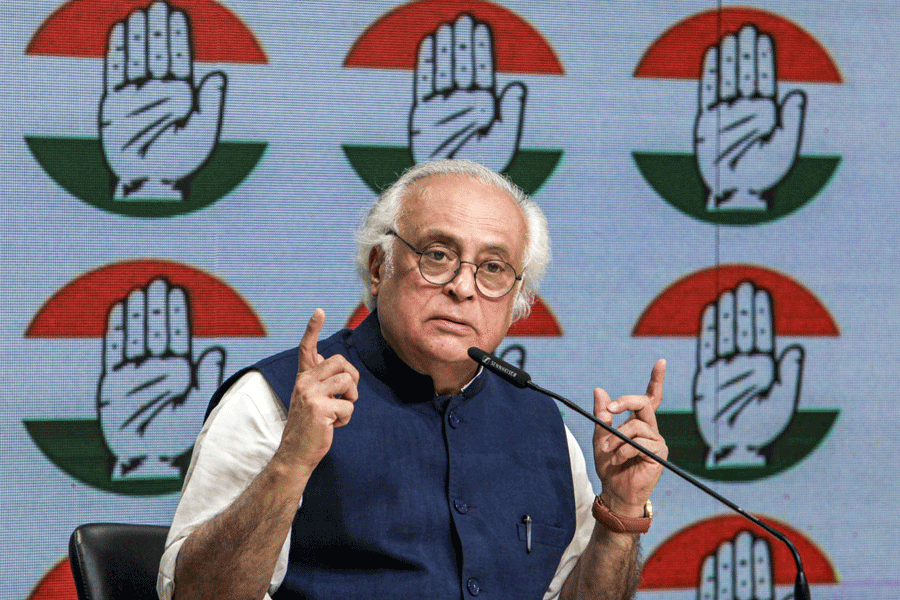
Congress leader Sonia Gandhi on Monday said the real issue behind the government’s move to bring bills in a special session of Parliament is delimitation, not women’s reservation, calling the proposal “extremely dangerous” and an “assault on the Constitution”.
She stressed that any increase in Lok Sabha strength must be politically, not just arithmetically, equitable, alleging that the Prime Minister intends to “delay and derail” the caste census that should be conducted alongside.
The proposed changes under the Delimitation Act would redraw constituencies in line with an expanded Lok Sabha, whose strength is expected to rise from 543 to 850 seats — an increase of nearly 50 per cent.
Under the projections, major states would see proportional increases: Uttar Pradesh (80 to 120), Maharashtra (48 to 72), West Bengal (42 to 63), Bihar (40 to 60), Tamil Nadu (39 to 59), Madhya Pradesh (29 to 44), Karnataka (28 to 42), Gujarat (26 to 39), Andhra Pradesh (25 to 38), Rajasthan (25 to 38), Telangana (17 to 26), and Kerala (20 to 30).