|
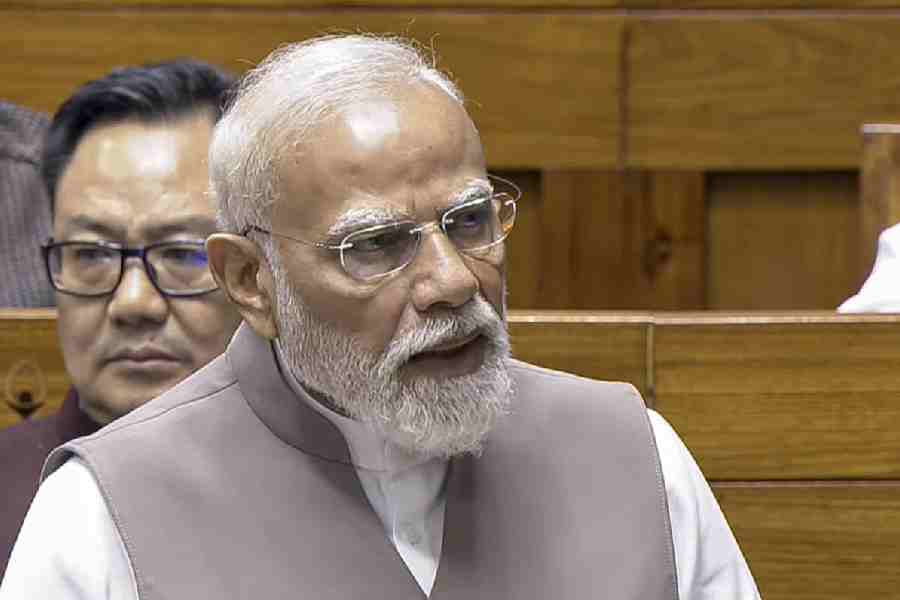
| Artistes perform at the annual theatre fest of the National School of Drama in New Delhi on Tuesday. Picture by Prem Singh |
New Delhi, Jan. 12: The Prime Minister’s latest gift to the theatre fraternity may not find too many takers.
On January 7, Manmohan Singh had flagged off the “Scheme of Building Grants, including Studio Theatres”, under which registered not-for-profit organisations and cultural groups dealing with the performing arts would be given 60 per cent of the money estimated to construct a studio theatre.
A studio theatre is one where the stage is not on a raised platform or within a proscenium arch. It can seat 100-200 people and the actors are on the same level as the audience. Although minimalist, a studio theatre has modern facilities.
Such spaces can cost anything between Rs 30 lakh and Rs 70 lakh depending on location, said Union culture secretary Jawhar Sircar. His ministry will give up to Rs 50 lakh in grants for a studio theatre in a metro and up to Rs 25 lakh elsewhere.
The remaining 40 per cent would, however, have to be borne by the theatre groups. That’s a sum most theatre groups, especially in small towns, can’t dream of.
“Unless we do plays in English, we can’t afford to hire a hall, let alone buy one,” said B. Rajesh of Madurai’s Nigazh theatre. Rajesh and his colleagues usually spend their own money to stage plays.
“In Madurai, no one can spend so much. But we need modern theatres, so we can use modern techniques of lighting we learn at drama school,” he added.
Shikhar Tripathi of Delhi’s Act One Art Group echoed him. “Even if a group has the cash, paying the whole amount may reduce members’ commitment. Most groups like to take spaces on rent. This ensures a tighter discipline and we can manage even if our membership dwindles.”
Rents for prime theatre venues in Delhi are over Rs 50,000, said Tripathi. He would like the government to manage theatres and rent them out at nominal rates. “It doesn’t matter if it’s on the outskirts. If there is a hub of art and theatre, artistes will flock there,” he said.
The culture ministry had consulted Kathak dancer Chetna Jalan, the managing trustee of Calcutta’s Padatik Dance and Theatre Centre, while drafting the scheme. “The financial people from the ministry didn’t listen to us. It is impossible for even established centres like ours to cough up 40 per cent (of the estimated cost),” she said.
Jalan, however, said the scheme would do wonders for theatre. “Young artists who can’t afford high rents can hire our studios at nominal rates after they are renovated. This will open the doors for worthy artistes. They can do serious work and even repeat shows if they are popular.”
Culture secretary Sircar said the scheme, announced by Singh at the inauguration of the National School of Drama’s annual theatre fest last Friday, would lead to bolder theatre. “Theatre has always been ahead of its times. This scheme will make it less financially dependent.”