Monday, 06 July 2026
Monday, 06 July 2026
Monday, 06 July 2026
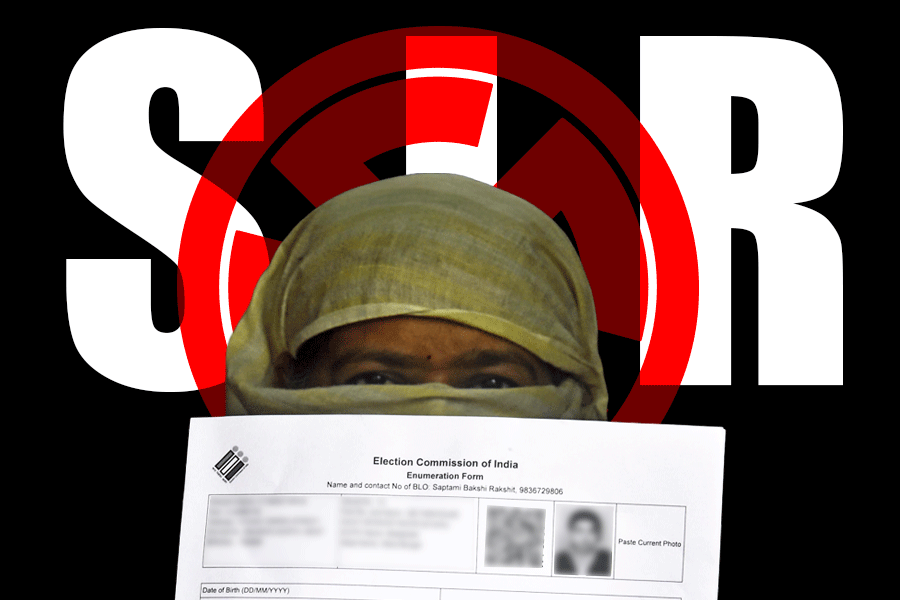
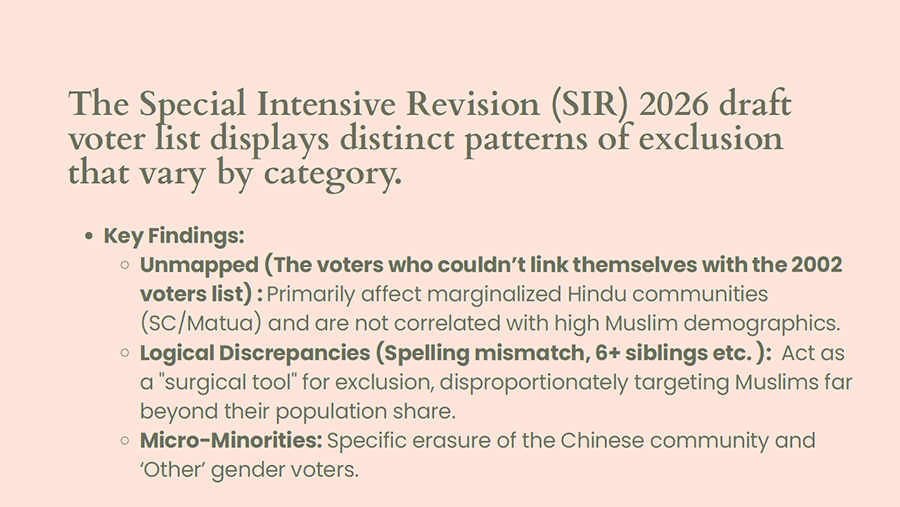
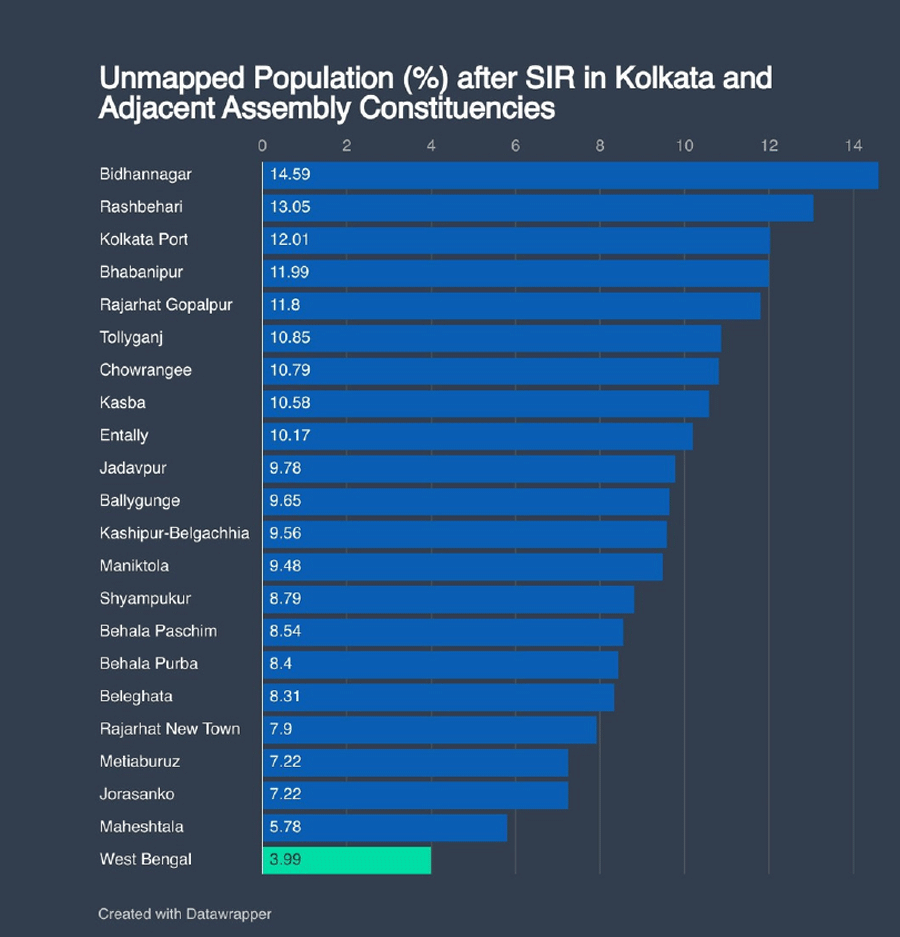
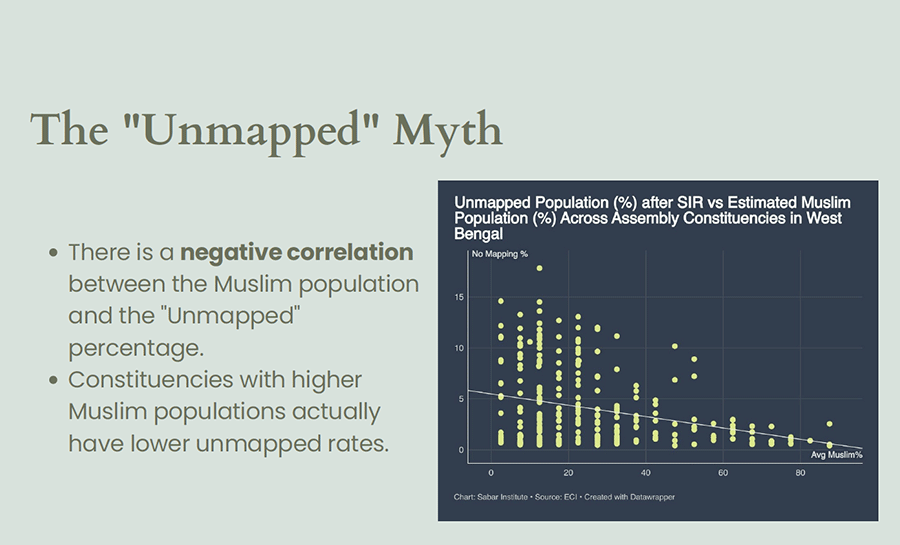
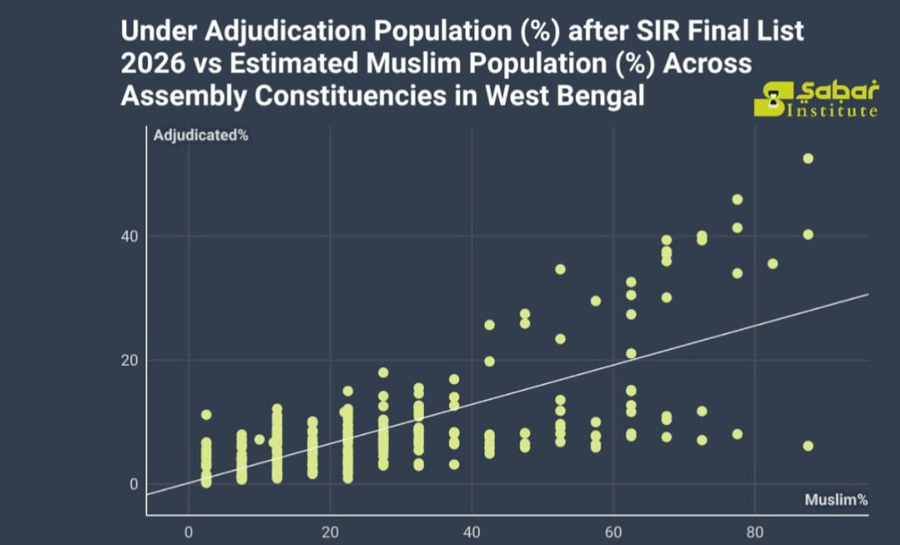
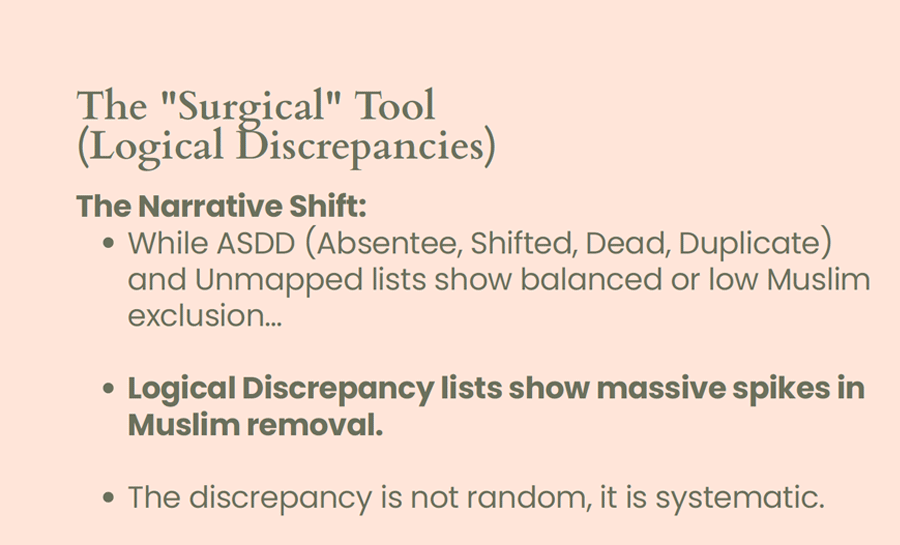
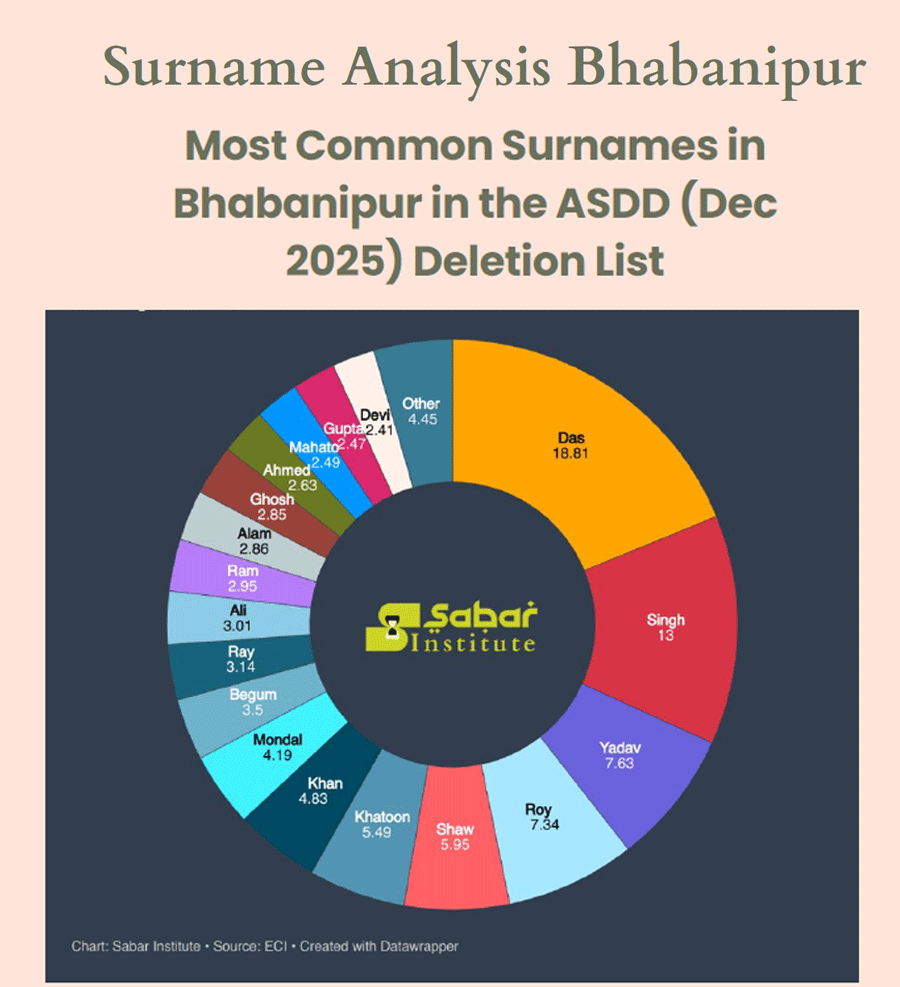
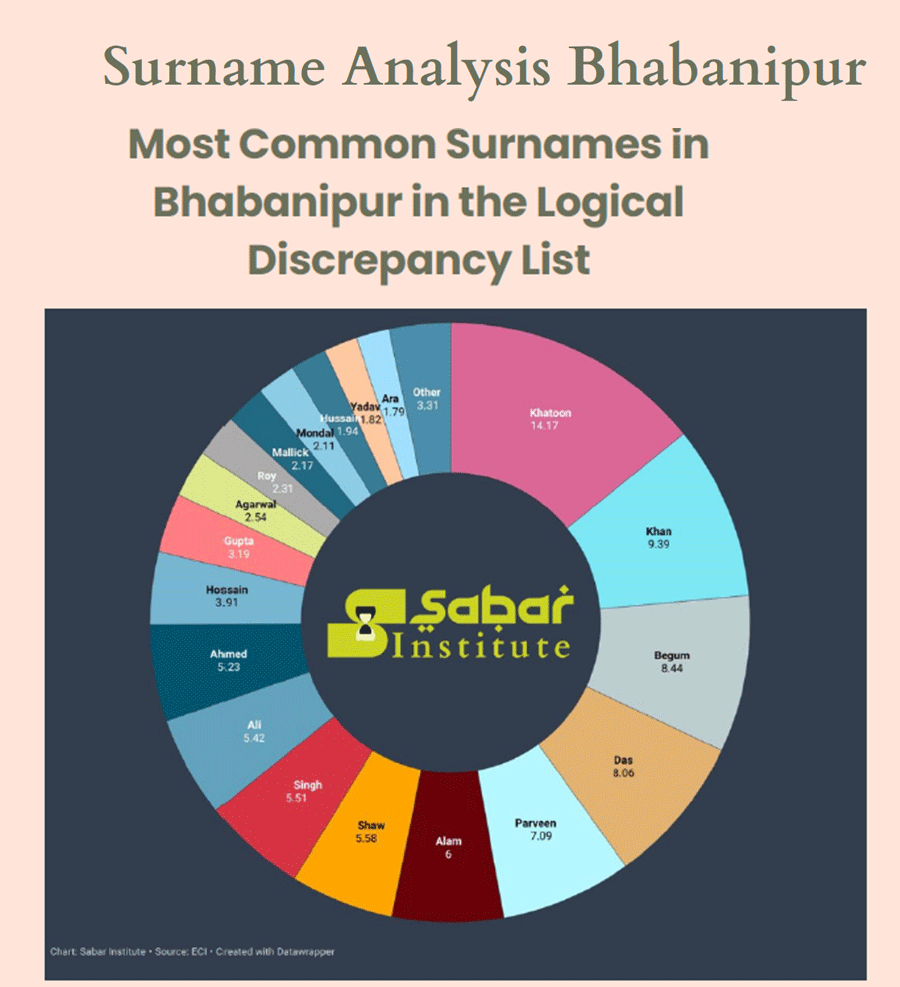
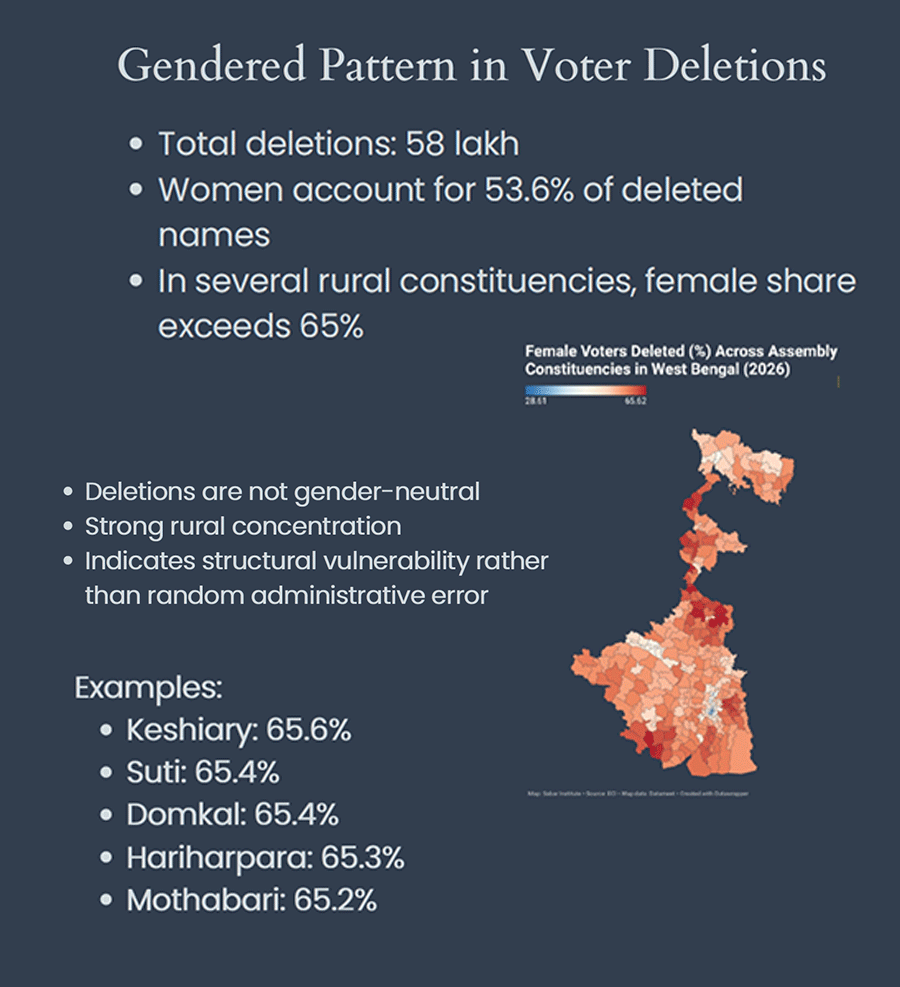
A disproportionate percentage of Muslim voters were reported under "logical discrepancies" and women account for more than half of removed names in many places in the special intensive revision of electoral rolls underway in Bengal, according to data presented at an event in Delhi on Monday.
Many people with legal documents had their names eliminated, entire families were removed and even booth-level officers were facing exclusion, according to testimonies presented at the discussion titled ‘Vanishing Voter Rights and Vulnerable Citizenship’ that focused on the SIR in Bengal, with particular emphasis on areas such as Malda and Murshidabad where mass deletions are being reported.
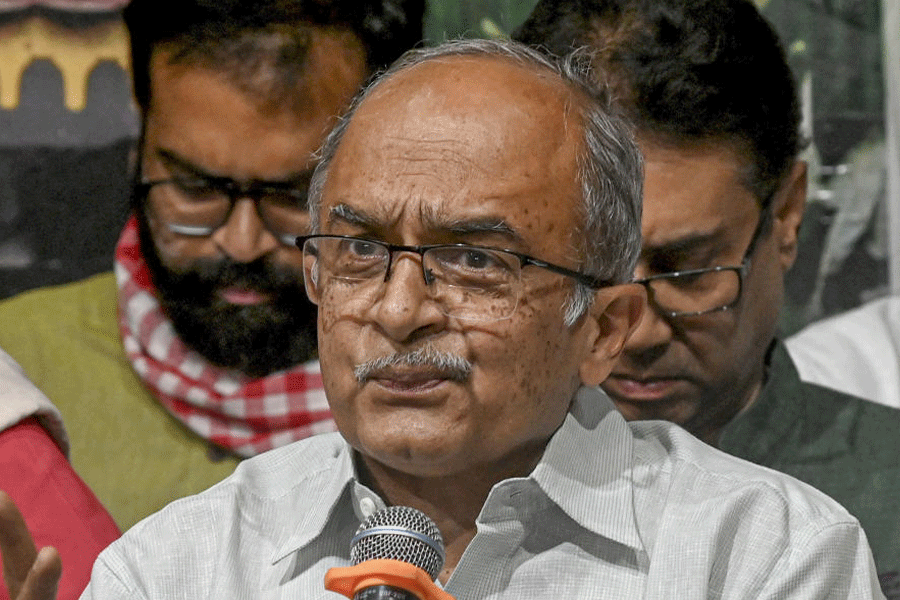
“In history, such an intensive revision has been done once – in a part of an Assembly constituency in Uttar Pradesh,” said senior Supreme Court advocate Prashant Bhushan. “When [James M.] Lyngdoh was the chief election commissioner, the Election Commission gave a very detailed reason as to why the intensive revision, ie, voters' list, is required in a new way.”
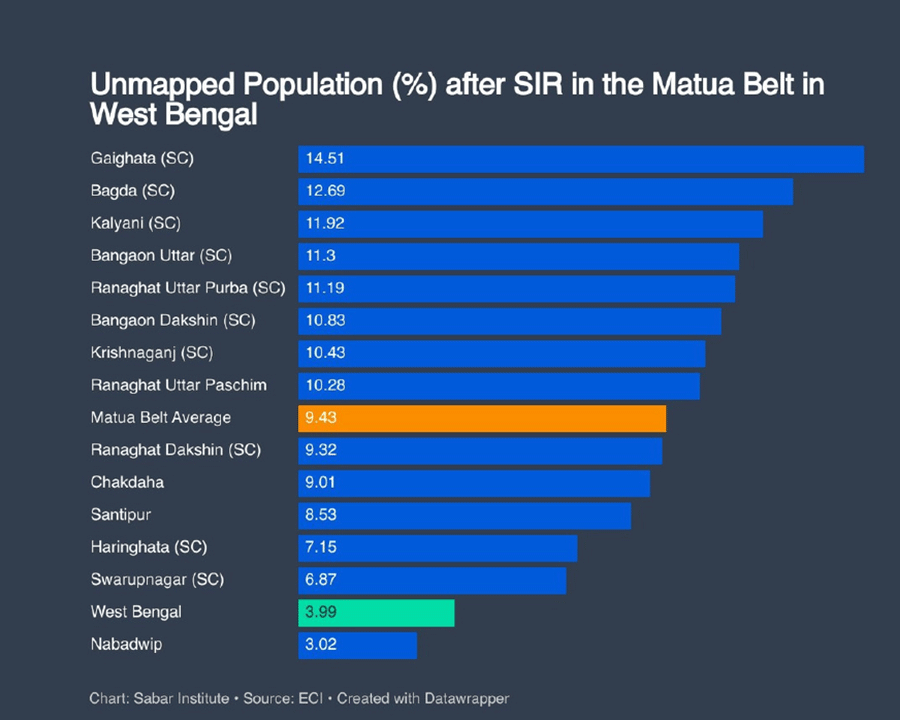
The Association for Protection of Civil Rights (APCR), which hosted the discussion in a packed auditorium at the Press Club of India, made a data-driven presentation titled ‘Hidden Algorithms of Exclusion.’
The presentation claimed women’s names were removed as a result of post-marriage relocation, a lack of ongoing recordkeeping, and “elimination” of micro-minorities such as Chinese-origin inhabitants and third-gender individuals.
“You can see that in West Bengal, Muslims are being targeted… so that their name is removed from the voters' list,” Bhusan said.
The hit has been the worst in places like Malda and Murshidabad, per the APCR. These zones already grapple with river erosion and displacement. The SIR has amplified distress. Persistent re-check requests, opacity around erasure reasons, and instances of family members vanishing while their kin remain have turned routine administrative exercise into a survival struggle, the speakers at the discussion said.
“This is the first time in India that the voters' list is being made in a new way,” Bhushan said. “When intensive revision was done in 2002-03, on the basis of the old voters' list, BLOs had added names to the list door-to-door. The names of those who died and those who left were removed. If someone’s name is in the old voters' list, then it will be accepted that he is a prima facie citizen. If you have a doubt, then you have to give him a notice on the basis of facts and reasons. After that, he can give any evidence, oral or documentary, to show his citizenship. If you still feel that he is not a citizen and hence his name should be removed, then he will either go to the Foreigners' Tribunal, the court or the government of India to decide his citizenship. They [the Election Commission] can only flag him," he added
The Supreme Court has pushed for tribunals and re-verification but has not halted the SIR exercise or intervened to tweak the election timeframe.
On Monday, the apex court refused to entertain the Bengal government’s plea to direct the 19 appellate tribunals to pass interim orders allowing at least certain categories of excluded voters to vote, saying “we do not want to rush it”.
The state government had sought the interim relief, particularly for the deleted but “mapped” voters – those with kin in the 2002 list – citing a purported 20 lakh-plus exclusions and the shortage of time for the tribunals to dispose of all the appeals.
The court decision means that if the tribunals do not dispose of the appeals of those deleted before the expiry of the deadline for fresh inclusions, these voters cannot vote in the Assembly elections that begin on April 23.
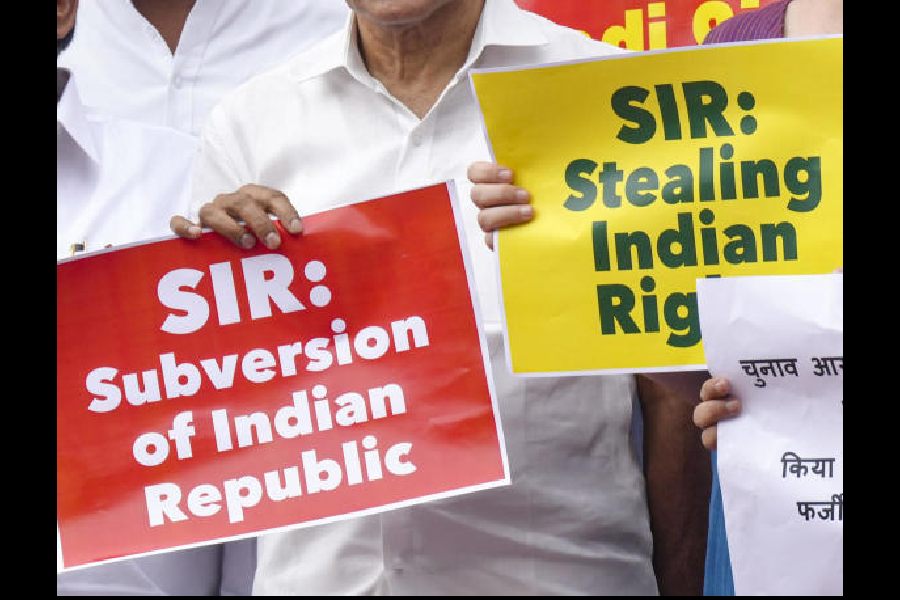
Politically, there is a stark division. Supporters of the SIR say cleansing the voter rolls is critical to electoral integrity. Critics argue that the burden of proof unfairly impacts the poor, the migrating workers and the undocumented and hence alters the electorate.
“Everyone knows what is the condition of the Election Commission,” Bhushan said. “But leaving that aside, in an unprecedented way, the SIR is being pushed in haste. And, unfortunately, the Supreme Court did not stop it. They are allowing it to go on and they are allowing it to move forward.”
The APCR panel ended with a call for transparency, accountability, and a hope for those who are under the revision process and facing continuous issues. The panel concluded that the SIR was designed to refine democracy but is exposing its fault lines.