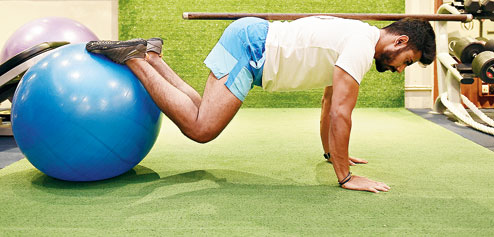
If you’re into fitness, you may have stumbled upon Paul Chek, whose fitness videos are all over YouTube. Well, the C.H.E.K Institutes all over the world train fitness trainers to train just right.
Imran Sarfaraz, a 27-year-old trainer at Endorphins in Ballygunge, is the second CHEK trainer in eastern India, after strength and conditioning coach and t2 columnist Ranadeep Moitra of Endorphins. “Imran’s commitment to education is admirable. A CHEK certification stands among one of the most respected credentials of distinction in the field of fitness and reflects the professional’s credibility and competence,” says Ranadeep.
Back home from Sydney after his certification as a CHEK Exercise Coach, Imran tells t2 what to get right in the gym (and also out of it)...

What are the things one should look for when signing up at a gym in order to avoid exercise-related injuries?

The first thing a client should ask for is a postural assessment by a qualified professional before their trainer/coach make them jump to weights and fancy gym gimmicks. If you start your movement in a faulty posture, you are very likely to injure yourself. It’s like when you visit a doctor, you carry your reports or he/she assesses you and asks you to get certain tests done. The doctor cannot start your treatment before knowing what is wrong in your system.

The top three ailments that people come in with?
Back pain — lower and upper, knee joint pain and headaches are some of the most common ailments I see my clients suffering from due to physical nutritional and mental stress.

Tips to manage stress:
(i) Identify your primary stressor and make a realistic plan to address it.
(ii) Eat and drink right. Drink plenty of clean water.
(iii) Move and exercise.
(iv) Meditate.

What are some of the common mistakes people make in the gym?
Using too many machines and performing supported lifts such as bench press, prone row, Smith squat. If we use a machine that supports our body in any way (like the Smith Machine does), we are not activating the body’s static stabilisers or postural system. There is a very poor correlation between strength during any supported lift and any functional lift or task such as lifting a heavy suitcase off the floor, tackling an opponent in a game of rugby. Try using more of barbells, dumbbells, kettlebells and perform functional exercises that have benefits in daily life.
What would you start an absolute novice off with? What exercises are an absolute no-no?
I would first assess my client to see if there is any dysfunction and based on that, I would prescribe exercises. For the first four to six weeks, I would make them do two sets of two to three exercises, 15 to 20 reps each. I’d focus more on their core stability and range of motion. Too many exercises, sets or reps are a complete no-no for a novice. Supported lifts such as Smith squat or bench-press, leg press, leg extension, running or using cardio machines should be an absolute no for any novice.
Low weights with high reps or heavy weights with low reps?
It depends on your goals.
8 reps = strength zone
8 to 12 reps = body-building zone
12 to 20 reps = strength endurance zone.

Is too much cardio bad?
Too much cardio increases production of the stress hormone, cortisol. Cortisol breaks down amino acids which are the building blocks of muscles, exposing joints and tissues to various injuries. Loss of muscle is related to low metabolism, thus encouraging fat storage.
Is circuit training good or bad?
Circuit training is a good way to promote a healthy metabolism and increase strength and cardiovascular endurance.
The top five foods one may incorporate in their diet...
More organic food since it is free of toxic pesticides, herbicides, fungicides or chemical fertilisers. Add good fats to your diet in the form of organic ghee, coconut oil and palm oil. Eat free-range animal meat and animal products. Drink plenty of water.
Pictures: B Halder