
He’s been making films for 30 years now and Sudhir Mishra’s next is the interestingly titled Daas Dev, an intriguing subversion of Saratchandra Chattopadhyay’s classic Devdas. t2 caught up with Mishra for a chat on the film, which releases on April 20, and beyond.
Devdas has had numerous interpretations on stage and screen. What made you want to turn it around and call it Daas Dev?
Somebody once told me to think about the idea of making Devdas, but when I did, it became something else in my head. I am calling it Daas Dev, but I am crediting Sarat babu (Saratchandra Chattopadhyay) for the story. But unlike the original, Dev’s (played by Rahul Bhat) addiction is his power in my film.
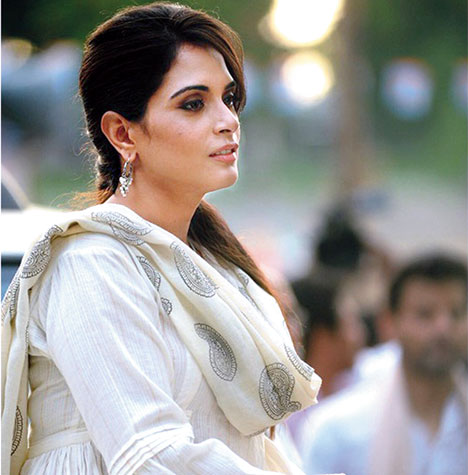
When I started thinking about Devdas, I got bored. This was five years ago. Then suddenly, I saw the similarity between Devdas and Hamlet, both being indecisive characters. I thought of making Dev the heir to a political legacy who, like many political dynasties in India, plays the son who comes back to help his family when they are in trouble. Paro (played by Richa Chadha) is Dev’s father’s secretary. So the rift between Dev and Paro becomes a political one. She wants revenge against Dev.
Chandramukhi, whom I call Chandni (played by Aditi Rao Hydari) in this film, is a political fixer who brokers deals. She still has that flaw of being in love with Dev, but she’s in the game for her own selfish ends. I thought of showing the Dev-Paro love-hate story against the backdrop of dirty politics and the lust for power. Chandni narrates the story from her viewpoint. Devdas is the story of Dev who becomes a ‘das’ (slave) to his addiction and his guilt. This is a reverse story of people moving from ‘Daas’ to ‘Dev’ and how they rid themselves of their addictions. This is a story of liberation.
So unlike the classic Devdas, your film isn’t a tragedy?
It isn’t, but it isn’t a happy film either. I’ve mixed genres in this film — it’s a political story with Shakespearean treatment with a strong romantic base. It has a kind of an epic scale.
What’s been the influence of Saratchandra Chattopadhyay’s Devdas on you?
Well, I think he wrote a very interesting character. Devdas not only talks about its protagonist’s journey of doom, but also about the structure of society at that time and the place of women in that world. The character of Devdas is interesting because he’s someone who destroys himself for love. It’s an impossible fantasy. But I didn’t want to make that story… I have only borrowed these three characters. But yes, I’m admitting the influence.

What made you choose your ensemble cast, led by Rahul Bhat as Dev?
I thought it was interesting to have Richa play Paro, originally a coy and demure woman who escapes into herself. But the Paro in my film is a modern woman who is intelligent and opinionated and is not afraid of being wrong. Richa is like that in life. Aditi Rao Hydari has a porcelain kind of beauty and yet her Chandni is a character who is a manipulator… in her I found a Chandni who’s both soft and strong.
As far as Rahul Bhat is concerned, I really liked him in Ugly (directed by Anurag Kashyap) and I needed a face that was — to put it in Hindi — khandaani. Also, he’s a very good actor who doesn’t have much of an image. In my films, the character and the journey become important, and not the actor. And I think he’s played the character very well.
You first explored the Indian heartland and used it successfully in films like Hazaaron Khwaishein Aisi. Daas Dev also seems to be set in that space, but don’t you think the backdrop of the Indian heartland has been done to death?
I think love stories in Bollywood are done to death. There are a lot of directors who hail from the heartland and they set their stories against the backdrop they are familiar with. My film is a political story that could happen anywhere. I set it in UP, but I could set it anywhere — lust, ambition, greed, power have no boundaries. Chandni has nothing to do with the Hindi heartland, by the way.
Let me be a little arrogant here. My understanding of politics is fundamentally different from most. I don’t justify gangster-ism and neither do my films. My films are not moralistic, but they have a moral centre. But I also enjoy those other kind of films. When the Hindi heartland is handled by Anurag Kashyap, it’s quite interesting and even brilliant at times. Or for that matter Vishal Bhardwaj in Omkara. That was brilliant.

Your last film Inkaar released five years ago. Why this long gap?
Well, I was writing Mehrunnisa (starring Amitabh Bachchan and Rishi Kapoor) in between, but it didn’t work out because the budget became too much. Daas Dev was tough to set up because it’s kind of a big film. It’s got crowds and big locations… for films like this finance takes time. And honestly, I don’t want to make films all the time. My grandfather used to say, ‘If you don’t have anything to say, shut up!’ (Laughs)
The women in your films have always been very strong. Does that stem from a personal space?
I think it must be. My grandmother single-handedly brought up my father and his five brothers when my grandfather walked out on them. My mother as well as Renu Saluja (Sudhir’s wife who died of cancer in 2000)… they were all strong. I was in a New York restaurant and heard Gabriel Garcia Marquez speaking to a bunch of people and telling them that the trick to understanding women is to know that they are as close to betraying you as you are. That kind of stuck with me. And the women in my films have been like that — those who have their own trajectory and refuse to be victimised. That’s the kind of women I’m drawn to. A lot of people didn’t see Chameli (starring Kareena Kapoor) which was about a prostitute’s right to say ‘No’. These are the kind of women I like writing about.
It’s been three decades for you in films. How do you look forward to the next couple of years as a filmmaker?
I’m working on something very interesting on the Indo-British collision. They might ban me from England after that! (Laughs) It’s a web series and the digital platform really intrigues me. I love being on social media. Even social media has a lot of credible sources. I follow a lot of people around the world and social media allows you to read a cutting-edge piece on science or a great journalistic piece from anywhere around the world. The web allows you to read every newspaper in the world… you can almost curate your own newspaper.

You’ve been one of the most consistent voices against censorship and the clampdown on freedom of speech in an industry that’s been largely silent...
I’ve been fighting against the censor board for the last three years. I have never shied away from expressing myself. I have no idea what it will take to bring the industry together cohesively. Some of us have got together and sided with films like Udta Punjab and Lipstick Under My Burkha. Babumoshai Bandookbaaz or even (Sanjay Leela) Bhansali… whenever there has been an extra-constitutional authority that has tried to clamp down on a film, I have been very vocal. But I don’t know if the industry will.