The angst and anger of citizens struck off the revised electoral rolls came to the fore at Park Circus Maidan on Sunday afternoon.
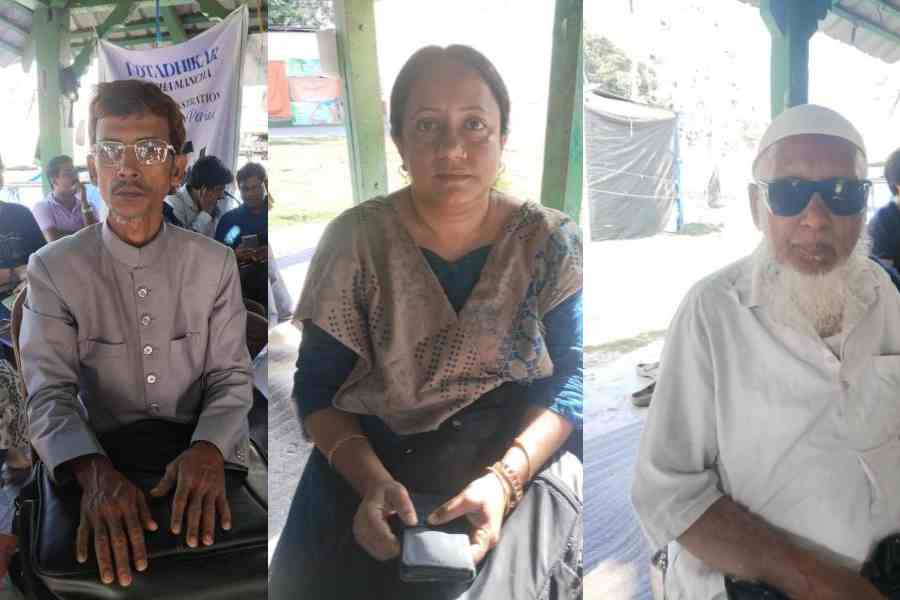
The ground has been hosting a long-running protest against the contentious SIR. On Sunday, the organisers brought together around a dozen deleted voters, who shared their ordeal.
Their stories pointed, yet again, to a flawed system that turned a reformative exercise into an exclusionary one.
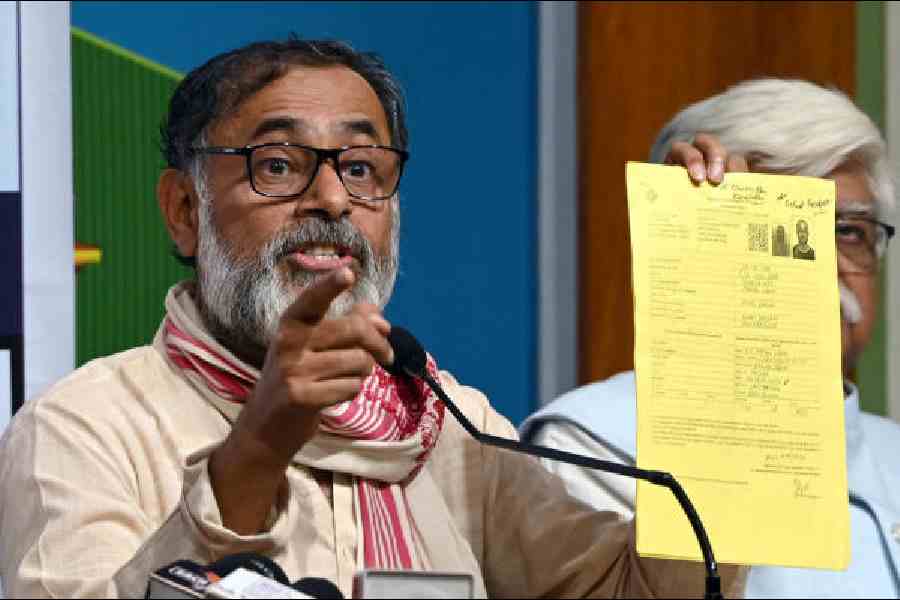
The speakers included college teachers and senior citizens. Most of them said they had appeals against their exclusion.
Shamim Akhtar, 68, was one of them. He lives on Dr Lalmohan Bhattacharjee Road and has been a voter in Entally since 1979.
He has a paan shop in the neighbourhood.
In the 2002 rolls, his name was misspelt as Md. Shamin (ending with “n” instead of “m”). He later had it corrected and received a fresh voter card in 2013 — retaining the same EPIC number as before — with his name spelt as Shamim Akhtar.
Yet, he was flagged as a voter with a logical discrepancy. The notice that summoned him to a hearing said he did not fill in his own or a relative’s details properly in the 2002 rolls.
At the hearing on December 29, Akhtar submitted his passport, Aadhaar and other documents. He was still removed from the rolls.
“I have never missed a vote. This time, it is almost certain I will,” said Akhtar, who wore black glasses to shield his eyes following a recent cataract surgery. He had trouble walking without help.
A neighbour and namesake, also deleted from the rolls, held his hand at the protest meet.
Mohd Shamim Akhter, 50, is an associate professor and head of the department of Islamic Theology at Aliah University’s New Town campus.
A discrepancy in his father’s name between the previous roll revision and the current one created a mismatch.
Akhter hails from Madhubani in Bihar and moved to Calcutta in 2016. He was previously a registered voter in Bihar, where his name appeared as Mohd Shamim in the 2003 revised electoral rolls. His father’s original name is Mohd Motiur Rehman, but it appears as Motiur Rehman in the 2003 rolls in Bihar.
He submitted his passport and PhD certificate, along with a host of other documents, at the hearing. “The software is biased against Muslims. Was it tested even once before its application on such a large scale?” asked Akhter.
His son, who studies MBBS at Diamond Harbour Medical College and Hospital, has also been removed from the revised rolls, apparently due to the mismatch in Akhter’s name.
Melisha Khatun, 39, an assistant professor of economics at Aliah’s New Town campus, had also lost her voting rights.
She hails from Raina in East Burdwan but moved to Khandaghosh after marriage and is a voter there. She has five sisters. All six received hearing notices after being flagged with logical discrepancies because they were mapped to the same father.
“My sisters’ names were later approved, but mine was not. I submitted all the required papers at the hearing. I think the SIR is exclusionary in general, and even more so for women. The supplementary list of my booth, which came out on April 7, shows women make up a majority of those removed,” said Khatun.
One of the organisers of the Park Circus demonstration, who is also a colleague of Khatun, echoed her.
Md Saifullah, 51, the head of the Bengali department and the dean of humanities and languages at Aliah University, is a voter in Habra in North 24-Parganas. He was under adjudication but has eventually been approved as a voter.
“Women have suffered the most from this drive. The current regime at the Centre, which controls the EC, is anti-women to the core,” said Saifullah.