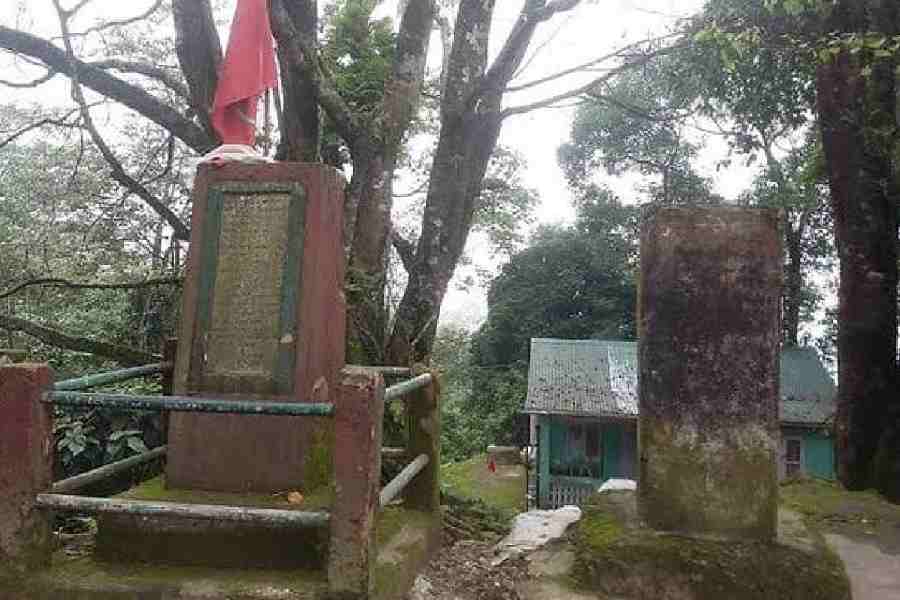
The echoes of the 1955 Margaret’s Hope firing still linger in the tea gardens of Darjeeling, where bullets once felled workers demanding more rights. Decades later, their descendants continue to fight quieter battles over wages, land and survival.
On June 25, 1955, at the Margaret’s Hope tea estate in Kurseong subdivision, police opened fire on protesting workers during a charged labour movement. Six workers — Jitman Tamang, 48, Kaley Limbu, 14, Iccha Sunwar, 21, Amrit Kamini,18, Maulishova Raini, 22, and Padam Lal Kami, 24 — lost their lives.
The protest was part of a wider agitation across Darjeeling, the Terai and the Dooars, where tea workers had risen against working conditions, demanding better wages, bonus, maternity benefits and an end to arbitrary eviction practices like the “hattabahar” system.
Under hattabahar, a tea garden worker’s family had to leave the estate for good if even a single member was not working in the garden. There were no exemptions even if the family had been living in the garden for generations.
The 1955 agitation was among the first organised labour movements in the Darjeeling tea industry. Seventy years on, the memory of that day survives not just in the annals of history but in the lives of families like that of 62-year-old Bhim Subba.
Bhim is the nephew of Kaley Subba (also referred to as Kaley Limbu), one of the youngest victims of the firing.
“My uncle was just 14. He was shot when he had climbed a guava tree,” Bhim said, recounting a story passed down generations.
Elections have come and gone, governments have changed, but the economic struggle for the likes of Bhim continues.
Bhim retired from tea garden service four years ago, receiving a little over ₹3 lakh as gratuity and provident fund. It was not enough to sustain a family. He now works as a carpenter to make ends meet. His wife, Samjana Subba, continues to labour in the tea garden.
“Wages are too low,” Bhim said bluntly. Daily wages in the gardens hover around ₹250, a figure many workers say is insufficient given the rising costs of living.
The economic constraints have forced migration within families. Bhim’s son, Anand, has moved to Bengaluru to work in a hotel. “Who would not want to work near home had the wages been good?” Bhim asked, summing up a sentiment widely shared across the hills.
The irony is hard to miss. The 1955 movement, one of the earliest organised labour uprisings in post-Independence India, had forced the system to concede key rights such as bonus, maternity leave and regulated working conditions, eventually contributing to the implementation of the Plantation Labour Act rules in 1956.
Yet, fundamental issues remain unresolved.
“Our wages have to be increased, and we must get land rights,” Bhim said. Tea plantations in the Darjeeling hills date back to the
1850s, and generations of workers have lived and worked on estate land without ownership rights.
In the run-up to elections, promises for tea garden welfare are once again in the air from Prime Minister Narendra Modi to local leaders. But on the ground, workers like Bhim remain sceptical.
A committee to set up minimum wages for the tea gardens has not been able
to fix the rate, even after almost a decade of its formation. Land rights to tea gardens, a promise of all leaders, is still a distant dream and continues to be entangled in technicalities.
“There is a need for strong leadership not just at the top level, but even at the garden level. We have none to fight for us,” said Bhim when asked about the present set of leaders in the region.
Back in 1955, more than 30,000 people had joined the funeral procession of the slain workers, turning grief into a powerful statement of unity. That movement proved that tea garden workers could organise and resist.
They won the battle in 1955, but are yet to win the war on basic issues even after 70 years.
- Darjeeling voted on April 23