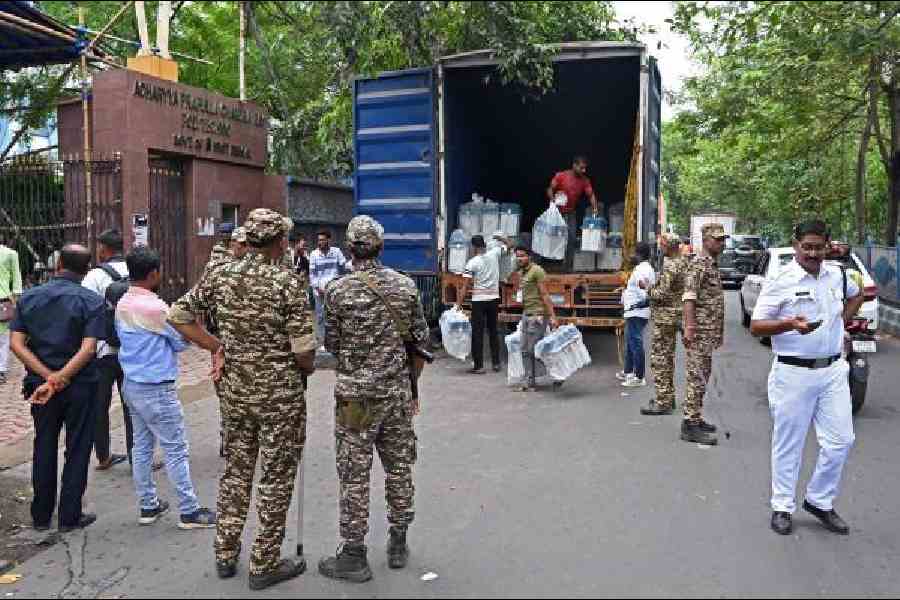
Peaceful? Admirably. Free? Perhaps. Fair? There’s the rub.
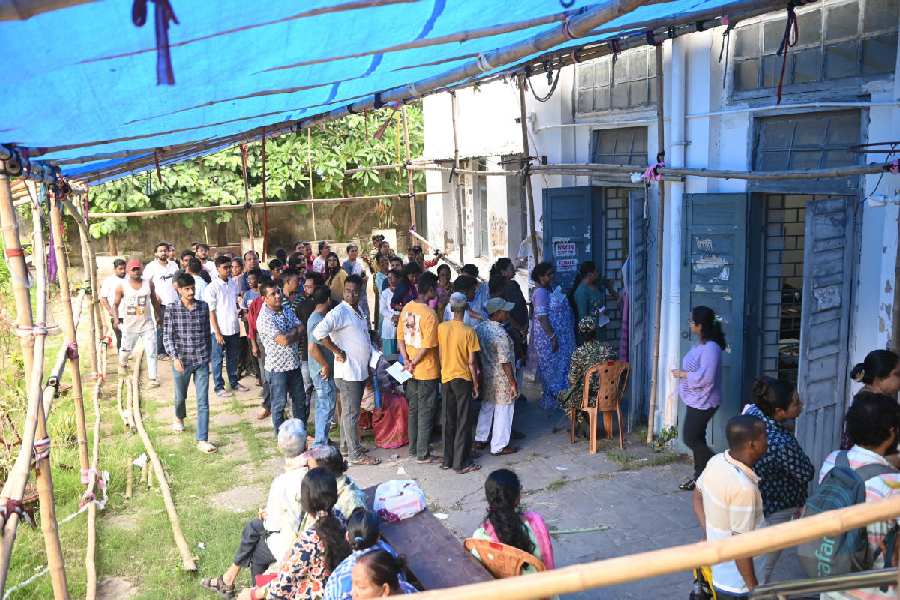
At 7.45pm, the poll panel had said the second phase had recorded 91.66 per cent polling across the 142 seats, and that the overall turnout this Bengal election stood at a record 92.47 per cent at the time.
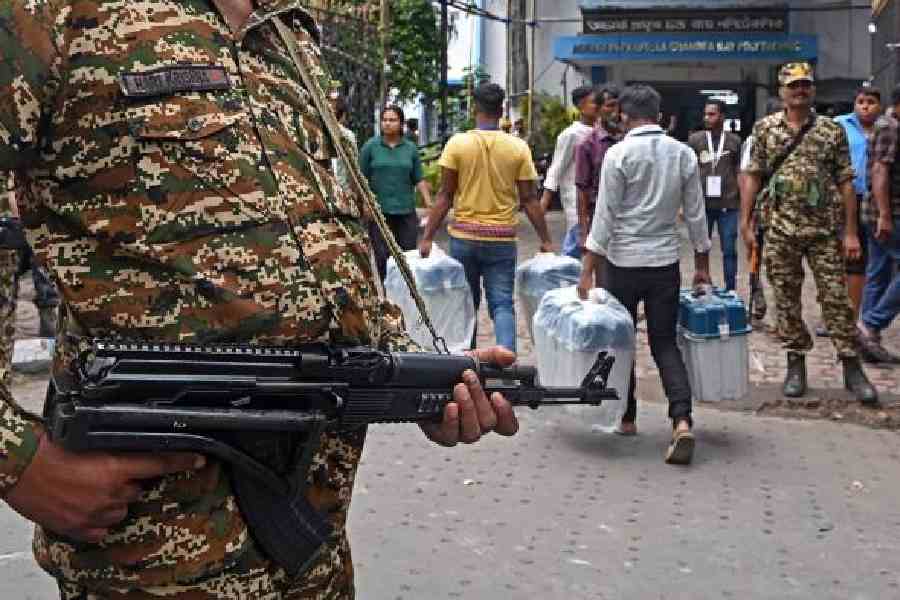
Also, for the first time in recent memory, Bengal — arguably the country’s most politicised state — refused to reaffirm its reputation as the country’s most politically violent state.
By 10pm, when this report was written and the curtain had fallen on the second and final phase of this Assembly election, there had been no reports of deaths, critical injuries or bombing.
Psephologists and political scientists could not remember the last time the state had witnessed a big election with little or no bloodshed. One of them suggested the previous instance was 1977, but others contested the claim saying that election had been violent too.
“This may not be unprecedented, because not all such records exist in detail about every election in post-Independence Bengal. But this is certainly the first in recent memory,” political scientist Subhamoy Maitra said.
“Nirvachan Sadan under Gyanesh Kumar has been questioned in several areas relating to upholding the constitutionally approved democratic practices, but it has definitely delivered on this core parameter.”
Maitra and other experts, however, suggested that the lack of violence on the polling days did not itself make this election a fair one, one of them citing the examples of incident-free polls in North Korea and Russia.
They flagged the massive voter deletions through the SIR, with most of those excluded not being given enough time to argue their case before an appellate tribunal.
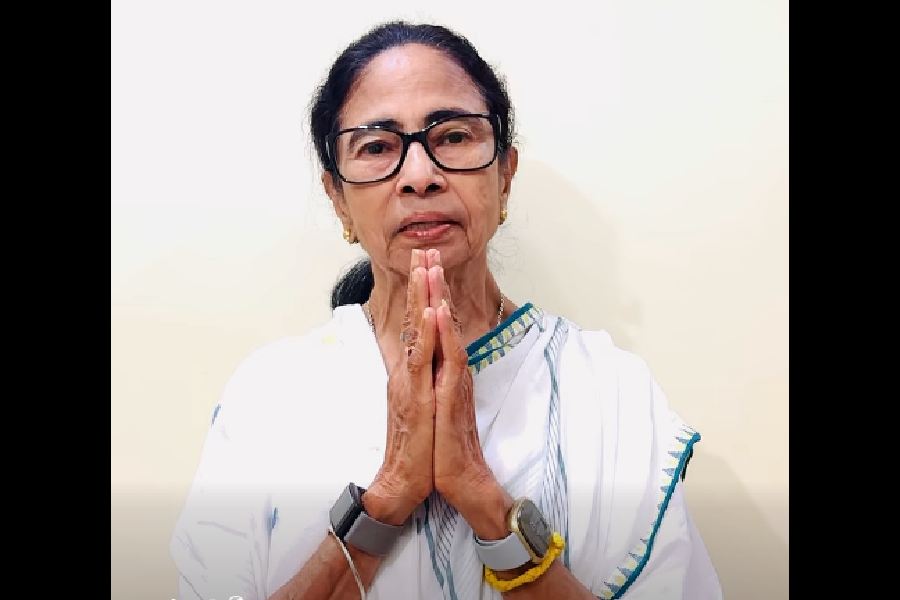
Chief minister Mamata Banerjee said the polls had been neither free nor fair.
Poll violence had grown gradually to become part of Bengal’s “political culture” since the first post-Independence election in the early 1950s.
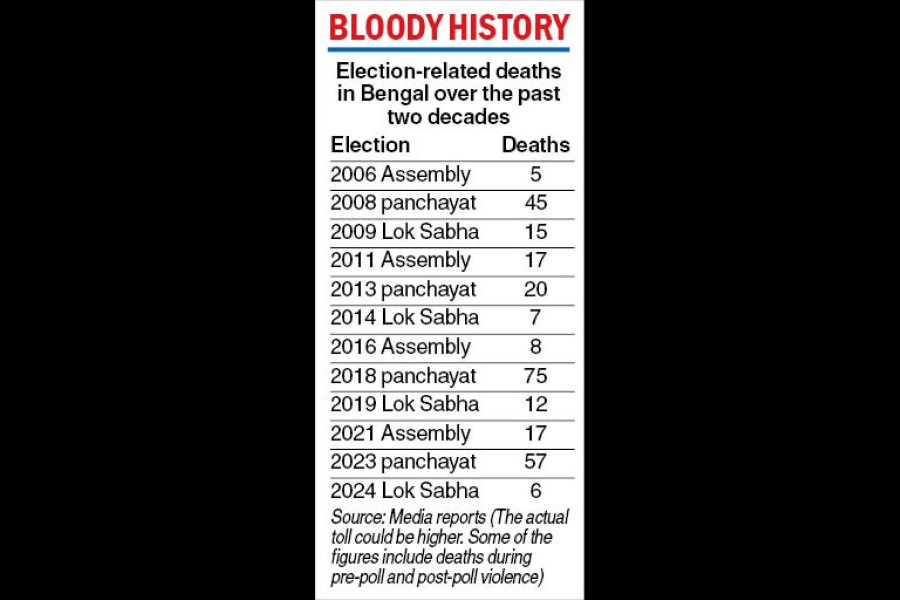
The past two decades alone have seen at least 280 poll-related deaths in Bengal.
“That is only the death toll. It excludes the incidents of serious violence that caused substantial physical harm to people, ranging from several hundred to over 1,000 during each election over these 20 years,” a teacher of sociology at a premier city university said.
Opposition leaders such as Bengal BJP chief Samik Bhattacharya, CPM central committee member Sujan Chakraborty and senior Congress leader Soumya Aich Roy hailed the “peaceful” election.
Even Trinamool Congress spokesperson Arup Chakraborty acknowledged the relative peacefulness while lambasting the “criminal highhandedness and bullying” by the central forces, marshalled by the Election Commission and, allegedly, the BJP.
“This commission gets a minus 1 out of 10 for its role in Bengal this time,” Chakraborty said.
An official handling election responsibilities in a south Bengal district said the high turnout did owe substantially to the reduction of the voter base by the 91 lakh deletions during the SIR.
“But there is no denying that people turned out in astonishing numbers in both phases,” he said.
“The fear of being identified as someone who did not vote despite being included on the post-SIR rolls was a major driving factor. And, of course, there was the urge to vote for or against change this time,” he added.
“If over 90 per cent turnouts have been witnessed in both phases, involving such a vast electorate, how can anybody claim the election was not free?”
But were they fair?
“These elections took place with the questionable exclusion of 27 lakh voters — a higher number than the entire population of several nations — under the contentious ‘logical discrepancies’ parameter of the poll panel,” Maitra said.
Several studies by independent bodies with no political affiliation have suggested a lopsided exclusion of Muslims and underprivileged Hindus, especially women — segments that Mamata claims are unlikely to vote for the BJP.
Of the 27 lakh voters excluded after “adjudication” of their “logical discrepancies”, only 1,474 — just over 0.05 per cent — were heard by the tribunals, which cleared 1,468 of them.
This means that among those heard by the tribunals, “99 per cent or so” had their voting rights restored, Maitra emphasised, which implies that most of the exclusions happened erroneously.
“So how can we suggest this was fair?” he said.
Zaad Mahmood, a teacher of political science at Presidency University, said: “What we saw was that the day of polling — only that one part of the poll cycle — had been violence-free in a fairly unprecedented way. Nobody was killed.
“However, in the pre-poll days, we saw that this was not (a) fair (election) because of the disenfranchisement of millions of voters. Today, whatever the election outcome is, there will always be the question: What if these millions of excluded people had voted?”
Mahmood added: “If you look at some African countries, or Russia or North Korea, they have 90-99 per cent polling — perhaps with no reported deaths.”
He said the bigger question was whether there was an electoral level-playing field.
“Many are perhaps going gaga over Nirvachan Sadan’s handling of this election, but it has actually failed. Sixty-one lakh people were put under ‘adjudication’, and a verdict could only be reached in favour of 34 lakh among them. They simply denied the rest their right to vote,” Mahmood said.
“If the margins turn out to be what the exit polls are now suggesting — with the vote shares very close — Trinamool can always say the election was stolen from the party before it could even take place. The election’s legitimacy stands questioned.”