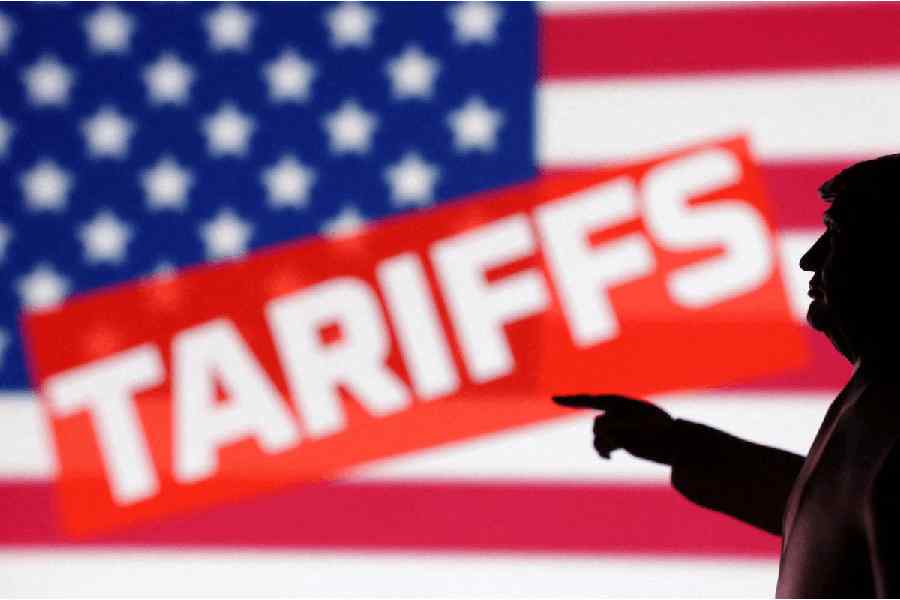
A clause in the joint statement issued on February 6 by the United States and India on the interim trade deal may offer a window to the Modi government to renegotiate its terms, after the US Supreme Court struck down Donald Trump’s favourite toolkit to impose sweeping tariffs on nations.
India, like other nations, will now face a standard 15 per cent tariff, after Trump raised the so-called ‘worldwide tariff’ on Saturday. He had notified a rate of 10 per cent on Friday, hours after the Supreme Court ruling.
As a result, around 55 per cent of India’s merchandise exports to the US will attract a 15 per cent plus MFN (most favoured nation) tariff (3 per cent on average), which will still be lower than the 25 per cent India is paying now.
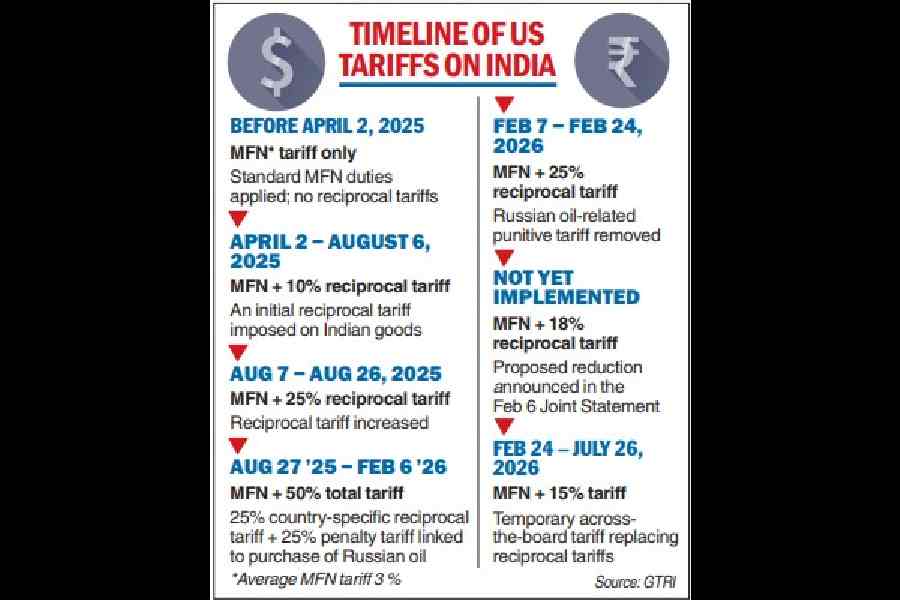
However, the existing tariff will be almost equal to the 18 per cent it would pay under the interim trade agreement, which was to be signed later. In other words, a trade deal as it stands will not lower US tariffs for India.
However, India had bowed down to US pressure to cut tariffs on several US goods and made sweeping commitments, including not buying cheap Russian oil under the proposed trade deal.
There appears to be an escape hatch built into the joint statement issued by both countries. It observed that, “In the event of any changes to the agreed upon tariffs of either country, the US and India agree that the other country may modify its commitments”.
Now that US tariffs have changed, India should use this clause to either opt out of the agreement, delay negotiations or seek fresh terms so the trade deal looks equitable, Ajay Srivastava, founder of think tank GTRI, said in a note on Saturday. His comments came before Trump raised the tariff again.
In a press conference from the White House after the SC ruling, Trump suggested it was going to be business as usual as far as the Indo-US trade deal is concerned.
“They’ll be paying tariffs, and we will not be paying tariffs,” the US President said in response to a question on the future of the Indo-US trade deal, which is yet to become a legally enforceable document.
Biswajit Dhar, trade economist and former JNU professor, argued there are several aspects of the proposed trade deal, which were mentioned in the joint statement, that should be looked into.
For instance, India should not agree to open up its agriculture sector, he said. The joint statement suggested fruits such as apples and nuts would find their way to India.
India should also steer clear of the clause of non-market policies of third parties, which essentially rob the country’s flexibility to forge meaningful economic partnerships with competing economies such as China, Dhar argued.
However, countries across the world reacted to the SC judgment with caution, indicating they want to tread carefully, fearing retaliation from the Trump administration.
Experts had also previously cautioned about India’s commitment to import $500 billion worth of US goods in 5 years, which can potentially reverse the trade balance in favour of the US.
New toolkit
This across-the-board 15 per cent tariff imposed by the Trump administration invokes Section 122 of the Trade Act of 1974. It will be valid for 150 days, effective February 24, 2026.
Section 122 of the Trade Act of 1974 allows a President to impose temporary tariffs (up to 15 per cent) to address serious balance-of-payments deficits. It is one of the legal pathways Trump has to impose tariffs, even as each is limited and harder to use.
It has never been used in the 50 years since it was enacted, and any tariffs imposed under it expire after 150 days unless the Congress extends them. The provision was designed for the era of fixed exchange rates, when countries faced currency crises and external payment shortages.
Since the world moved away from that system in the 1970s, the law applies only in the event of a major international payments crisis — a condition the US does not face today — placing the proposed 15 per cent tariff announced on February 20, 2026, on an uncertain legal footing, the GTRI observed.