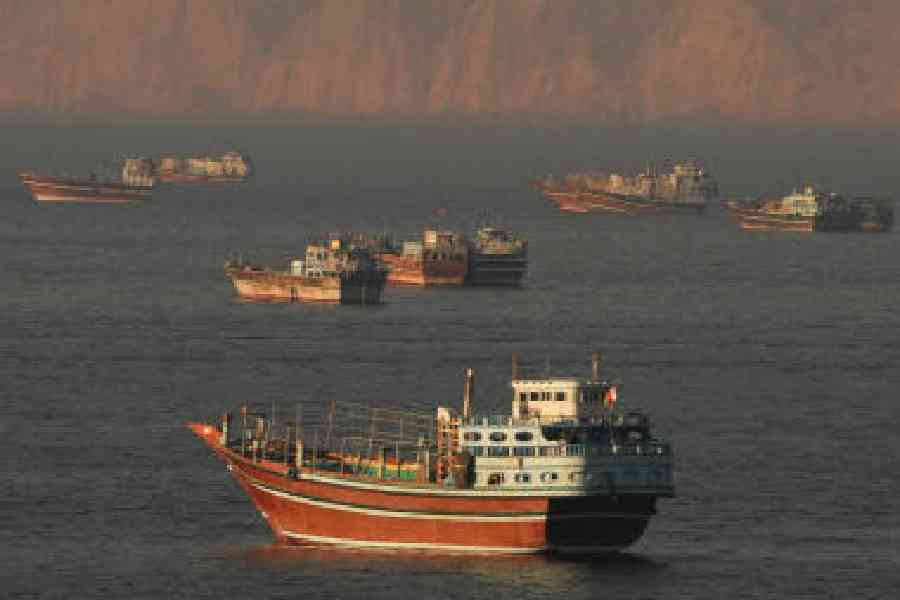
The US-Iran peace deal will bring relief to India, which has been reeling under the impact of the war on multiple fronts, but experts advised caution, given the fragile nature of the proposed agreement.
Reopening the Strait of Hormuz is expected to stabilise energy markets by avoiding a prolonged shock, ease pressure on oil and gas prices, strengthen the rupee and improve India’s growth outlook.
India’s dependence extends beyond oil and gas, encompassing the supply of fertiliser, petrochemicals, plastics, metals and several industrial raw materials.
“The conflict exposed India’s dependence on West Asia, from where it sources roughly 50 per cent of its crude imports, around 70 per cent of its LPG supplies and nearly 90 per cent of its LNG imports. The disruption of shipping through the Gulf raised India’s energy import bill, increased inflation risks, weakened the rupee and forced refiners to seek alternative supplies from distant markets,” Ajay Srivastava, founder of GTRI, said.
Shrikant M. Vaidya, former chairman of Indian Oil, said operational normalcy at the Strait could take months.
“The true test is not whether the Strait is open. The true test is when shipowners, insurers, traders and refiners conduct business as though disruption is no longer a credible risk. This distinction is important. In energy logistics, reopening is an event. Normalisation is a process... restoring confidence takes considerably longer than restoring flows,” Vaidya said in a LinkedIn post.