
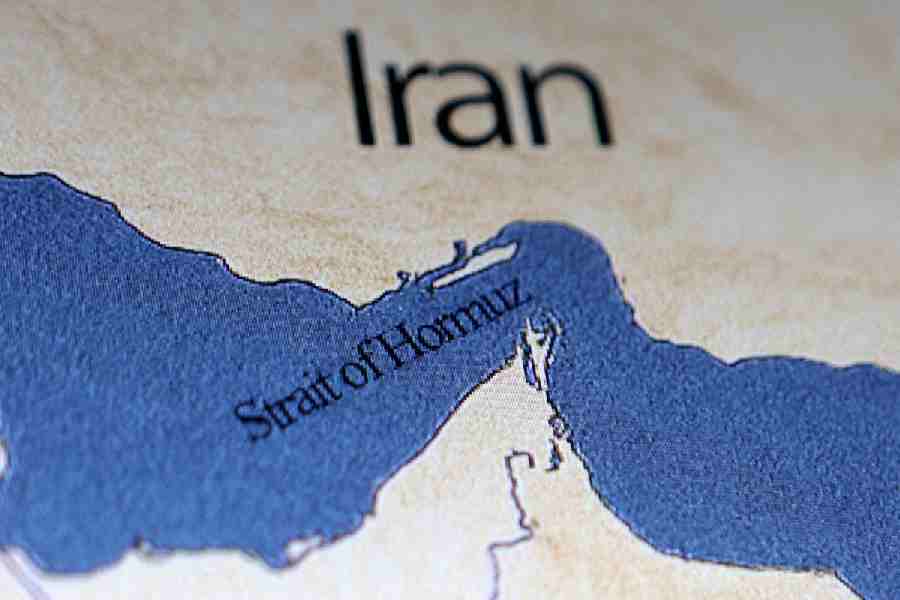
Escalating tensions in West Asia and shipping disruption in the Strait of Hormuz are beginning to affect multiple sectors of the Indian economy, from energy and fertilisers to aviation and exports. About 15.1 per cent of India’s exports and 20.1 per cent of imports during April–December 2025 were linked to West Asia, according to commerce ministry data, underscoring the region’s strategic importance to the country’s trade flows.
A prolonged disruption could raise input costs, delay shipments and squeeze corporate margins, according to Crisil Ratings and think tank GTRI.
ENERGY
India imports about 85 per cent of its crude oil and roughly half of its LNG requirement. Of this, nearly 40–50 per cent of crude oil and 50–60 per cent of LNG supplies pass through Hormuz. Brent crude prices shot up to about $82–84 per barrel from $66–67 a barrel during January–February 2026, while Asian spot LNG prices have surged to $24–25 from around $10 per MMBtu. A sustained rise could widen India’s current account deficit, stoke inflation and squeeze corporate profitability. Margins of oil refiners may come under pressure as higher crude costs may not be fully or immediately passed on through retail fuel prices.
BASMATI RICE
Around 70–72 per cent of India’s basmati rice exports — nearly 6 million tonnes last fiscal — are destined for West Asian markets. Shipping delays could disrupt near-term trade flows, while prolonged instability may delay payments from buyers.
FERTILISER
India imports about 30 per cent of its fertiliser requirement, with West Asia accounting for roughly 40 per cent of supplies. Disruption could tighten availability. Also, a cut in LNG supply or increased prices, a key feedstock for urea, will impact production or raise costs. This may increase the fertiliser subsidy burden on the government.
DIAMONDS
West Asia serves as a major trading hub, with about 68 per cent of India’s rough diamond imports routed through the UAE and Israel via auctions. However, alternative hubs such as Belgium and Hong Kong could help polishers partly offset disruptions.
TOURISM
Roughly 25 per cent of India’s outbound travel is to the UAE, 10 per cent to Saudi Arabia and another 10 per cent across Qatar, Kuwait and Oman. Cancellations and postponements could delay revenue recognition for travel companies, while higher airfares and uncertainty may weigh on new bookings.
CONSTRUCTION
India imported $483m worth of limestone, a key input for cement, from West Asia, accounting for 68.5 per cent of its imports. Shortages could push up cement prices. India also imported $420m worth of sulphur, used by chemical industry and fertiliser, from West Asia, representing 65.8 per cent of its imports.
TYRES
Around half of operating costs in the tyre industry are tied to crude prices. Manufacturers may pass on part of the increase through higher prices, though pass-through tends to lag in original equipment manufacturer sales, which contribute about 35 per cent of sector revenue.
TEXTILES
As much as 70–80 per cent of production costs in synthetic textiles are linked to crude derivatives. While higher oil prices could raise input costs, improved demand-supply conditions may allow companies to pass on part of the increase to customers, albeit with a lag.
CERAMIC
The sector depends heavily on LNG and LPG for fuel. With exports accounting for 40 per cent of revenue and West Asia contributing more than 15 per cent, weaker shipments may dent both revenue and margins.
PAINTS
Nearly 30 per cent of production costs are linked to crude oil derivatives. Elevated input prices, combined with competitive pressures and subdued demand, may limit companies’ ability to fully pass on higher costs, squeezing profitability.
METAL SUPPLY CHAINS
India imported $869m worth of copper wire, representing 50.7 per cent of imports, used in power transmission, electrical equipment and renewable energy infrastructure.
Compiled by Pinak Ghosh and Sambit Saha