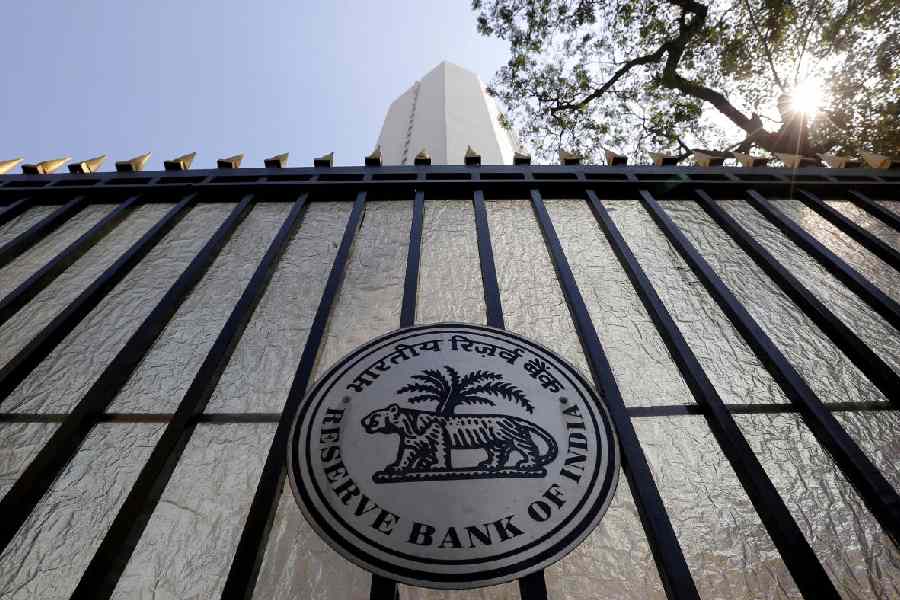
The Reserve Bank of India will issue comprehensive norms for regulated entities on advertising, marketing and sales practices to prevent mis-selling of financial products and services, the central bank said in its Report on Trend and Progress of Banking in India 2024-25, released on Monday.
The RBI said mis-selling of financial products and services by regulated entities has significant consequences for both customers and the financial sector.
To address conduct-related concerns, it proposed to review the existing instructions associated with the engagement of recovery agents and recovery of loans, and issue harmonised instructions in this regard.

On digital frauds, the report said the Reserve Bank continues to work with stakeholders, including the Ministry of Home Affairs, to develop and operationalise measures to curb digital and cyber-enabled fraud and strengthen customer protection.
“REs need to put in place robust internal controls, ensure sufficient grievance redress officers at all levels, and enhance digital financial literacy to address digital frauds,” the report said.
The RBI highlighted several recent initiatives, including the development of MuleHunter.ai to facilitate system-wide learning to identify and flag potential mule accounts.
The system has been implemented in 23 banks as of 17 December, 2025. Another initiative is a digital payments intelligence platform to leverage AI to flag risky transactions and share intelligence for fraud detection and prevention.
The central bank also said that instructions related to the limited liability of customers in unauthorised electronic banking transactions, issued in 2017, are being reviewed in view of major shifts in the banking landscape, including the emergence of new payment channels, higher volumes of digital transactions, and evolving fraud patterns. “This is expected to improve customer safeguards,” the report said.
The Reserve Bank noted that its regulatory and supervisory policies remain focused on reinforcing cybersecurity, mitigating fraud, enhancing customer protection, integrating climate risk awareness, and preserving financial stability as an overarching goal.
Balancing financial innovations with stability, strengthening public trust, and supporting sustainable development will continue to guide the central bank’s policies, it added.
The report further pointed out that frauds pose multiple challenges by exposing financial institutions to reputational, operational and business risks, while also weakening customer trust.
During 2024-25, based on the date of reporting by banks, the total number of frauds declined, although the amount involved increased.
“This was mainly due to re-examination and reporting afresh of 122 fraud cases, amounting to Rs 18,336 crore after ensuring compliance with the judgement of the Supreme Court of India dated 27 March, 2023,” the report said.
Based on the date of occurrence of frauds during 2024-25, card and internet frauds accounted for 66.8 per cent of the total number of cases.
In terms of value, advances-related frauds accounted for 33.1 per cent of the total amount involved.
In 2024-25, private sector banks accounted for 59.3 per cent of the total number of frauds reported, while public sector banks accounted for 70.7 per cent of the total amount involved.
Within private banks, card and internet-related frauds constituted the largest share by number, while frauds related to advances formed the largest share by value.
In contrast, state-owned banks reported the highest share of frauds related to advances, both in terms of the number of cases and the amount involved.