India’s external sector outlook has received a boost following the conclusion of the India–EU free trade negotiations in end-January and the subsequent announcement of an interim trade agreement with the United States.
The Reserve Bank of India, in its February 2026 bulletin, said the developments are expected to improve market access, enhance export competitiveness and deepen the integration of Indian firms into global value chains.
In the near term, the trade breakthroughs have lifted investor sentiment.
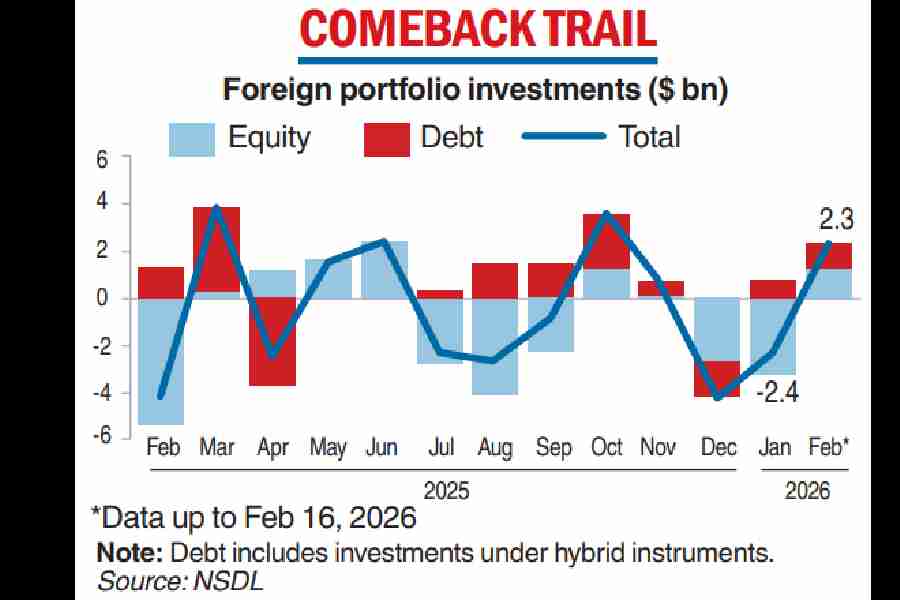
“Foreign portfolio investments (FPIs) staged a comeback in February with investor sentiments turning around following the India-EU free trade agreement and the interim India-US trade deal,” the RBI Bulletin said.
Gross inward foreign direct investment (FDI) rose to $73.3 billion during April–December 2025, up from $63.1 billion in the corresponding period a year earlier. In December, gross FDI inflows remained robust with Singapore, the Netherlands and Mauritius accounting for more than 80 per cent of total inflows.
Net FDI increased to $4.0 billion during April–December 2025 from $0.6 billion in the same period last year. However, in December 2025, net FDI remained negative for the fourth consecutive month, reflecting a rise in repatriation and outward FDI.
The RBI sold a net of $10.02 billion in the foreign exchange market in December, reflecting the central bank’s efforts to support the currency.
The central bank purchased $18.33 billion and sold $28.35 billion in December. In November, the central bank had sold a net of $9.7 billion in the market.
The Indian rupee fell to its then-record low of 91.0750 on December 16, pressured by worries over a trade stalemate with the US and persistent foreign outflows.