The edible oil and soya bean processing industry has cautiously welcomed the India-US interim bilateral trade agreement announced on Saturday, but is awaiting crucial details on tariff cuts, quota mechanisms and quality specifications.
Under the pact, while the US will reduce tariffs on Indian goods to 18 per cent from the present 50 per cent, India will eliminate or cut down import duties on all US industrial goods and a wide range of American food and agricultural products, including soya bean oil, distillers dried grains with solubles (DDGS), red sorghum for animal feed, tree nuts, fresh and processed fruits, wine and spirits.
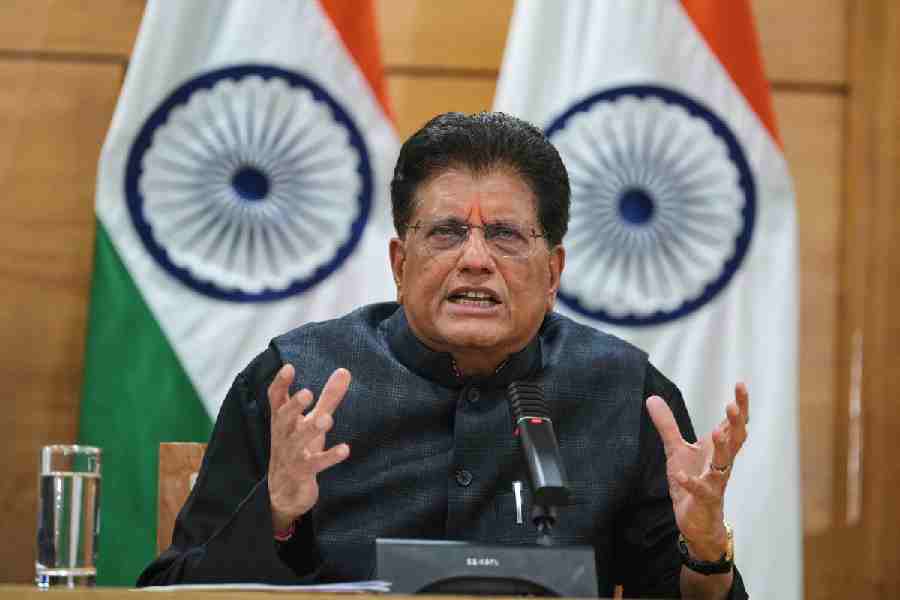
The India of today is negotiating trade deals from a position of strength and confidence that it can offer a future market of USD 35 trillion, Commerce and Industry Minister Piyush Goyal said on Sunday.
"That's what is our negotiating strength," Goyal told PTI Videos in an interview. His first after India-US reached an agreement on tariffs, seen as a first step toward finalising a bilateral trade agreement (BTA).
"I start by saying look we are 4 trillion dollar economy today, but it is going to be 30-35 trillion by 2047, when we are a developed economy," he said.
"And that is the confidence that india has today, that delta of opportunity from 4 trillion to 30-35 trillion, that is the future we offer," he added.
IMPORT DEPENDENCE DRIVES CAUTIOUS OPTIMISM
The Solvent Extractors Association of India (SEA) has welcomed the move, particularly given India's heavy dependence on soya bean imports. During the 2024-25 edible oil year (November-October), the country imported a record 5.47 million tonnes of soya bean, mainly from Argentina and Brazil, much of it genetically modified.
Currently, India imports only about 1,50,000-2,00,000 tonnes of soya bean oil from the US. The product attracts a 16.5 per cent duty, which includes a 10 per cent basic customs duty, 5 per cent agri-cess and 1.5 per cent education cess.
However, SEA Executive Director BV Mehta pointed out a critical challenge.
"The US-origin soya bean oil is generally more expensive for India by USD 30-40 per tonne plus additional logistic cost, so the advantage of duty reduction will be less for Indian importers," he told PTI.
UNANSWERED QUESTIONS
What remains unclear is whether American soya bean oil will be allowed on a quota basis with nil basic customs duty, and whether the 6.5 per cent agri and education cess will be exempted.
"We will have to see if cess will be reduced or removed," Mehta said, adding that US soya bean imports could reduce shipments from Argentina and potentially impact palm oil prices.
Interestingly, Mehta suggested that a reduction in import duty on US refined soya bean could also resolve the issue of oil flows from Nepal, as such imports may no longer be commercially viable. "We are waiting for more details", he said.
DDGS: BOON OR BURDEN
On dried distillers' grains (DDGs), the SEA official said duty-free imports of this animal feed would boost "additional" supply for both the cattle and poultry sectors in the country.
India currently produces about 7.5 to 8 million tonnes of DDGS, a byproduct of maize and rice, which replaces soya and rapeseed meal. "The supply of American DDGS would impact the domestic production and prices, impacting the domestic processors," Mehta warned.
The Soya bean Processors Association of India (SOPA) Executive Director DN Pathak raised another concern that India has not currently permitted GM-DDGS.
"There is no clarity as of now whether GM or non-GM DDGS will be permitted from the US. Whether there will be a quota or not, there is no clarity," he said.
With domestic DDGS production running high, Pathak said three critical clarifications are required from the government -- whether imports will be quota-based, what the duty structure will be, and whether GM or non-GM products will be allowed.
INDUSTRY IN WAIT-AND-WATCH MODE
Both industry bodies emphasised that while the framework signals positive intent in bilateral trade relations, the real impact will only be clear once the fine print emerges.
"Let's see how the fine print comes out," Pathak said, reflecting the industry's measured response to the trade announcement.