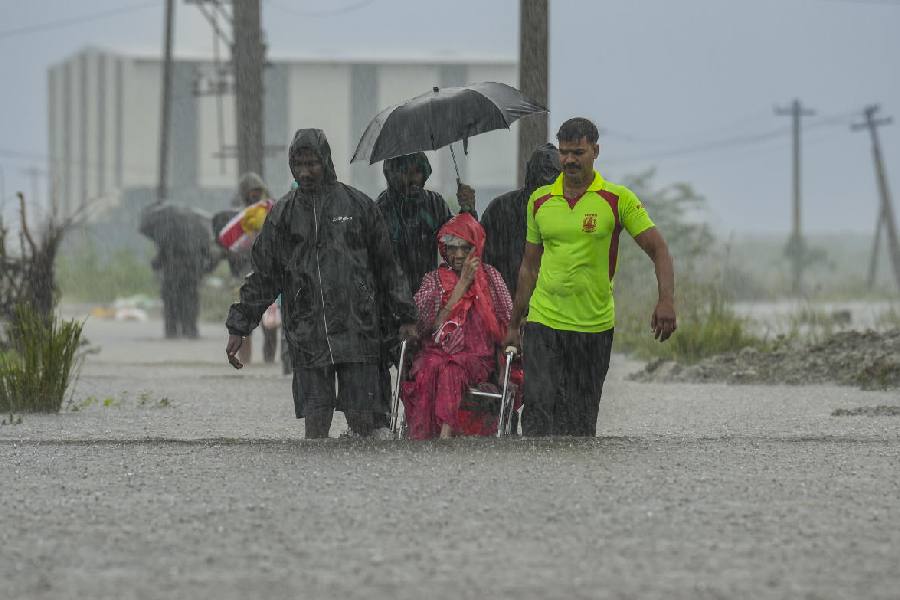

The clouds in the northern part of the country have brought rain to the city but that's bad news for the health department, which is busy coping with the swine flu scare.
The drop in the mercury column, experts opined, may lead to an increase in number of swine flu cases.
"The sun's ultraviolet rays help kill the H1N1 virus, which is responsible for swine flu. The absence of sunlight, because of the cloud cover, would provide congenial environment for the propagation of the virus," said S.N. Sharma, a former microbiologist with Patna Medical College and Hospital (PMCH).
Normally, swine flu cases are reported in February every year but the numbers dwindle by March. The cloudy weather may, however, prolong the period when H1NI virus cases are reported.
The H1N1 virus spreads mainly in two ways - it becomes airborne in the form of droplets when an infected person sneezes, coughs or spits and enters a new host through the mouth, eyes or nose. Another way it can spread is when the infected patient touches his eyes, mouth or nose and then passes the virus to an inanimate object like a doorknob or even a pen. When a non-infected person touches the same (doorknob or pen) within six to eight hours and then his or her eyes or mouth, the virus enters its new host.
For both these modes of transmission, the virus has to survive in the open environment till it can enter the body of a new host.
Obviously, the longer it can survive in the open, greater the chances of transmission. This time span is cut short when the temperature increases and that is why outbreaks of influenza dip drastically during summer.
"Eleven new cases of swine flu were detected in the city on Monday," said civil surgeon K.K. Mishra, before he added: "Sixty-five samples were tested of which 11 were found to be positive. So far, 185 samples have been tested at Rajendra Memorial Research Institute of Medical Sciences (RMRIMS) of which 27 have been found positive," Mishra said.
The civil surgeon, however, could not divulge the place where the 11 people, who were detected with swine flu, came from. "We have not been told about their whereabouts," Mishra said.
Sources said the district civil surgeon's office was not considering two Noida-based cases in the list of confirmed cases. "Two people have returned from Noida. Both of them tested positive there but we are not considering the cases as positive. We are awaiting the results of their tests here. Their throat swab samples have been sent to RMRIMS but their reports have not arrived yet," said a source at the civil surgeon's office.
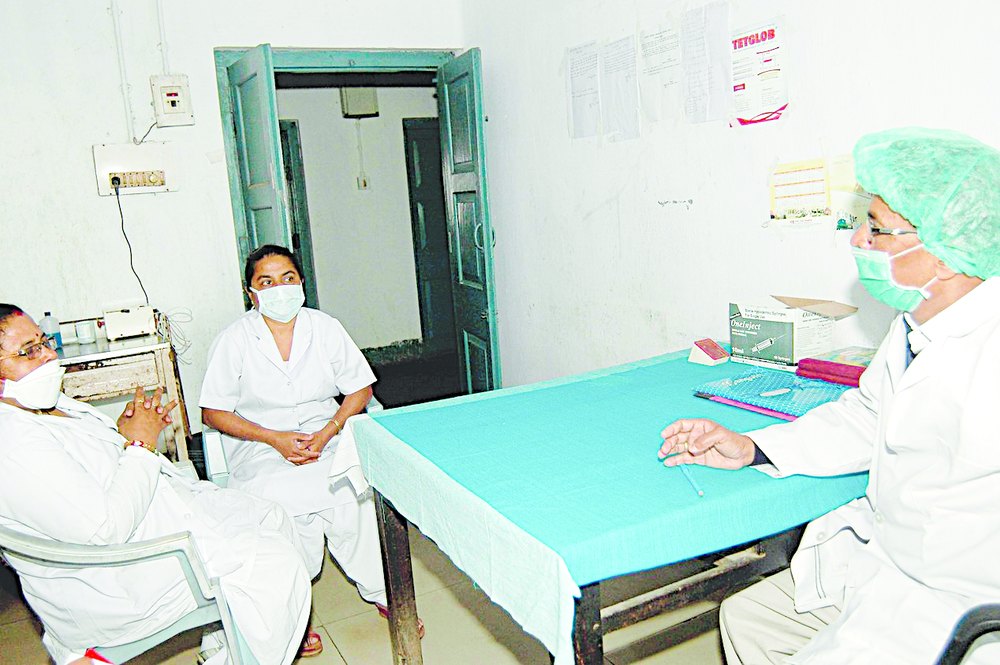
City doctors associated with the government health facilities, who are engaged in collecting throat swab samples from suspected patients and also those who are engaged in the treatment of confirmed patients, said they were yet to be vaccinated against the disease.
"We are still waiting to be vaccinated. The state government should make arrangements for the vaccine as soon as possible because it takes a fortnight before it becomes effective in shielding against the virus," said a microbiologist associated with PMCH.