|
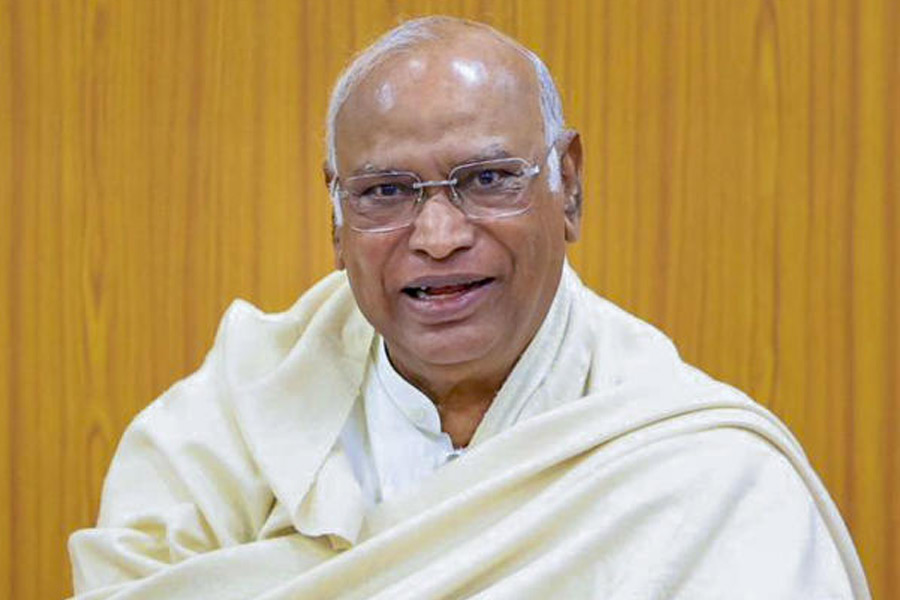
| K Gopal Iyer speaks at the seminar on Wednesday. Picture by Deepak Kumar |
Patna, May 11: Subsidy grants to farmers should be increased and irrigation facilities improved to tackle the issue of farmer suicides in the country.
Delegates expressed this view on the adverse impact of globalisation on the agrarian sector at AN Sinha Institute of Social Studies.
K. Gopal Iyer, a retired faculty member of Panjab University, Chandigarh, was one of the speakers at the daylong seminar on “Globalisation, agrarian crisis and farmers suicides in India”. He said: “Globalisation has an adverse impact on the Indian economy, particularly for farmers, driving them to suicide.”
The former teacher of Panjab University said a priority market has been created with globalisation and advent of market economy. Coupled with globalisation, the subsidy received by farmers has also been withdrawn.
Iyer, who had undertaken his research from AN Sinha Institute of Social Studies before moving to Panjab University, has also done a series of survey related to the problems of farmers in Punjab. He said the survey results pointed at the problems faced by the farmers after globalisation in the early 1990s.
The issue of farmer suicides in Punjab was not raised as the state was passing through militancy problems, said Iyer.
D.M. Diwakar, the director of AN Sinha Institute of Social Studies, said: “Punjab has passed through a phase of Green Revolution with bumper crops, maximum utilisation of land and use of fertilisers and manures. However, the phase of bumper crop production has reached its saturation point in the past few years. There have also been reports stating that the land which yielded bumper crops is losing its fertility because of the excessive use of fertilisers and manures.”
Diwakar added: “There have been talks of starting a second green revolution in the eastern region of the country, particularly Bihar and Bengal. However, the policymakers and agriculture experts should take caution that the problem faced by Punjab and other states during the first Green Revolution is not repeated. There should be maximum utility of land and fertility of soil should be maintained in the longer run.”
Iyer said: “The main reason behind farmers’ suicide in Punjab was their cumulative debts and pressure from money-lending agencies to repay the money.”
In the era of neo-liberalisation since 1991, Iyer said, the nationalised banks started reducing their commitment towards the farmers and at the same time the co-operative banks failed to provide adequate credit.