
Rural women lauded the government's prohibition move but demanded lady doctors at every health facility and free and timely ambulance services to save lives during childbirth at a discussion on what they expected from the healthcare system.
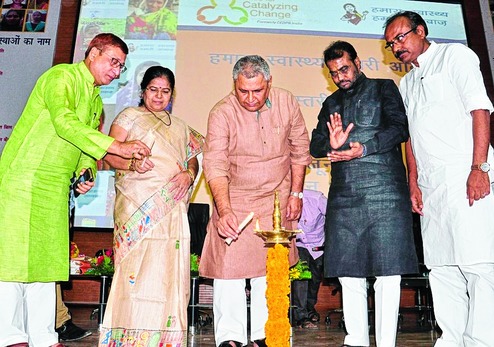
Assembly Speaker Vijay Kumar Chaudhary, social welfare minister Kumari Manju Verma, JDU national general secretary Shyam Rajak and Digha MLA Sanjeev Chourasiya and over 300 rural women attended the programme organised by NGO Centre for Catalyzing Change at Adhiveshan Bhavan on Saturday.
Heena Jha, a ward member from a gram panchayat in Sitamarhi, was all praise for prohibition. "Earlier, men would roam the streets in a drunken state," Heena said. "We had no place to sit and talk. I want to thank the chief minister for this. Now, I want every health facility to have lady doctors so that we can discuss health easily with them."
Sushma Devi, a ward member from Kosut Panchayat of Dhanarua village, said: "We need free and timely ambulance service to save the lives of women during childbirth."
Neetu Devi from Gaya demanded availability of medicines at public health centres while Prabha Devi, a ward member from Lagma Panchayat of Sitamarhi village, requested for appointment of skilled doctors at all locations to deal with complicated cases.
Bhagyavati Kumari of Vaishali district demanded clean toilets, labour rooms and improvement in hygiene standards to prevent infections.
While JDU national general secretary Rajak admitted to the crisis of doctors, ambulances and other healthcare indicators at rural level, social welfare minister Manju Verma spoke about increased incidences of breast and uterus cancers. She also talked about the state government's cycle and uniform schemes and urged girl students to go to school not for just these benefits but to excel in studies.
Executive director of Centre for Catalyzing Change, Aparajita Gogoi said the NGO reached out to 75,000 rural women and asked them what they expect at a health centre. While 38 per cent sought access to maternal health entitlements, 30 per cent demanded dignity and respectful care, 11 per cent wanted hygienic facilities, 18 per wanted availability of healthcare providers and 3 per cent wanted information on entitlements to be displayed," said Gogoi.
The Speaker said the NGO should have focused on whether government facilities were reaching rural women.