
Most critically, Lalu Prasad and Nitish were able to ensure near complete transfer of votes between the Mahagathbandhan partners - the RJD, JDU and Congress. This reflects in the high strike rate of each component, an average of over 70 per cent for the RJD and the JDU.
In the bargain, two dwindled fortunes in Bihar stood at once revived. Lalu Prasad's RJD becomes the single largest party in the new Assembly with 80 seats, the Congress recovers from a long tenure in the grave to net close to 30.
The BJP-led alliance committed critical errors of judgement and tactic. It relegated the local leadership to foreground Amit Shah, never a mass politician, least of all in Bihar. It was Shah too that held strategy and execution close to himself, often at the expense annoying experienced Bihar BJP hands. It was only after getting rapped in the first two phases that the phonics of the campaign began to reflect local faces and voices, but it was probably a change effected too late.
Wrong-footed by Bhagwat's intervention, the BJP claimed it would project a backward chief minister, it played Modi as a backward protagonist but gave away more than 90 seats to upper caste nominees, an identity fracture the Bihari voter seized upon.
They also put too much faith in their allies shoring up the non-upper caste vote. Of the 83 seats conceded to Ram Vilas Paswan, Upendra Kushwaha and the fancied former chief minister, Jitan Ram Manjhi, only six were delivered to the NDA's shrunken kitty. Together the allies scored fewer percentage points than the NOTA vote. (The much touted votekatuwas - vote splitters - of this election, the Samajwadi Party, the NCP and Asaduddin Owaisi's AIMIM, were cast aside by an electorate determined to hand out a decisive verdict.)
A case may also be made that the BJP ran too shrill and divisive a campaign, relegating vikas to favour beef, pork, cowdung, urine, tantriks and shaitaans. Amit Shah's "crackers in Pakistan" bribe was a last-minute polarising bid; it floundered. The Prime Minister's sharp personal bludgeoning of Nitish and Lalu Prasad seems to have met strong voter disapproval.
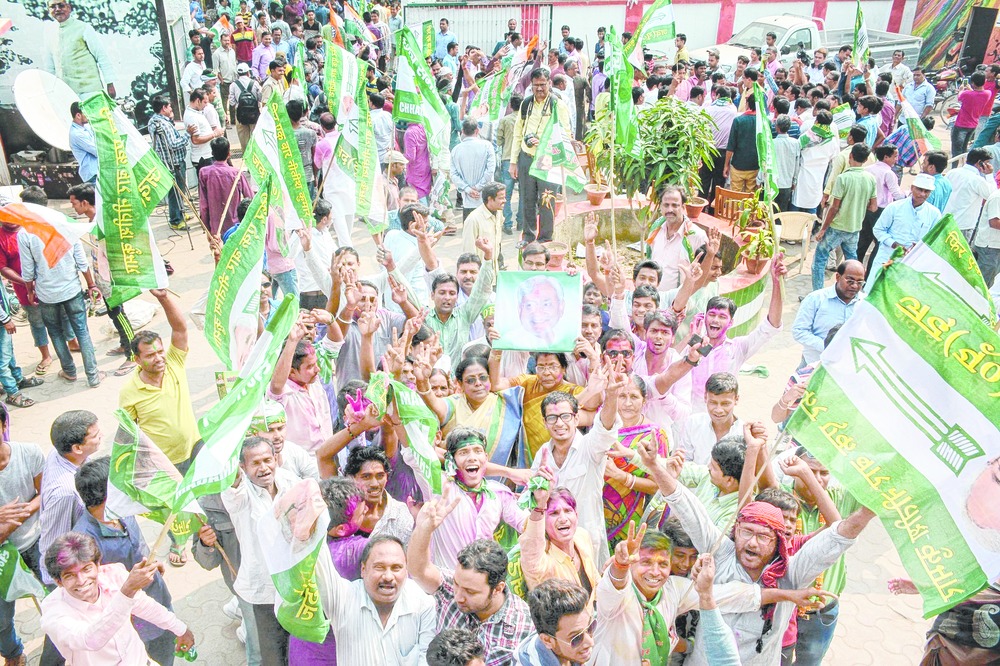
Turning out in Lalu Prasad's company to an armada of cameras and flashbulbs at his Circular Road residence this afternoon, Nitish thanked the people of Bihar and said it was a mandate that placed on them "huge responsibility". It was a scene surreally similar to Nitish's victory in November 2010: the cacophony of wild cheering punctuated by cracker bursts; the hurried mounting of celebratory posters and billboards all across central Patna; Mahagathbandhan activists running ribbons across town on motorbike and station wagons; and that song playing at deafening decibel - Bihar mein bahaar ho, Nitishey Kumar Ho!!
Nitish was smiling ear to ear, but willing to say little more than the graces. "We are humbled, we have earned a huge victory and a bigger responsibility. We respect the Opposition, we are not going to do anything out of bitterness, there are huge tasks ahead for us to accomplish."
It was left to Lalu Prasad to provide the sparks and he gleefully obliged. But not before he had sombrely underlined the big takeaways: Nitish will be chief minister again and it will be his task to govern the state, let nobody be confused about it. "We have run this campaign like one party, not two, so there is no reason to discuss who got more and who less," he told The Telegraph on the sidelines of the news conference. "Our sense of unity is what has made this success and we are not fools to lose it."
But the real Lalu Prasad is not known to hold himself back. He turned to the sombre Nitish and said: "He speaks very carefully, I speak straight. We have given a stable Bihar to Nitish now, the instability will be in Delhi and I am going to create it, I am going to launch an assault against Modi, make no mistake about it."
Delhi must await the rumble of Bihar's tectonic shift away from Modi. Bihar awaits, most expectantly, the delivery of many and urgent promises made to its people. They can turn quickly unforgiving, ask Narendra Modi.