|
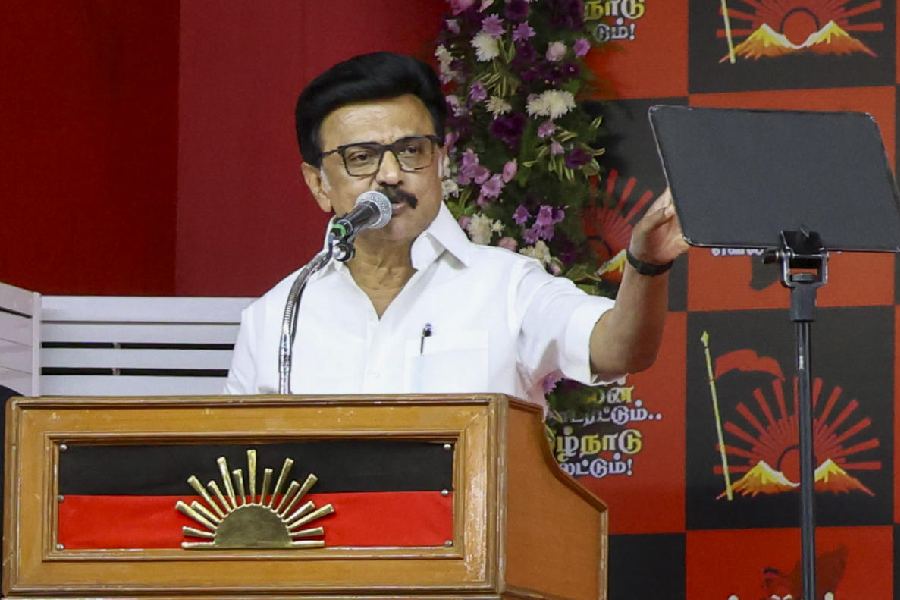
| Nagaland Governor Nikhil Kumar (centre) at the state-level co-operative seminar in Patna on Wednesday. Picture by Ranjeet Kumar Dey |
The state government can’t think about inclusive development without developing co-operative societies and banks.
The government also needs to be concerned about these financial institutions as they could provide employment opportunities to many.
These were the views of most speakers, including some prominent bankers, addressing a state-level co-operative seminar at Rabindra Parishad on Wednesday. Around 1,000 members of various Primary Agriculture Co-operative Societies (PACS) took part in the seminar.
Organised by Bihar State Co-operative Development Co-ordination Committee, Patna, the speakers said the state government has not done much to develop co-operative societies.
They said the lackadaisical approach of the government is responsible for many co-operative banks’ poor financial condition and many also run the risk of shutdown.
Many speakers said staging dharnas are the only solution to draw the attention of the state government on this issue.
While Nagaland Governor Nikhil Kumar inaugurated the seminar, Chandra Pal Singh Yadav, the president of National Cooperative Union of India, was the chief guest.
Jag Narain Singh, the chairperson of Aurangabad Central Co-operative Bank, talked about the poor condition of co-operative banks across the state. “The co-operative banks across the state are in a very bad condition. Many of them are going through a poor financial condition and run the risk of being closed any moment. The state government has not done much on this issue. I would like to urge the state government to kindly take necessary steps because co-operative banks have a major role to play in development of agriculture and its allied sectors,” said Singh.
Rajkishore Prasad, the chairperson of Bihar State Co-operation Development Coordination Committee, said: “The state government should make the co-operative societies an autonomous body. At present, it is running under government-appointed administrators.”
He added: “The state government should do away with the existing system which makes it compulsory for PACs to obtain a licence for storing 100 metric tonnes or more of fertilisers.”
Prasad added: “The state government should increase the amount of fertiliser distribution, which is given through PACS. The state government should distribute fertilisers as much as 25 per cent of the total consumption of fertilisers in the state only through PACS.”
Yadav said the state government should try to fix the problem of co-operative institutions.
“Agriculture industry, handloom and handicraft are some of the sectors in which village people can explore employment opportunities. Co-operative societies train villagers in these fields so that they can earn a livelihood. The government should not take problems plaguing co-operative societies lightly. The government needs to help the co-operative societies because it creates many employment opportunities,” said Yadav.