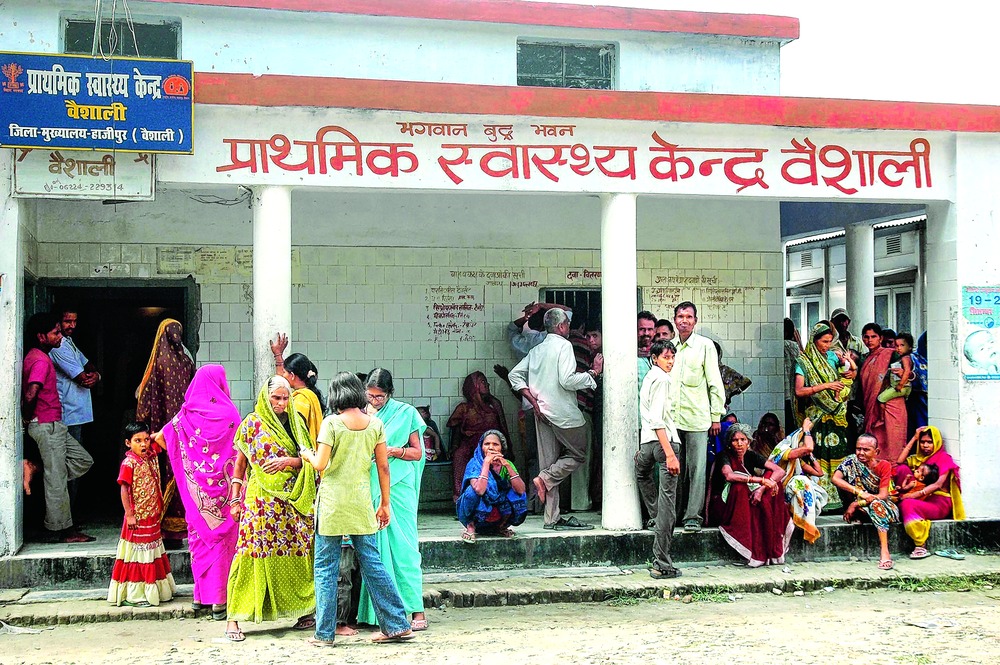

Patna, Oct. 1: The memories of his earlier rural postings haunt Ranjeet Kumar, a doctor working in government hospitals for many years.
According to Ranjeet, the quarter which he had been allotted during his postings at Sono (Jamui district) and Masrakh (Saran district) primary health centres, did not even have a water connection.
"I had to depend on hand pumps and that too was located outside the quarter. The state government has failed to provide basic amenities to doctors in the rural areas. This is one of the many reasons because of which many doctors don't want to work in the rural set-up. Besides, there are doctors who join the rural set-up with the right earnest to serve the people but after few years they leave the job as they realise that they cannot live without the basic amenities," said Ranjeet.
What this government doctor experienced has also been reflected in the findings of a research paper prepared by Prateek Nishant, an MBBS student at Patna Medical College and Hospital. The research is based on inputs collected from students pursuing MBBS course at present.
Majority of these students are unwilling to work in rural primary care but they would consider working in the rural set-up only if they are provided basic amenities.

Prateek is all set to present his research paper in the upcoming annual conference of Royal College of General Practitioners at Harrogate International Centre in United Kingdom, on October 6. In his research paper, "Energizing medical students in India - What would make them willing to work in rural primary care", Prateek has focused on a new concept of "conditional willing" in which 55.6 per cent MBBS students said they would think about working in rural set-up provided they get certain amenities like proper residence, water, electricity, educational facilities for kids , good salary among other things.
Prateek conducted the research in 2013 when he was a second-year MBBS student at Patna Medical College. Prateek covered 394 PMCH MBBS students of all the four years during his research. He also received a grant of Rs 10,000 from Indian Council of Medical Research (ICMR) in 2013.
"My study suggests that only 33.5 per cent students are willing to work in the rural health care set-up while 10.9 per cent students were absolutely unwilling to work in rural primary care under any condition but 55.6 per cent MBBS students are currently unwilling but would consider working in the rural set-up if they are provided with certain amenities."
Prateek said an interesting part of his research was that he found that students' interest in working in rural health care set-ups declined when they reached their final-year of MBBS.
"While 59.6 per cent students were found willing to work in the rural set-up in the first year of MBBS course, only 14.8 per cent students were found willing for rural service in the final year of MBBS. On the other hand, 35.3 per students had "conditional willing" to work in rural belts in the first year of MBBS contrary to the 74.8 per cent students willing to work in rural set up in the final year. One of the reasons of this decline in interest could be that till first year students have no exposure to the rural health care set-up," said Prateek, adding that practical concerns about lifestyle countered initial idealism of the profession.
Doctors working in the rural set-up agreed to Prateek's research but they said apart from the basic amenities, the primary concern of doctors in the rural health care-set up was security.
"Now, security of doctors has become major issue in rural settings because there have been incidents in the past in which doctors were beaten up, kidnapped or murdered at their workplace. The basic amenities now has become our second concern," said Ranjeet, a doctor at the Hajipur primary health centre.