The Trump administration on Tuesday imposed visa bans on a former European Union commissioner and several anti-disinformation campaigners, accusing them of involvement in censoring U.S. social media platforms, in the latest escalation of a transatlantic dispute over European digital regulations.
U.S. officials say the European Union’s landmark Digital Services Act (DSA), designed to combat hate speech, misinformation and disinformation, goes beyond legitimate regulation, stifles free speech and imposes costs on U.S. technology companies.
The visa bans followed the administration’s National Security Strategy this month, which accused European leaders of censoring free speech and suppressing opposition to immigration policies, warning of “civilisational erasure” for the continent.
Five individuals targeted, says Rubio
Secretary of State Marco Rubio said five people were targeted.
“The five people targeted with visa bans have led organized efforts to coerce American platforms to censor, demonetize, and suppress American viewpoints they oppose,” Rubio said.
“These radical activists and weaponized NGOs have advanced censorship crackdowns by foreign states -- in each case targeting American speakers and American companies,” he added.
Rubio did not name the individuals, but U.S. Under Secretary for Public Diplomacy Sarah Rogers later identified them on X, accusing the group of “fomenting censorship of American speech.”
Breton named as ‘mastermind’ of DSA
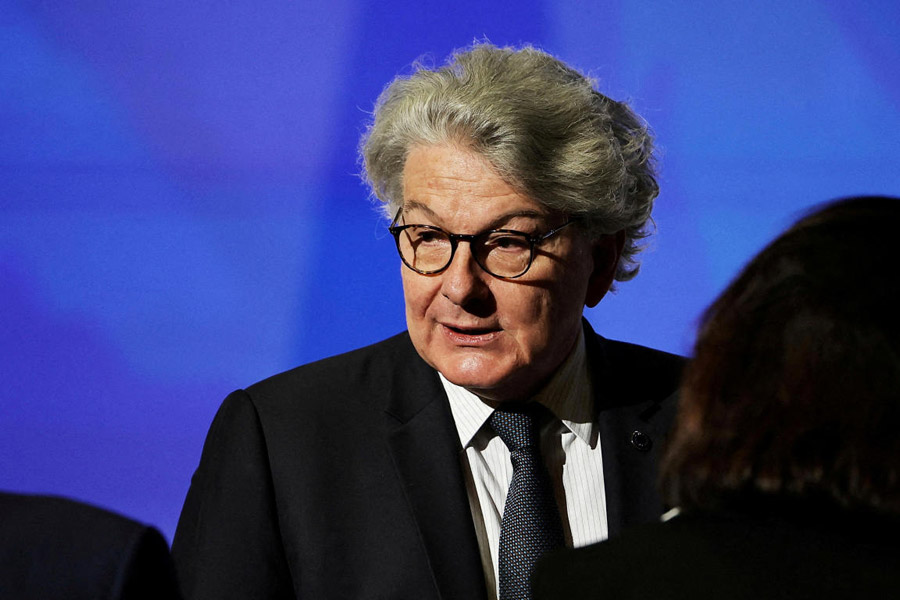
The most high-profile individual targeted was Thierry Breton, a former French business executive who served as European commissioner for the internal market from 2019 to 2024.
Rogers described Breton as a “mastermind” of the Digital Services Act and said he had once threatened Trump ally and X owner Elon Musk ahead of an interview Musk conducted with Trump. Reuters was unable to immediately reach Breton for comment. Reuters had reported in August that U.S. officials were considering sanctions on those responsible for the DSA.
Activists and NGOs also hit
According to Rogers, the visa bans also apply to:
- Imran Ahmed, British CEO of the US-based Center for Countering Digital Hate
- Anna-Lena von Hodenberg and Josephine Ballon of German nonprofit HateAid
- Clare Melford, co-founder of the Global Disinformation Index (GDI)
A spokesperson for GDI condemned the U.S. action, calling it “immoral, unlawful, and un-American” and “an authoritarian attack on free speech and an egregious act of government censorship.”
Rogers accused Melford of falsely labeling online comments as hate speech or disinformation and of using U.S. taxpayers’ money to “exhort censorship and blacklisting of American speech and press.” The other organizations did not immediately respond to requests for comment.
In a video posted online in 2024, Melford said she co-founded GDI “to try to break the business model of harmful online content” by reviewing news websites so advertisers could “choose whether or not they want to fund content that is polarizing and divisive and harmful, or whether they want to steer their advertising back towards more quality journalism.”
France, EU condemns US decision
France strongly criticised the visa ban imposed on Breton.
“France strongly condemns the visa restriction imposed by the United States on Thierry Breton, former minister and European Commissioner, and four other European figures,” French Foreign Minister Jean-Noel Barrot wrote on X on Wednesday.
The European Commission strongly condemns the U.S. decision to impose a visa ban on five European individuals, including former EU commissioner Thierry Breton, a Commission spokesperson said on Wednesday, adding that the EU had requested clarifications from the US authorities.
"If needed, we will respond swiftly and decisively to defend our regulatory autonomy against unjustified measures," he also said.
Breton’s successor as EU commissioner for the internal market, Stephane Sejourne, who is now the European Commission’s executive vice president, also criticised the move and defended the DSA.
“No sanction will silence the sovereignty of the European peoples. Total solidarity with him and all the people of Europe affected by this,” Sejourne wrote on X.
EU defends Digital Services Act amid tensions
U.S. officials reiterated their criticism of the DSA as Europe continued to defend the law. This month, Elon Musk’s X platform was fined 120 million euros by the EU for breaching online content rules.
“The Digital Services Act was democratically adopted in Europe to ensure that what is illegal offline is also illegal online. It has absolutely no extraterritorial reach and in no way affects the United States,” Barrot wrote on X.
Breton himself also condemned the U.S. action.
“Is McCarthy’s witch hunt back? As a reminder: 90% of the European Parliament — our democratically elected body — and all 27 Member States unanimously voted the DSA. To our American friends: Censorship isn’t where you think it is,” Breton wrote on X.